
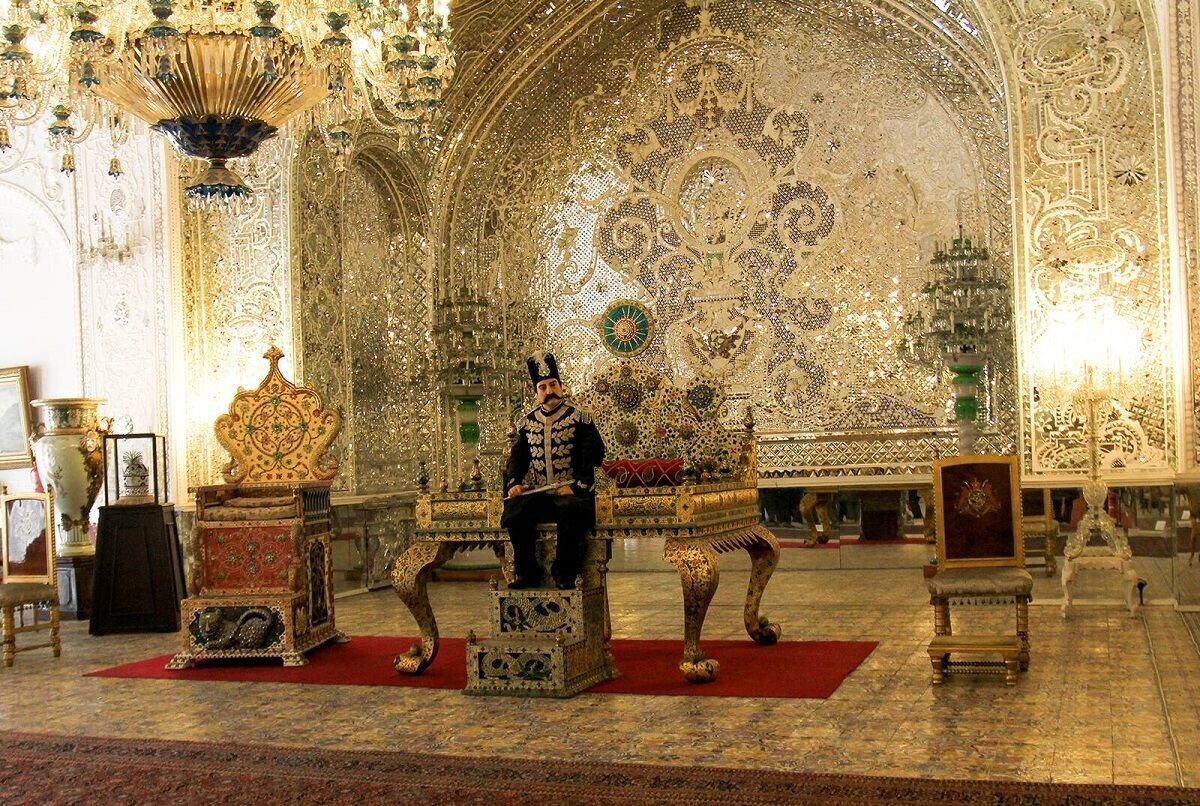
TEHRAN – Thirty-one film reels from Iran’s Qajar era recently discovered at Golestan Palace, a UNESCO World Heritage Site in downtown Tehran, are being prepared and deciphered before being released to the public, palace officials said on Monday.
Afarin Emami, director of the Golestan Palace World Heritage Complex, said the films were identified during a regular inventory of the palace archives. “During the latest protection intelligence operations, Seyed Reza Rezaei Amin discovered that some of the 189 raw films from the Qajar era contained visual content,” Emami said.
Emami added that following this discovery, re-examination confirmed that a total of 31 reels contained visual material, including 28 35mm reels and three 16mm reels.
Although experts have not yet conducted a detailed analysis of the film’s content, early research suggests that some of it may contain images from the Qajar era, which could add new historical information, Emami said. “However, the exact content and title have not yet been fully considered.”
Emami said plans are underway for a meeting with the Directorate General of Museums to decide on experts and institutions such as the National Film Center and reputed centers to assist in deciphering the film. “We aim to utilize the available capacity in the country to extract content,” he said.
Regarding the public release, Emami said that once the film has been fully analyzed, it will be screened at a formal public event at Golestan Palace, inviting experts, researchers and the public. In coordination with other relevant organizations, a suitable platform for the release of the film will be arranged.
The schedule for the expert review process has not yet been determined.
A few years ago, 38 reels from the Qajar period were discovered in the palace’s album archives. These were sent to France’s Center National de la Cinematique (CNC) during the tenure of the late Professor Shahryar Adl, and 59 minutes of footage was extracted. In addition, 22 more reels were discovered in 2010, Emami said.
The film, which was restored and extracted under the direction of Professor Adl and sent to Germany, was then returned to Iran and is now stored under standard conditions in the archives of Golestan Palace.
Emami explained that researchers who have requested access to these archival films have been provided with digital copies on compact discs during past viewings conducted at the palace.
Golestan Palace, located in central Tehran, is a UNESCO World Heritage Site known for its historic palaces, museums, and extensive archives from the Qajar dynasty.
morning