
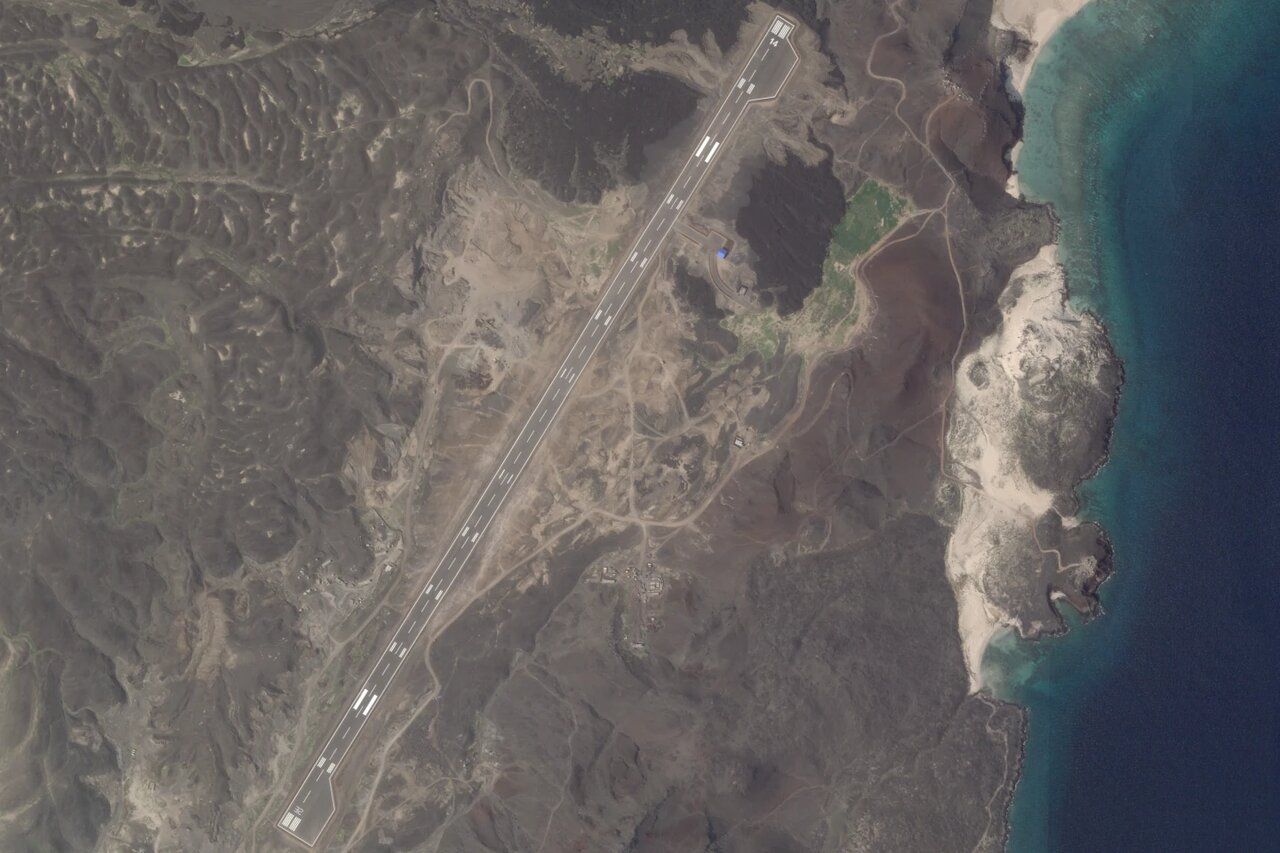
The newly visible 2,000-meter airstrip on Zukar Island marks a new chapter in how outside forces reshape Yemen’s coastline, a move many Yemenis see as a deliberate violation of their sovereignty.
A Planet Labs PBC satellite image published by The Associated Press on Tuesday shows the strip built this year on a volcanic outcrop 90 kilometers southeast of Hodeidah.
The site enables monitoring of the Red Sea, Gulf of Aden and Bab el-Mandeb Strait, and positions it as a key link in a growing network of marine facilities.
The runway is not considered a technicality and is seen as a continuation of the pressure that began in 2015. The Saudi-led coalition (which also includes the United Arab Emirates) launched a brutal 10-year campaign that killed more than 150,000 Yemenis and helped start an ongoing famine.
Major ports and airports remain effectively blocked, and much of the country is ruled by the UAE-backed Southern Transitional Council and the Saudi-aligned Presidential Leadership Council, which has sidelined Yemen’s political institutions.
Reports that Israel plans to separate the Yemeni front from Gaza – which Channel 12 says would “allow for the continuation of military operations against Yemen after a ceasefire” – reinforce the sense that outside policies, not Yemeni needs, will determine the fate of their waters and lives.
Since October 2023, Israeli airstrikes in Yemen have hit Sanaa, Hodeidah and other provinces, killing dozens and wounding many more.
Yemeni forces have launched missile and drone operations in the Red Sea, declaring the operations to be in defense of Gaza and a direct response to growing Israeli aggression.