
TEHRAN – The New York Times reports that Israeli Prime Minister Benjamin Netanyahu may end the Gaza ceasefire and return to a genocidal war against the Palestinians.
The occupation government’s prime minister has argued that Hamas’ continued delay in returning the bodies of all Israeli prisoners violates the Gaza ceasefire agreement.
Since the ceasefire began on October 10, the remains of 15 Israeli prisoners have been returned by Hamas. Another 13 people need to be recovered in Gaza.
The return of prisoners of war was always expected to be a key element of the armistice agreement. Before signing the cease-fire agreement, Hamas had informed mediators of the significant challenges involved in recovering and returning the bodies. This means that the occupying government recognized the potential for delay and agreed to a cease-fire with the understanding that handing over the dead hostages could take a significant amount of time.
Prime Minister Netanyahu, a war criminal, is facing mounting pressure from his ministers to restart the massacre, with some threatening to collapse his government if he refuses. A government collapse would end Prime Minister Netanyahu’s tenure as prime minister and expose him to continued corruption charges and increased scrutiny for intelligence and security failures under his leadership that led to the October 7 attacks.
Under the ceasefire agreement, Hamas was expected to return all remaining surviving prisoners by last Monday, a condition it has met.
However, the return of the bodies of deceased prisoners of war is a much more complex issue. In many cases, Hamas does not know the exact location of burial sites. Some of the prisoners were captured by other resistance groups and killed along with those protecting them during Israeli airstrikes.
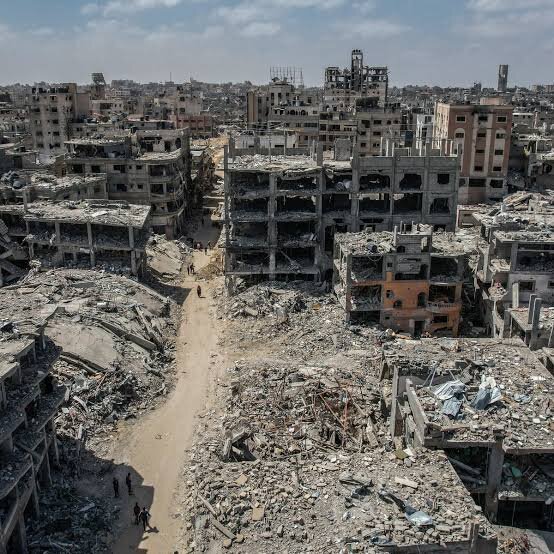
Additionally, extensive destruction from the occupation regime’s shelling has left many areas in ruins, making it difficult to find, retrieve, and identify bodies buried under the rubble.
The Palestinian Resistance Movement has previously said that recovering the remaining bodies could take time because not all burial sites were known.
Further complicating matters, some of the groups may be located in the Gaza Strip, which is not currently controlled by Hamas. Most of the Gaza Strip, the area behind the so-called “Yellow Line”, is still occupied by Israeli forces.
Hamas’ militant group Al-Qassam Brigades said it had returned all bodies it could reasonably recover and would need special equipment to hand over the remaining bodies.
However, Israeli occupation forces continue to maintain a stifling siege of Gaza, severely restricting the entry of humanitarian aid, not to mention the heavy equipment needed to clear rubble and search for the bodies of Palestinians and prisoners of war.
It is in Hamas’ interest to return the bodies of prisoners of war. In return, the agreement stipulates that occupation forces will hand over the bodies of Palestinians abducted and murdered during the genocide.
Regional mediators have warned occupied Israel that renewed violence could undermine a fragile ceasefire and urged it to refrain from restarting its genocidal war. On Tuesday, US Vice President J.D. Vance also called for “patience” given the difficulties in recovering the hostages’ bodies. “Some of these hostages are buried under thousands of pounds of debris. Some of the hostages don’t even know where they are,” he said.
U.S. officials acknowledge that the Gaza massacre has left their staunchest ally in West Asia isolated on the international stage.
The International Committee of the Red Cross (ICRC) echoed these concerns, stressing that finding bodies amid the widespread devastation in Gaza is an enormous challenge. “It’s an even bigger challenge than releasing people alive. That’s a big challenge,” said ICRC spokesperson Christian Kardon.
The ICRC has previously said recovery and handover of prisoners’ bodies could take weeks and warned that given the scale of destruction inflicted on Gaza, some bodies may never be found.
On Wednesday, a spokesman for the al-Quds Brigades, the Palestinian Islamic Jihad militant group, confirmed the resistance movement’s commitment to the ceasefire, saying: “We announce our full commitment to the ceasefire and will monitor the enemy’s compliance with the terms of the agreement.”
While there are clear signs of commitment to a ceasefire from the Palestinian side, the Israeli occupation continues to operate with a decades-old mindset rooted in war and aggression against Palestinians and the wider region. It is clearly in Prime Minister Netanyahu’s best interest to resume an indiscriminate bombing campaign to appease the widespread Nazi-like Israeli mentality.