
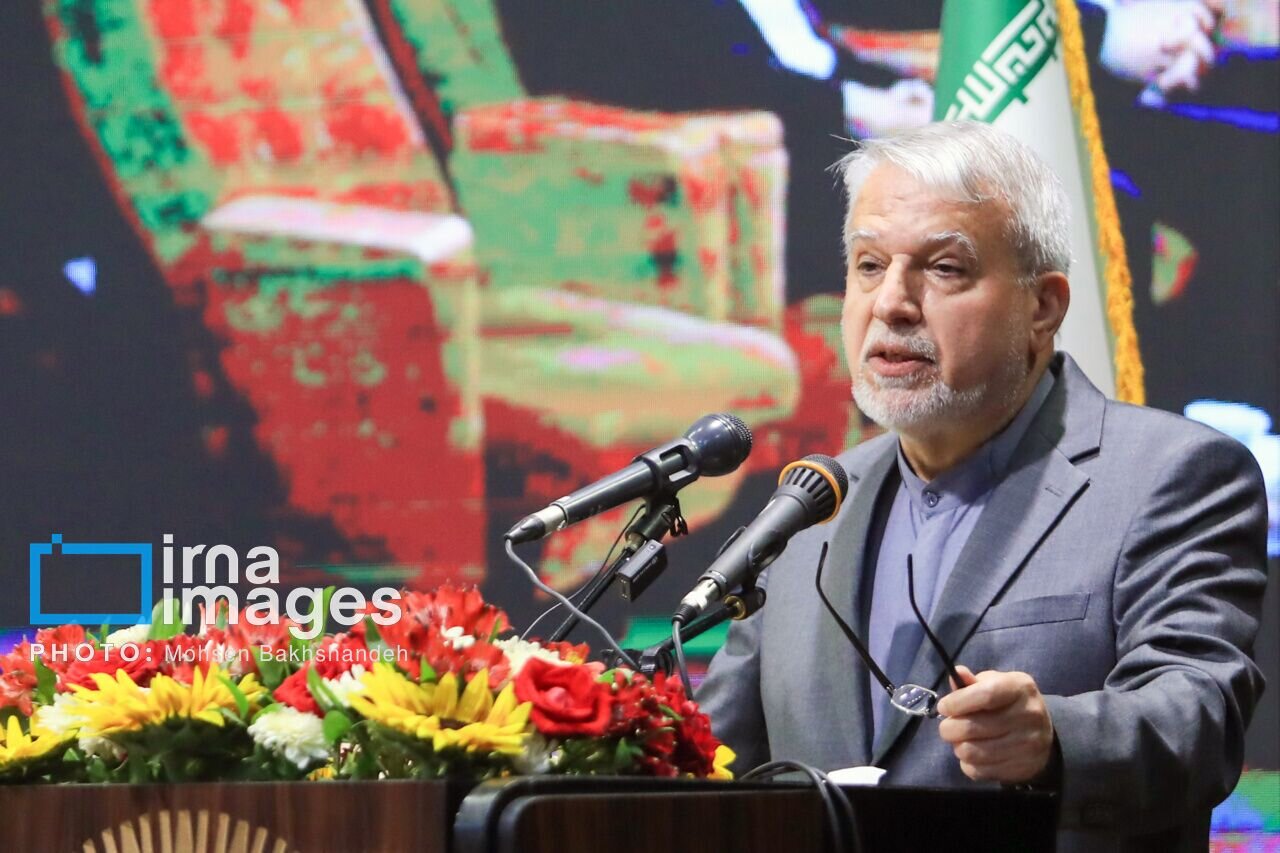
TEHRAN – Iran’s Minister of Cultural Heritage, Tourism and Handicrafts said on Wednesday that Iranian ambassadors from neighboring and friendly countries can play a role in attracting more tourists to the Islamic Republic.
Speaking at a regional conference on regional diplomacy in Mashhad, Seyed Reza Salehi Amiri said tourists from Central Asia, the Caucasus, Turkey, Pakistan, and the Persian Gulf countries from Iraq to Saudi Arabia are interested in visiting Iran.
He added that Iran is also focused on attracting visitors from China, India and Russia as its main target markets.
The minister said that based on Iran’s Seventh National Development Plan, Parliament (Majlis) has approved five tourism incentives and related regulations are being prepared. He said the new incentives could bring big changes to the sector.
For example, Salehi-Amiri said investors across the country are now allowed to build complexes that combine residential and hotel facilities. He added that the government has approved duty-free and duty-free import of 200 essential items for hotels.
The minister told reporters on the sidelines of the event that Iran hosts about 1.2 million medical tourists annually, generating about $2 billion in revenue. He said the plan is to increase its visitor numbers to 2 million and reach $6 billion in revenue.
He said the government aims to strengthen tourism and economic cooperation by making border crossings more active in (border) provinces such as Kermanshah, Ilam and Khorasan. He gave the example of a 400-bed hospital in Abadan that receives medical tourists from Basra, Iraq, every day, and similar operations in Kermanshah and Tabriz.
The two-day conference opened in Mashhad on Wednesday with two expert panels on economic, commercial, investment and free zone cooperation, and a panel discussion on linking national and regional economies through new knowledge-based technologies. The conference brought together 12 Iranian ambassadors to neighboring countries, national and local chamber of commerce officials, and a number of foreign ministers.
The event aims to showcase the capabilities of the Northeastern states, assess the supply of essential goods from neighboring countries, and explore ways to expand trade and economic ties with regional partners.
Iran strives to gain wealth from its numerous tourist attractions, including bazaars, museums, mosques, bridges, baths, madrassas, mausoleums, churches, towers, and mansions, of which 29 single or sequential sites are included in UNESCO’s World Heritage List.
morning