
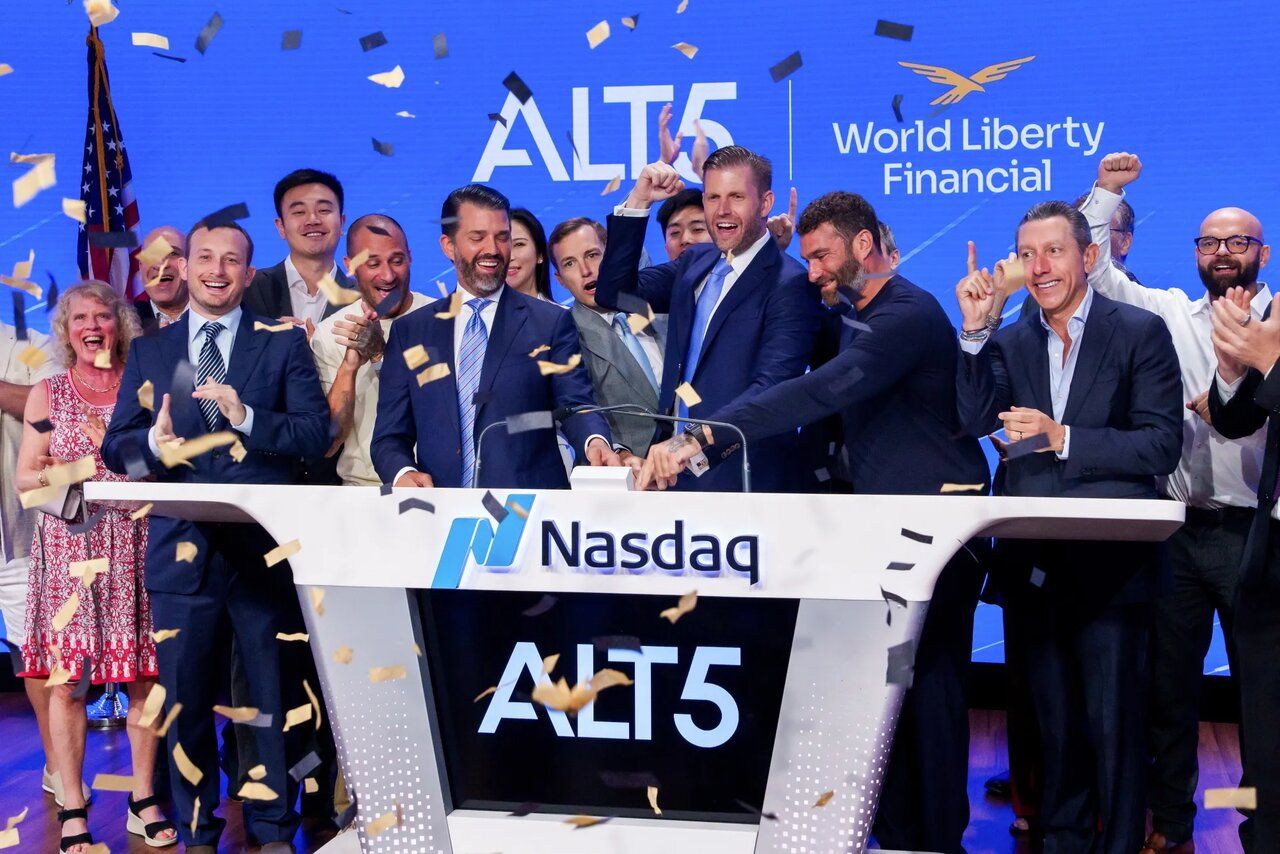
TEHRAN – The U.S. Department of the Army’s recent purchase of 3,500 drone motors and related parts from Unusual Machines, a company in which Donald Trump Jr. owns roughly $4 million in stock and serves as an advisor, has increased scrutiny of what critics call an administration increasingly comfortable turning policy to personal gain.
The Army has indicated it may order 20,000 more parts next year, highlighting the company’s rapid growth.
There was a dramatic aspect to the rise of Unusual Machines. The company gave Trump Jr. more than 330,000 shares, worth about $4 million, and publicly unveiled the components at a Mar-a-Lago demonstration after he joined as an advisor.
When his association was made public, stock prices soared. Ethics experts and watchdog groups say the proximity of the family’s investment and procurement decisions makes perceptions of impropriety inevitable.
The drone trade is not an isolated episode but part of a broader pattern of influence and transactional governance that unfolds across regimes.
Treasury Secretary Scott Bessent’s $40 billion stabilization package for Argentina sparked anger among Trump supporters, many of whom saw it as a betrayal of America First policies.
The trade, which exchanged U.S. dollars for Argentine pesos, yielded little profit for ordinary Americans, but a huge profit for billionaire hedge fund manager Rob Citron, Bessent’s longtime friend and former colleague at Soros Fund Management.
Citron had invested heavily in Argentine bonds and stocks linked to President Javier Millei’s austerity measures. CPAC operatives, including Matt Schlapp and Tactic Global, arranged meetings with Milley, Citron, and U.S. officials, demonstrating a close relationship between political influence, private interests, and foreign lobbying.
Similarly, the White House pardon of Binance founder Qiao Changpeng and the emergence of the Trump family’s World Liberty Financial (WLF) stablecoin (USD1) reveal a surprising convergence of deregulation and private enrichment.
According to the report, a $2 billion investment from the UAE, along with a U.S. dollar boost to U.S. AI chip sales (a deal said to have been brokered by Trump’s envoys and close family members) preceded a favorable policy shift, culminating in a pardon for an executive whose company once paid a $4.3 billion fine.
Observers describe a clear pattern of market access, political access, and policy remedies that benefit private interests.
Chip and cryptocurrency trading this summer deepened the entanglement of public affairs and private interests. In the Mediterranean, President Trump’s Middle East envoy Steve Witkoff met with the UAE’s Sheikh Tahnoun on a superyacht off the coast of Sardinia. Sardinia is an Italian island that has long been known as a playground for the world’s elite.
The meeting emphasized the increasing integration of diplomacy and business. Months later, the White House moved to ease export restrictions on advanced AI chips to Emirati companies linked to Sheikh Tahnoun’s G42.
Family advisers, Group of 42 executives, and White House technical aides played overlapping roles as negotiations progressed, creating a web of commercial and diplomatic interests that ethics rules would have blocked.
There were potential conflicts with key insiders who helped broker the deal, but it was formally tolerated rather than prohibited. David Sachs, the administration’s AI and cryptocurrency czar and longtime venture capitalist, received an ethics exemption to participate in chip negotiations despite his previous fund ties to Persian Gulf investors. Witkoff initially insisted that his son was withdrawing from World Liberty, even though he had publicly kept his investments in cryptocurrencies private.
After key national security officials were fired amid external upheaval, dissent within the White House was overruled and officials who tried to tighten security measures were removed, The New York Times reported.
Taken together, these episodes paint a picture of a Washington in which governance, national security procurement, and international finance are increasingly conducted through personal relationships and private interests.
For a president who campaigned on the idea of ”draining the swamp,” this pattern reads more like a systemic erosion of norms — rules that were supposed to protect the public interest, bending under the weight of family wealth.