
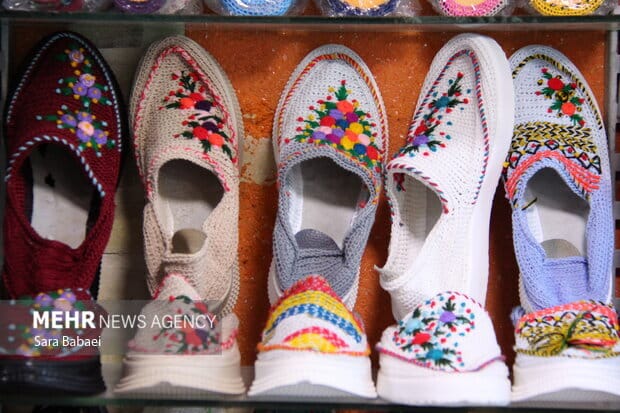
TEHRAN – Art flows from small workshops to bustling alleys in Marivan, Kordestan province. Handicrafts, from gibbehs and shawls to woodwork, are more than just souvenirs, they are expressions of the region’s people’s identity and aesthetics.
According to Mair news agency, the show will not only take place on a stage in an alley in Maliban. Every home, every workshop, every market is a stage for life and art. Recently, attention has been focused not only on theater, but also on the hands of artists who create culture and memories from wood, thread, and wool.
Cultural events can be a driving force for tourism and local economies, especially in provinces like Kordestan, where authentic and diverse handicrafts are woven into people’s lives. The presence of artists and tourists in Maliban is an opportunity to connect art, business and local identity.
The 18th Maliban International Street Theater Festival will be held from October 26th to 30th with various categories including public competitions, children and youth, traditional ceremonies, international, performance, environment, and educational workshops. Domestic and international artists and tourists can take advantage of the opportunity to visit Maliban to watch this festival and are invited to take home souvenirs and handicrafts from this city.
To buy Mariban souvenirs, visit the Mariban border market, Zaribar Lake local market and Bashmag border market. If you’re a fan of traditional musical instruments, the best ones are made by artists from the region, as duffs and tambours (long-necked stringed instruments) are famous handicrafts in Cordes.
Cordestan woodwork is very eye-catching. Woodworking means making practical and artistic tools from beautifully carved and colored wood with great grace and precision. Our job is to veneer wood based on desired designs and patterns, and finish delicate, thin wood products with precision and beauty. Kordestan backgammon is also famous.
The handicrafts produced in Maliban are very diverse, but their artistry and originality more or less serve the needs of local clothing and consumption. The most important of these products is the Janamaz (prayer rug), which is made of wool and sold.
Lake Zaribar is located northwest of Mariban. Next door is a swamp filled with reeds, and the locals use these reeds to weave bamboo baskets. Mat weaving is mainly done by women.
Gib (kalash) made of cotton and thread is also famous. It is lightweight, warm in winter, cool in summer, prevents unpleasant foot odor and sweat, and is highly durable. This art inspired the city of Mariban to be registered as a Kalash (Giveh) World City in 2017. They also make a type of woolen coat or vest called a “farge” from very warm wool. Wool-related handicrafts such as moji weaving (cloth weaving) and kilims are generally popular in Kordestan. Moji is a type of thin woolen fabric made with a checkered design and warm colors, especially red. This fabric is mainly used for bed covers and blankets.
The inhabitants of the Kordestan region weave this work of art using twisted and colored double-thread wool for the weft and cotton thread for the warp. The most common kilim weave in Kordestan is a slit weave with a curved and delicate structure.
Hat weaving, jazim weaving, shawl weaving using sheep’s wool and wool, and weaving of woolen fabrics sewn together to make local Koldish dresses are also handicrafts of the region.
Tourism activist Emami says, “I once led a tour of European photographers and anthropologists to Iran. They were traveling through different provinces, and Kordestan, the hospitable people, the terraced villages, the rituals, the music and rhythmic movements, and the Kordisk costumes were so fascinating and exciting to them.” “You can easily organize a half-day tour for your guests to visit workshops in nazoku kali (the art of making very delicate objects from wood), shawl weaving, and moji weaving, creating an attraction of sorts. People come to see the artists and their workshops up close, see how they really live, and are treated to traditional drinks and food, which they enjoy, buy from, and introduce themselves.”
KD