
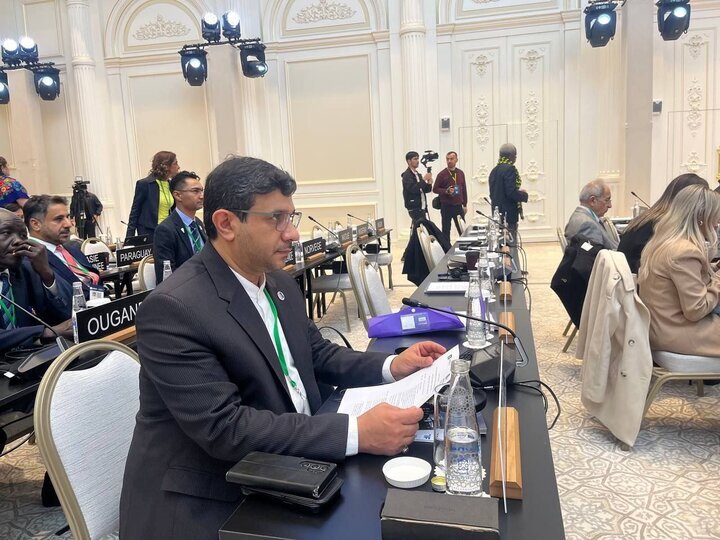
TEHRAN–The 12th Interregional Conference of the National Commissions for UNESCO was held in Samarkand, Uzbekistan, attended by the Secretary-Generals and representatives of the National Commissions from all over the world.
According to Mehr News Agency, Hassan Fartusi, Director-General of the Iranian National Commission for UNESCO, attended the conference as the official representative of the Islamic Republic of Iran and participated in four specialized meetings and multilateral consultations on the future of cooperation between UNESCO and member states.
At the outset of the meeting, UNESCO Assistant Director-General for External Relations, Mr. Shin Khoo, welcomed the Secretary-General and emphasized the importance of the role of national commissions in advancing the organization’s mission in the fields of education, science, culture and communication.
Also, Ernesto Ottone Ramírez, UNESCO Under-Secretary-General for Culture, Lydia Arthur Brito, UNESCO Under-Secretary-General for Natural Sciences, and Tawfik Gerassi, UNESCO Under-Secretary-General for Communication and Information, presented their views on global challenges and opportunities in the fields of culture, science, communication and sustainable development, and emphasized the need for continued interaction between national commissions and the UNESCO Secretariat.
The conference took the form of four specialized sessions, each dedicated to considering strategic issues. The connection between cultural people and their communities in the digital age. The role of national commissions as strategic allies of UNESCO. and share experiences and best practices in the areas of building inclusive societies and promoting sustainable development. The Director-General of the National Commission for UNESCO made speeches and expressed his views within the allotted time.
During the meeting, Mr. Fartusi underlined the role of national commissions as strategic allies of UNESCO, stressed the need to strengthen regional and interregional cooperation among national commissions, and emphasized the role of these institutions in achieving the Sustainable Development Goals and expanding cultural dialogue.
It also expressed Iran’s support for the resolution proposed by Kazakhstan on the role of the National Committee.
Despite these challenges, the Iranian National Commission for UNESCO continues on the path of promoting a culture of peace with determination and perseverance and remains committed to the realization of UNESCO’s goals, values and ideals.
Over the past year, Iran’s National Commission for UNESCO has strived to expand the network of UNESCO Chairs at universities in the country and strengthen cooperation with Category II centers.
Additionally, Iran’s network of creative and learning cities is being developed and becoming more coherent, and these networks play an important role in promoting a knowledge-based, resilient and inclusive society.
In addition to these measures, the structure and functioning of the National Expert Committees, consisting of the most eminent experts from the different areas of UNESCO’s mission, have also been strengthened, further strengthening the scientific and intellectual basis of the Commission’s programs and playing a more effective role in achieving UNESCO’s goals at national and international level.
Furthermore, with the valuable cooperation of our esteemed colleagues at UNESCO Headquarters (Paris), serious steps were taken to restructure and organize the network of UNESCO clubs and associations in Iran. This includes bringing qualified NGOs into this network and amending licensing regulations and monitoring systems to ensure that the activities of these clubs continue in a professional and effective manner.
At the regional level, Iran’s National Commission for UNESCO has deepened its cooperation with other national commissions, especially at the regional level.
Among the joint actions can be mentioned the preparation of joint instruments for inscription on UNESCO’s lists and programs, which will help strengthen intercultural dialogue and protect the common heritage.
Mr. Fartusi said: “As we discuss this interregional meeting, let us reaffirm our shared belief that national commissions are the basis of UNESCO’s existence and effectiveness at the national level. Through our cooperation we can translate UNESCO’s high ideals into concrete actions, thereby strengthening its impact on the lives of people around the world. We are confident that we will have strong and sincere support from the new Director-General Khalid El Enany.”
KD