
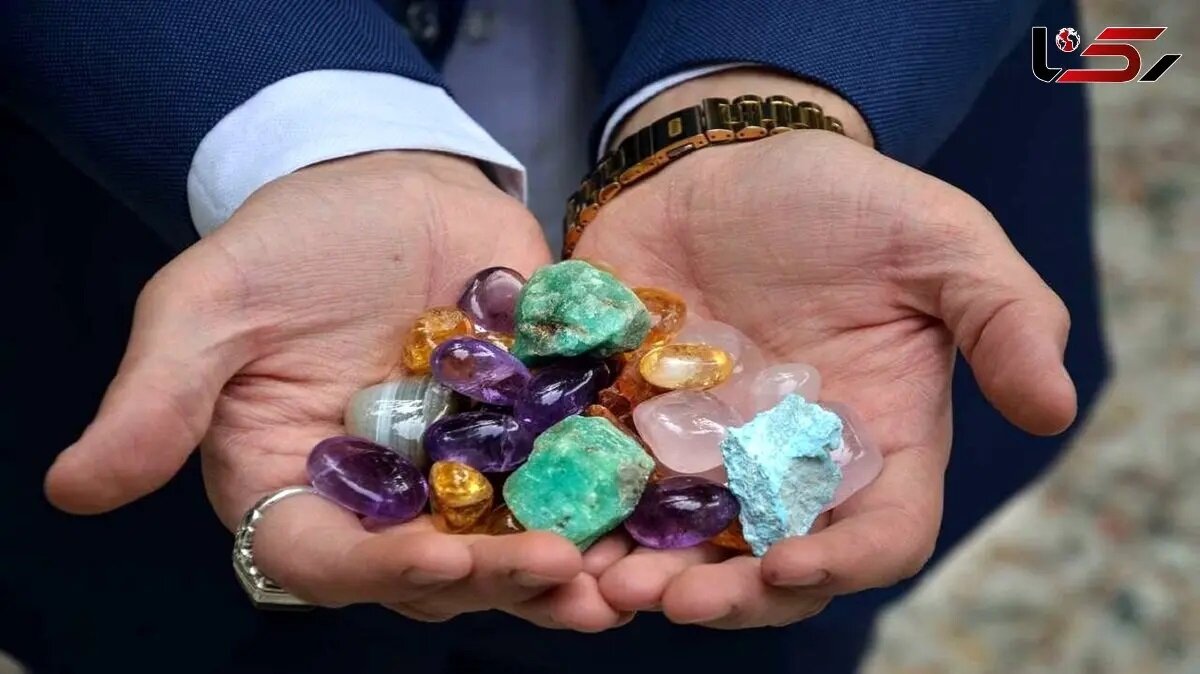
TEHRAN — Precious and semi-precious stones are today not only hidden treasures of the earth, but also a source of employment and income for Sistan-Baluchestan province. There, art, hard work, and a little capital transform inanimate stones into valuable works of art.
According to IRNA, among the various home-based jobs, cutting precious and semi-precious stones is one that can be started in a small space at home with minimal costs and capital. With basic tools and a little skill, you can produce decorative stones and turn your flair and creativity into sustainable capital.
Gem carving is one of the jobs that can provide low-cost employment to young people in various fields such as exploration, production, trade, and even export.
Iran has a large production capacity for these stones, and if properly processed, the added value can increase several times. It provides sustainable employment and significant income to the country.
Even today, jewelry and stone carving arts have many fans, and stable income and high foreign exchange earnings are one of the reasons for the growth of this industry. Jewel carving, which combines art and technology, has become one of the wealth-generating art fields, attracting more and more people day by day.
The province of Sistan-Baluchestan enjoys a special status due to its mining and other benefits. Home to a variety of metal and non-metal mines, the state has been called the “mining rainbow” of the country, and the region’s pristine and extensive mines have provided great capacity for the development of mining areas and related industries.
In recent years, due to the implementation of exploration projects in Sistan-Baluchestan, many young people have realized this ability and turned to skills training and the establishment of stone cutting workshops. Stones such as salt crystals, red agate, blue agate, Soleimani agate, lapis lazuli, and jasper are among the most important gemstones found in the state’s mines.
Today, the sounds of semi-precious stone cutting machines and power tools whisper in small homes and educational workshops in different cities of Sistan-Baluchestan province, speaking of jobs, income and hopes for a bright future for young people.
“I have been in the field of jewelry making for the past four years, working in the field of cutting precious and semi-precious stones,” Taha Abbasyan, a jewelry cutting entrepreneur from Zahedan, said about his activities in the field of gold and silver jewelry.
“I started by carving precious and semi-precious stones, but then I had to learn how to make silver and gold stirrups in order to complete the idea and realize the desired design,” he said.
Mr. Abbassian said, “Sistan-Baluchestan has a beautiful cultural heritage and I tried to combine this authentic and local art with jewelry making to create more diversity and charm.”
Referring to the importance of creating a bazaar for the sale of handicrafts, he continued, “The establishment of a bazaar for the sale of artefacts, especially the opening of a new bazaar in Zahedan, will have a great impact on the flourishing of artists’ works. Moreover, we will use the capabilities of cyberspace to showcase and sell their works.”
Abbassian added, “I exhibit the jewelry I make at exhibitions, and some of it is also sold in other cities. Usually friends and visitors see the pieces and buy orders.”
“Most of the stones I cut are available in different sizes and are welcomed in big cities due to their new styles and special designs. These stones are used to make different types of jewelry such as rings, earrings, bracelets, textiles, and even in the design of clothing.”
“In the past, I was a gemstone cutting instructor and taught about 60 students in the field of jewelry making. There is great potential for growth in this field, and those interested can be creative and find a path to success.”
The gem-cutting entrepreneur stressed that if the authorities support artists by purchasing their products and showcasing their works, it will increase the encouragement and motivation of artists.
Mr. Abbassian further said, “If the authorities support this art, it will create suitable employment for young people. The processing of precious and semi-precious stones is very delicate and attracts people’s attention. If special and exemplary designs are presented, it will provide a good job market for activists in this field.”
Jahad Daneshgahi (Academic Center for Education, Culture and Research) is one of the institutions actively engaged in training in gem cutting techniques in Sistan-Baluchestan province. According to Mahdi Keshtegar, deputy chief of Jahad Daneshgahi of Sistan-Baluchestan province, stone cutting courses and training in the handling of decorative stones are among the educational courses of the institution that were implemented to provide employment opportunities and a good labor market in the province.
Keshtegar added that students of the Jahad Daneshgarhi training course can take advantage of employment facilities to enter the labor market and start their activities after completing the course.
He said that three courses and three stone cutting workshops have been held in Sistan-Baluchestan province, and these courses are still ongoing.
“Our colleagues in the education sector are busy establishing educational complexes in Zahedan and Chabahar cities so that people can benefit from this capacity.”
Kestegar added: “There are three active workshops in Zahedan, and around 20 people are being trained in each workshop. In total, around 900 people have been trained in this field in Sistan-Baluchestan, and the majority of them were able to enter the labor market and find jobs after completing their courses.”
KD