
TEHRAN – On Saturday night, the Indian Embassy in Tehran held a cultural event at the Indian ambassador’s residence to celebrate Diwali, also known as the Festival of Lights, attended by diplomats, Iranian artists and cultural figures.
Guests were introduced to elements of traditional Indian culture, including symbolic decorations, music and local dance performances. The event also gave a glimpse of India’s traditional fireworks and folk traditions associated with festivals.
In his opening remarks, Ambassador Rudra Gaurav Shreth said Diwali is one of the most important festivals in India and is celebrated across regions and communities.
“Diwali is perhaps the most important festival in the Indian calendar.” India is truly a land of festivals, and every region, community and faith has its own rich celebratory traditions, the Ambassador said.
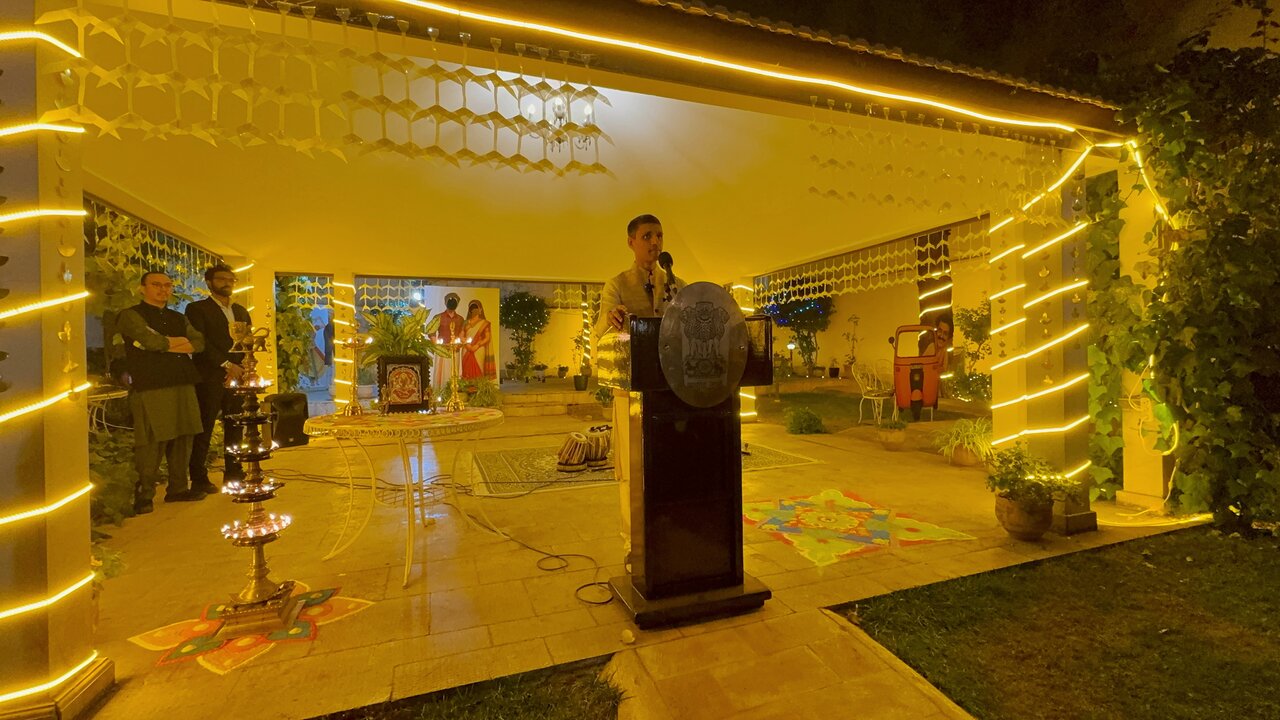
Rudra Gaurav Shres, the Indian Ambassador to Iran, addresses attendees during the Diwali celebrations at his official residence in northern Tehran on November 1, 2025.
He added that the festival has deep meaning for Indians and can be compared to Christmas in Western societies in terms of its cultural importance. “This is a celebration of light and all that it represents: hope, knowledge, goodwill and the victory of light over darkness,” he said.
Explaining the origins of the festival, the ambassador referred to the ancient Indian epic Ramayana, which depicts the return of Prince Rama to his kingdom after defeating the demon king Ravana and rescuing his wife Sita. Diwali marks the day of Rama’s return and is traditionally celebrated by lighting oil lamps.
In response to a question from Tehran Times about possible similarities between Diwali and one of Iran’s festivals, the ambassador said:
“Diwali is in many ways similar to Chaharshanbe Suri, one of the ancient festivals of Iranians.”
According to him, both festivals symbolize the victory of light over darkness, joy over sadness and hope for a better future.
morning