
BEIRUT — Although U.S. foreign policy has long been hailed by the U.S. government as a beacon of democracy and human rights, it is actually a carefully designed system of global corruption and control.
From imposing economic embargoes to orchestrating political chaos, the United States has consistently forced nations to serve its strategic interests while cloaking exploitation under the rhetoric of freedom.
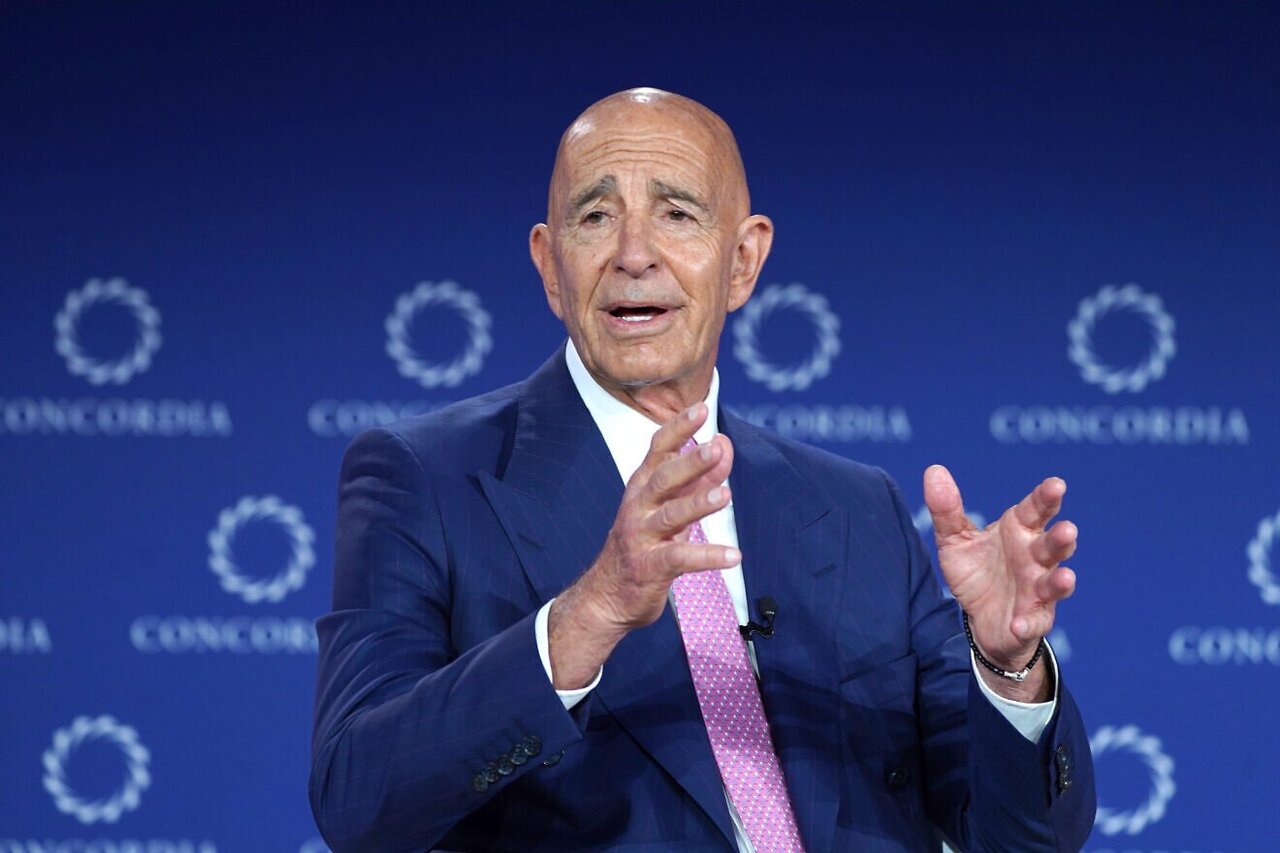
Now, Thomas Barrack, the US special envoy to Syria, has added Lebanon to this narrative, labeling it a “failed state.” This argument ignores decades of U.S. interference, the resilience of the Lebanese people, and the vital role of regional allies in defending the country’s sovereignty.
Lebanon, a small country that has resisted every attempt at conquest from the French mandate to Israeli occupation, has been a testing ground for dirty American policies that seek to impose an aura of guardianship and obedience on the nation.
When Mr. Barrack describes Lebanon as a “failed state,” he is actually replaying an old narrative from 70 years ago, dating back to when Marines landed in Beirut in 1958 in the name of “protecting democracy” under the Eisenhower Doctrine.
This principle was established to contain the Arab nationalist movement led by Gamal Abdel Nasser, and effectively served as a pretext for subjugating the Arab region to American hegemony under the guise of “preventing the Middle East from falling into the hands of communism.” But the ultimate goal remained the same: to protect Washington’s ambitions and protect Israel.
Since then, Washington has never truly left Lebanon – if not with its soldiers, then with its intelligence services, embassies, and the funds that financed corruption and sectarian politics, the Lebanese state has become a paralyzed entity that moves only on signals from its den of US surveillance.
Egyptian mediation: an American farce in disguise
On the other hand, the current attempt at “mediation” in Lebanon via Cairo is nothing but an extension of the same American policy.
Egypt’s mediation, which seeks to expand the “mechanism” to include civilians alongside the military, appears on the surface to be an attempt to resolve the crisis, but is actually a translation of the American-Israeli project aimed at neutralizing the southern resistance and stripping it of its effectiveness.
The real purpose of this so-called “mediation” is to impose a “freeze” on resistance activities south of the Litani River in exchange for a token withdrawal of Israeli forces from five locations.
This mediation is nothing but a means to gradually eliminate Lebanon’s sovereignty and transform it into a field of influence shared by Washington and Tel Aviv. The United States’ insistence on calling Lebanon a “failed state” and demanding the disarmament of resistance groups paves the way for a settlement that imposes a new balance of power that serves Israel’s plans.
Activation of hegemony
In her book Notes from the Minefield: U.S. Intervention in Lebanon and the Middle East, 1945-1958, Erin Genger meticulously documents how the United States intervened militarily and politically in Lebanon, not to protect “democracy” but to ensure oil pipelines and continued U.S. influence in the Mediterranean.
Agnes Corbani, in her study “U.S. Interventions in Lebanon: 1958 and 1982: Presidential Decision Making,” explains that the decision to intervene in Beirut was part of a broader Cold War strategy aimed at undermining true Arab independence.
And in his book American Diplomacy with Lebanon: Lessons from Foreign Policy and the Middle East, former US Ambassador David Hale reveals that the US government has treated Lebanon since independence as an instrument of regional pressure, giving it conditional aid and cutting it off whenever it deviates from the US path.
All this proves that those who today describe Lebanon as a “failed state” are the very same ones who created such a situation, imposed a financial and economic blockade, and blocked non-US aid, especially from Iran and Russia.
The Lebanese army, supposed to be the linchpin of sovereignty, has been stripped of its capabilities by continued American pressure to keep it from having any real military presence outside the Western system. The US government has refused to recognize Lebanon’s military independence, even though Iran has offered to supply weapons and oil derivatives that could ease the crisis in Lebanon.
Moreover, it exposes the American formula based on keeping Lebanon weak in order to maintain the security of the Zionist regime Israel. As Eisenhower once said, “The enemy must be outside the walls,” and by “enemy” he meant those who refused to submit to American interests.
Perhaps the most obvious irony is that Washington, which speaks of a “failed state,” is itself a corrupt state. There is no effective health care system, crime and drugs are rampant, there are occasional deadly mass shootings, prisons are filled with Africans and Latinos, and there is racism against non-whites.
From Vietnam to Libya, Syria, Yemen, Iraq and Afghanistan, countries wage war and destroy people in the name of freedom. Since independence, the United States has fought more than 100 wars and intervened in the affairs of more than 50 countries.
How America’s false mediation enabled the persecution of Bahraini opposition leaders
If Iranian diplomats had described Lebanon as a “failed state,” all hell would have broken out and we would have seen international and Arab statements issued accusing the Iranian government of meddling in Lebanon’s affairs and “violating its sovereignty.” However, if the statement is from an American official, it is a “clear opinion” and a “realistic assessment.”
This is a diplomatic hypocrisy that exposes the submissiveness of Arab regimes that have completely lost any sense of dignity and sovereignty.
Normalization with Zionist entities further enslaved these regimes to Washington and Tel Aviv, transforming them from state entities to security tools dutifully carrying out their orders.
When an American official speaks from Manama, the capital of Bahrain, which joined the wave of normalization under the Abraham Accords, about Lebanon’s “failure,” he is in fact repeating the same condescending rhetoric that allowed Arab client regimes to oppress their people and imprison their opponents under the umbrella of unconditional American support.
Take, for example, Sheikh Ali Salman, the Bahraini opposition leader who was wrongly imprisoned and sentenced to life in prison on charges of “espionage for Qatar.” The accusations came after Washington itself claimed to be acting as a mediator during the 2011 Bahrain crisis, in which peaceful protesters demanded political reform.
At the time, the US administration “called for dialogue” and “protected stability.” However, when the Bahrain regime decided to crack down on the rebels and arrest Sheikh Salman, Washington did nothing. In fact, Bahrain supported the regime and remained silent about all violations simply because Bahrain is a base for the US 5th Fleet.
The Sheikh Salman case encapsulates the essence of the relationship between the United States and client regimes. The US government has declared “mediation” to entrench tyranny, turning a blind eye to repression as long as the regime serves its own interests.
This same duplicity is being practiced against Lebanon today. Lebanon says it will pursue reforms while imposing sanctions and blocking economic and political solutions outside its sphere of influence.
To make matters worse, Washington is now trying to misappropriate the real rescue effort. When Iran offered oil and aid to Lebanon at the height of its crisis, Washington blocked it without offering an alternative that would alleviate the suffering of the Lebanese people. And when Russia offered military and technical support to the Lebanese army, Washington immediately intervened to block the deal under the pretext of “sanctions.” It was not Washington that saved Lebanon from collapse, but rather Iranian support and resistance that prevented Lebanon from falling into Israeli hands.
As history teaches us, as long as there are people in Lebanon who say no, who take up arms against occupation and refuse normalization and submission, this country will not be a failed state, but a vibrant nation that lives with resistance and dignity and stands up to the most corrupt empire in history, the United States.