
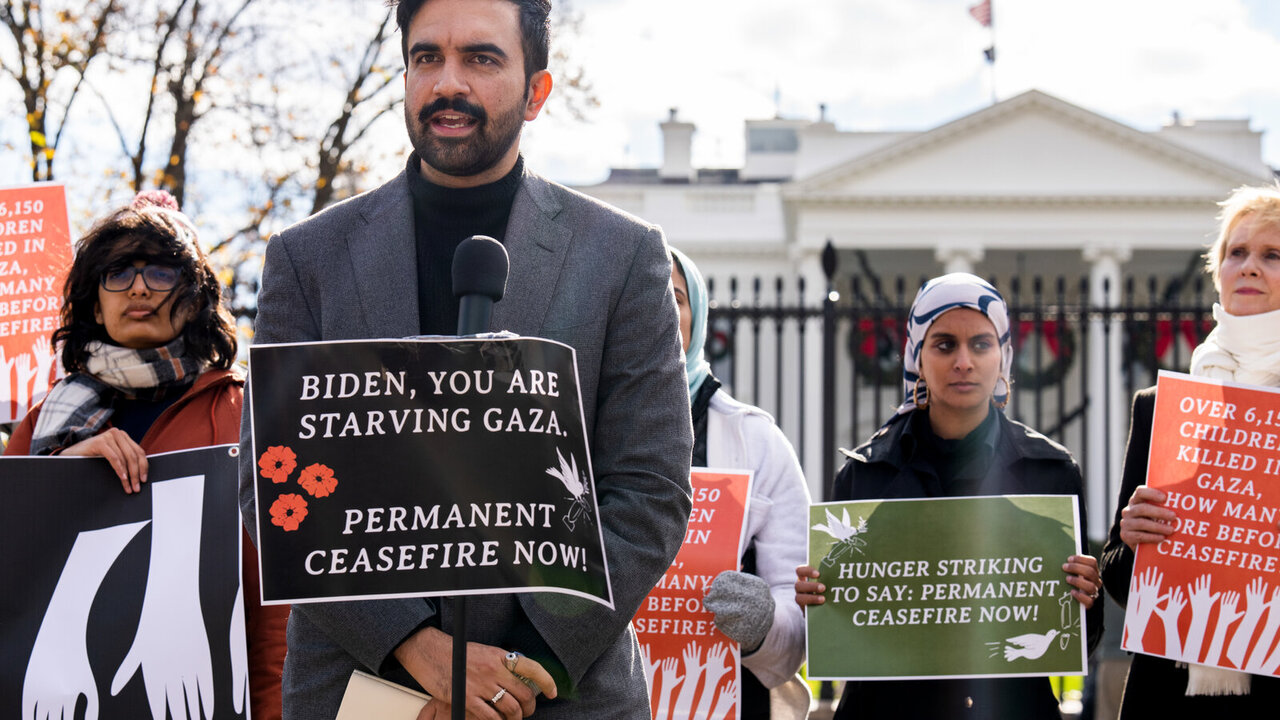
TEHRAN – Zoran Kwame Mamdani, a Ugandan-Indian Ugandan-born son of a postcolonial scholar, has accomplished what the intelligentsia thought impossible. His campaign brought the once-distant politics of Gaza into the center of New York’s mayoral race, forcing voters to decide whether American power remains accountable.
Mamdani’s blunt words – “We are on the brink of genocide against Palestinians in Gaza” – did not appear in the ivory tower debate. It made its way into subway stations, viral clips, and the homework assignments of floating voters.
That moralistic naming is why his rise was so important, and why there was an immediate backlash.
By repeating phrases like “If I were mayor, the NYPD would arrest Netanyahu” and “It’s important that New York City abides by international criminal law,” Mamdani suggested that his politics were not just about rhetoric, but about using power in ways that upset the system.
What happened next looks less like a policy disagreement and more like a coordinated strategy to accommodate others. The AI-generated attack ads, some of which were quickly removed, were widely seen and depicted Mamdani supporters in criminalized and racist terms. Civil rights groups denounced it as racist and dangerous.
This is old-school Islamophobia in a new guise: code words, manufactured fear, and now AI that amplifies lies.
At the same time, President Trump publicly labeled him a “communist” and threatened to cut federal aid to New York state if Mamdani wins, a move that turns the city council race into a constitutional skirmish.
Opinion polls show Mamdani leading into election day with turnout among under-45s and a coalition of Muslims, Arabs, young progressives and disillusioned working voters who care as much about rent, transportation and child care as foreign policy.
But popularity is not the same as power. Rather than unilaterally halting arms shipments or rewriting foreign policy, mayors can use procurement, divestment, and moral pressure, and pretending otherwise rewards tactical retreat and chills political courage.
Mamdani turned the New York mayoral race into a test of moral courage. Can the city use its powers—contracts, divestment, sanctuary—against collusion, or will entrenched political and financial forces bend principles to performance?
The dispassionate left must hold two truths simultaneously. First, Mamdani injected moral clarity at a time when many in the party were making platitudes. If naming a genocide shocks the country and engages it in debate, that is a strategic advantage.
Second, the history of the left includes a parade of rhetorically brave figures, such as Sanders, AOC, and other members of the Squad, whose supposed courage evaporates when tested, leaving only histrionics and habitual compromise.
Criticism of Israel, conditional aid, and BDS is a valid position. Converting them into lasting policies requires sustained organizing and a willingness to use power, not just language. Words are wind. Policy is the millstone that guides them toward change.
Sometimes the opponent made a tactical mistake. Mamdani’s earlier refusal to disavow specific provocative slogans has given his opponents a perfect opening to confuse criticism of Israel with support for violence.
The ensuing walkback (which discouraged inflammatory speech and promised to protect Jewish New Yorkers) may have seemed politically necessary, but it revealed how moral clarity can easily become a political liability. Leftists should not demand martyrdom or accept dilution as inevitable. We must sharpen our strategies rather than surrender principles.
The broader story is a structural one. In Gaza, young Jews and Jewish progressive organizations campaigned for Mamdani, as old party loyalties loosened and organizations tied to the Israel lobby mobilized in opposition.
If Democrats cannot move from rhetoric to actual influence, such as conditional aid and increased pressure on Congress, they risk losing the very basis for their moral consistency.
Now comes the crux of the problem. Mamdani is neither a saint nor a savior. He is a test case. If he wins and governs based on principles and pragmatic coalition building, his government could serve as a model for municipal cohesion to curb collusion.
If he retreats into comfortable compromises that have desensitized other progressives, the Gaza Strip will miss yet another tipping point for the American left.
Worse, just as the American empire has historically undermined left-leaning experiments abroad, the political and business establishment may actively seek to fail Mandani-led New York City—by depleting its resources, weaponizing regulations and markets, or setting it up as a warning.
The choices New Yorkers face are bigger than any one person. Will a city known for its immigrant power retain its moral nerve, or will fear and money erase the rare alliance between conscience and politics? Strike while the iron is hot, and return to the forge when the fire has subsided.