
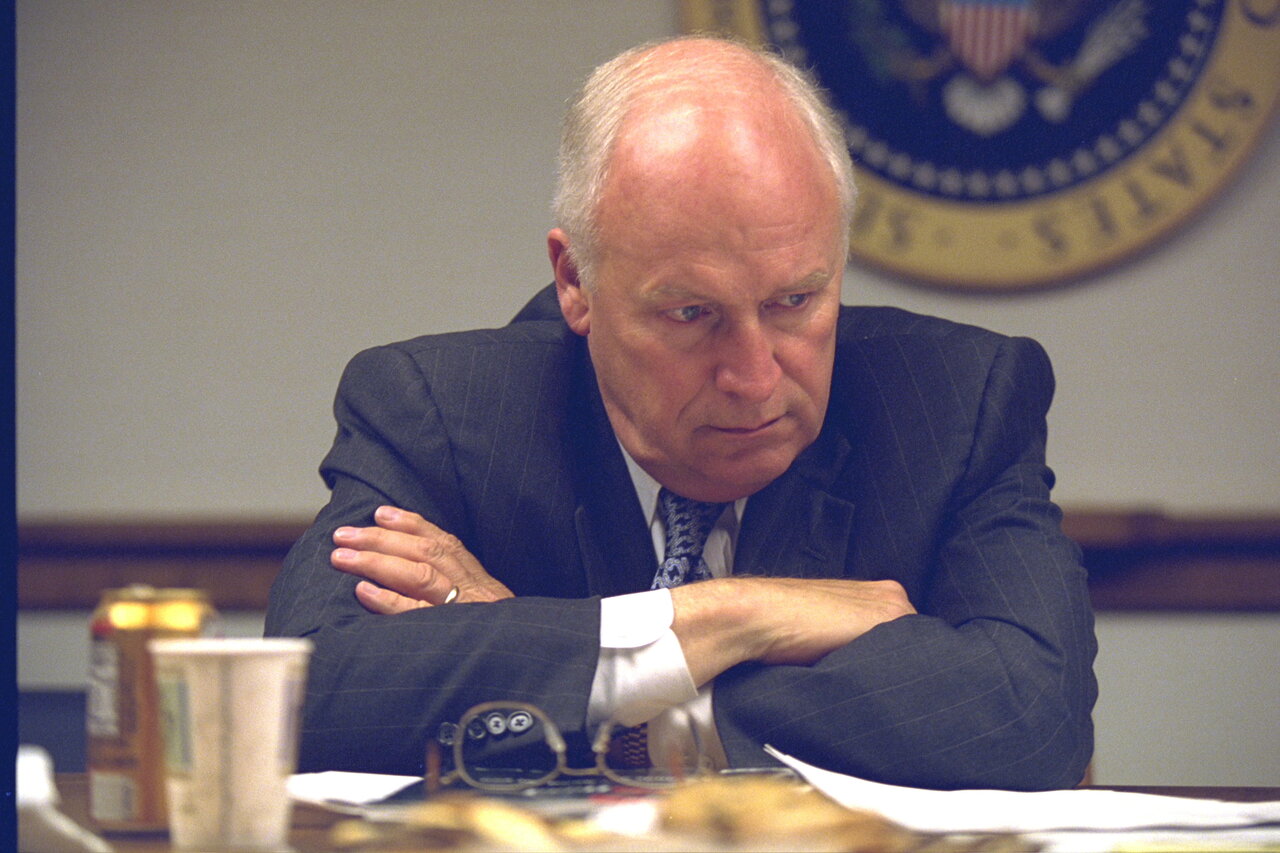
TEHRAN – Former U.S. Vice President Richard Bruce “Dick” Cheney, a hawkish neocon who weaved his ruthless ambition and doctrine into the military-industrial complex and sparked endless wars that profited from genocide and bloated corporate coffers, died on Monday at the age of 84.
His family announced his death on Tuesday, citing complications from chronic heart disease and pneumonia.
Cheney’s death comes amid renewed global conflict, including escalating wars in Ukraine and the Middle East, and reignited debate over a career that left a deep mark on American foreign and domestic policy. To his critics, he was a war criminal whose decisions left scars for generations and enriched corporate alliances.
Born in Lincoln, Nebraska in 1941, Cheney represented the perfect Washington insider. He rose through the Republican ranks as White House chief of staff under Gerald Ford, secretary of defense under George H.W. Bush, and CEO of Halliburton before becoming vice president in 2001. His reputation for secrecy and hard-line tactics led to his detractors labeling him “the worst Dick since Nixon.”
His influence reached its peak on September 11, 2001. Cheney directed the emergency response from a White House bunker and later claimed that President George W. Bush had authorized the fighter jets to be scrambled.
However, the 9/11 Commission determined that his order to shoot down the hijacked plane came too late, after the Pentagon had been attacked and the Twin Towers had fallen. Cheney admitted to allowing United Airlines Flight 93 to crash, but initially believed that the military had brought the plane down, not the passengers who had brought it down in Pennsylvania.
The investigation itself drew criticism. Cheney and Bush jointly testified, off the record and under oath, raising suspicions of evasion.
In the tense months that followed, post-9/11 cleanup operations set the stage for pre-emptive intervention, expanded surveillance, and authorizing covert operations.
Subsequent investigative reporting and Congressional investigations exposed detention and interrogation programs that many legal experts deemed abusive, and the findings became the central moral and legal indictment in the administration’s record.
There is no greater legacy than the Iraq War. On August 26, 2002, Cheney told veterans of foreign wars, “There is no question that Saddam Hussein now possesses weapons of mass destruction.”
This claim was later dubbed “Cheney’s Biggest Lie” and helped propel the 2003 invasion. International legal scholars considered this a war of aggression. Such a weapon was never found.
The toll was amazing. Brown University’s Cost of War Project estimates nearly 929,000 direct deaths across conflicts since 9/11, with millions more indirectly killed by displacement, disease, and infrastructure collapse.
Economically, the war enriched Cheney’s old company. Although Halliburton was still paying in arrears, it secured $39.5 billion in contracts with Iraq, many of which were awarded without competition. Cheney personally benefited from stock options and bonuses, blurring the line between public service and private profit.
Domestically, his impressions were equally controversial. In 2005, he supported the so-called “Cheney Loophole” in the Energy Policy Act, which exempted hydraulic fracturing fluids from the Safe Drinking Water Act.
The measure fueled a natural gas boom, but critics warned it could endanger groundwater, increase methane emissions and cause earthquakes.
Cheney staunchly defended the CIA’s use of torture, including waterboarding (euphemistically named “enhanced interrogation”). Coupled with warrantless surveillance under the Patriot Act, these measures became emblematic of the administration’s broader executive overreach.
Rumors of dark operations persisted. Investigative journalist Seymour Hersh reported in 2009 that Cheney oversaw a CIA “assassination ring” targeting suspected extremists without oversight.
He retired following international condemnation. In 2012, the Kuala Lumpur War Crimes Commission found Cheney and Bush guilty in absentia of crimes against peace, humanity, and torture. That same year, he canceled a speech in Toronto due to fear of arrest under Canadian law.
By the end of President Bush’s term, Cheney’s approval rating had fallen to less than 20 percent, and many critics saw him as the embodiment of secrecy, profiteering, and unchecked power.
Cheney’s death has reopened old wounds as praise and condemnation now collide. In the era of precision strikes and hybrid warfare, his legacy must be reckoned with. Who will count the graves of the forgotten when the architects of endless wars retire to comfort?