
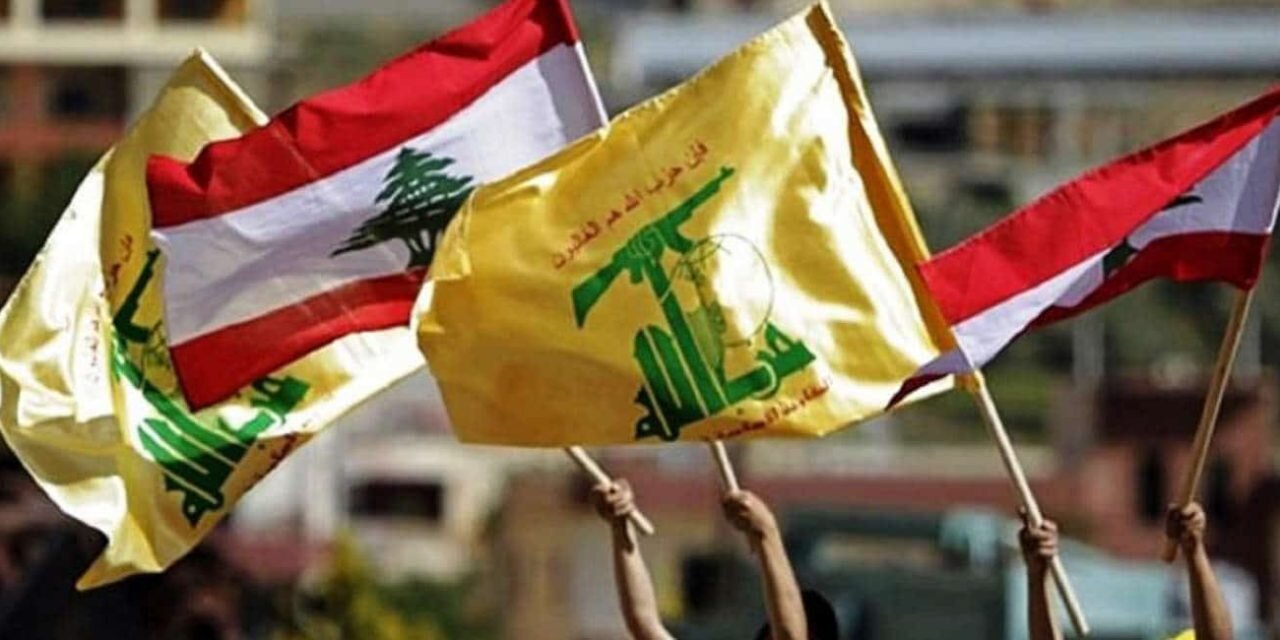
BEIRUT – Amid growing turmoil along Lebanon’s southern border, Hezbollah has published an open letter addressed to both the Lebanese people and the country’s top three officials: the President of the Republic, the Speaker of Parliament, and the Prime Minister.
The document frames resistance as an exercise of a legally based right to defend against an enemy (Israel) that, according to Hezbollah’s account, continues to wage war through sustained attacks.
Oppose widespread diplomatic pressure to push Beirut toward direct negotiations with its adversaries. This letter serves as a strategic repositioning with several political and operational implications.
Reaffirming the right to legitimate defense
The central claim of Hezbollah’s public documents is straightforward. Acts of resistance are a legitimate means of defense against Israel’s enemies who refuse to cease hostilities.
By asserting that “defense” goes beyond the binary of a state’s formal declaration of war or peace, Hezbollah is reshaping the legal and moral framework within which its actions are evaluated.
This legal-philosophical framework aims to blunt attempts to delegitimize resistance at home and abroad. This suggests that Hezbollah is not trying to usurp a state, but rather to exercise what is presented as an inalienable right when a state is unable or unwilling to stop external aggression.
A dual message to national leaders and the people
Hezbollah tells the president and the formal institutions of the Lebanese state to use the resistance as a bargaining chip to reduce external pressure.
In other words, rather than treating resistance simply as an obligation to be disarmed, state actors can leverage its deterrence value to extract more favorable terms from foreign interlocutors.
This is an attempt to transform Hezbollah from an obstacle into a strategic asset in national negotiations.
Importantly, Hezbollah notified three senior Lebanese officials in advance. This is an element that shows coordination at the highest political level and frames the communiqué as part of a national stance rather than a purely partisan one.
Hezbollah explicitly warned against “giving in to aggressive threats” and falling into the trap of negotiations that benefit the enemy and offer no guarantees.
For the Lebanese people, this message brings reassurance and vindication. Hezbollah is telling its people that future military responses will not be driven by whims, but by a clear reason: the ongoing attack on Israel.
By communicating its reasons for potential actions, Hezbollah aims to preempt internal divisions in case violence resumes and secure some social legitimacy for its choices.
Timing, context, and immediate impact
Timing is everything. The communiqué was released as Israeli media talked about escalation and a diplomatic push by the US government and regional actors to draw Lebanon into direct negotiations with Israel’s enemies.
Tel Aviv’s immediate reaction was swift, including psychological and military pressure on southern towns (evacuation orders in villages such as Aita al-Shaab, Taybeh, and Kafr Dunin), heavy airstrikes, and alleged attacks on alleged resistance infrastructure.
The close-range operations Thursday highlighted how quickly rhetoric can translate into kinetic pressure on the ground.
Domestically, the statement coincided with a cabinet meeting to consider the deployment of the army to the south.
President Aoun has publicly reiterated that negotiations remain a means to end the aggression, while promoting stability. Meanwhile, senior military officials have reportedly proposed freezing plans to “concentrate” (censor) weapons as long as Israeli attacks continue, a sign of institutional insecurity and competing calculations within the state structure.
Internationally, this message was not ignored. A senior UN interlocutor warned that Lebanon must open to direct negotiations or Israel could escalate its attacks “all over Lebanon.” Officials are treating the story as a threat of a “mini-war.”
At the same time, Washington applied fiscal pressure. The U.S. Treasury Department’s OFAC announced sanctions against Lebanese officials accused of facilitating transfers to Hezbollah, framing economic measures as part of a broader push to cut the movement’s funding lines.
Toward a new state resistance equation
Strategically, this open book suggests an attempt to consolidate a new equation of resistance as an integrated pillar of national defense rather than an unrelated “militia.”
Hezbollah has refrained from listing specific military responses or timelines. This ambiguity is intentional, in order to maintain operational flexibility while advancing the political thesis that any lasting settlement must take into account Hezbollah’s role and its declared security concerns.
Hezbollah increased the political costs of unilateral disarmament demands by explicitly warning against a “negotiation trap”, notifying three senior officials in advance, and combining legal and moral arguments with readiness to respond.
Hezbollah’s communiqué also exposed the weakness of external guarantees, declaring skepticism about whether intermediaries could restrain Israel’s enemies or deter unilateral attacks.
The ensuing Israeli attack, UN warning, and US sanctions collectively demonstrate how diplomacy, coercion, and economic coercion work together to put pressure on Lebanon, and how Hezbollah’s public stance is intended to disrupt that chain of events.