
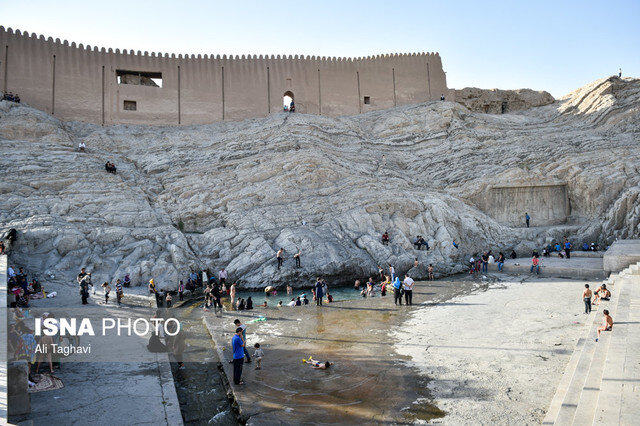
TEHRAN — The restoration of the Cheshme Ali ruins is not just a local demand, but rather the national will of the Iranian people to preserve the historical identity of Rei, southern Tehran, said Deputy Minister of Cultural Heritage Ali Darabi.
On Saturday, on the sidelines of a visit to the historical site of Cheshme Ali, he told IRNA that Cheshme Ali is one of the oldest human settlements in southern Tehran and has played an important role for centuries in the life and formation of the civilization of Ray and the current Iranian capital.
He said, “The restoration of Ceshme Ali does not only mean returning water to it. Rather, it is an effort to restore the historical identity and cultural spirit of the inhabitants of Lae. Today, all government agencies, from the city and the metro company to the service agencies, should act to complete this project.”
He added that the metro company is committed to providing the necessary credits and reviving the water route in order to breathe new life into the Ceshme Ali site.
He added: “Rey is a very important city in the history of Iran. It is home to many poets, intellectuals and ancient monuments. Currently, the Ministry of Cultural Heritage is preparing documents to consider the possibility of inscribing the city of Rei on the UNESCO World Heritage List.”
Daravi added: “Our colleagues at the Tehran Cultural Heritage Authority, with the cooperation of specialized universities and scientific advisors, are considering technical studies for the compilation of the Rei Document. We hope that with the support of local and national institutions, this valuable goal will be achieved by next year.”
He also pointed out the need to revive the old bazaar in Ray and restore the historical buildings around Shah Abdul Azim Mausoleum, saying, “Cultural heritage is not just monuments and walls. It is also something that gives identity to generations.”
Located near an ancient spring, Cesme Ali is located in the historic city of Rei. The mound is approximately 7 meters high and is located next to the remains of the Islamic Rei Wall, which reaches a height of 15 meters.
Ceshme Ali is a historical and recreational spot located south of Tehran and north of Rey, with settlements in the latter dating back to the 3rd millennium BC.
According to Kadir Afrovand, director of the Rei National Heritage Base, Rei is one of the oldest cities in Iran’s central plateau, with a history of human settlement spanning more than 8,000 years.
According to Encyclopedia Britannica, Rey’s history is mentioned as a sacred place in the Avesta (the original text of Zoroastrianism, an Iranian religion), and is also mentioned in the apocryphal book of Tobit and by classical writers.
KD