
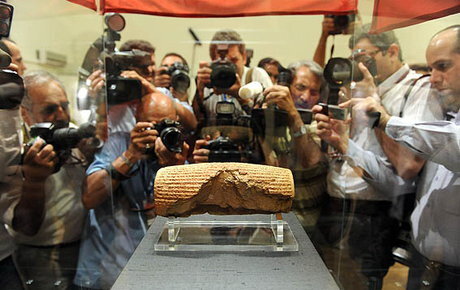
TEHRAN – UNESCO’s recent recognition of the Cyrus Cylinder as one of the oldest human rights documents is a source of national pride and reaffirms Iran’s contribution to the universal values of humanity, the director of the National Museum of Iran said on Sunday.
Jebrael Nokande said the recognition highlights the historical importance of the Cyrus Cylinder, which dates back to the 6th century BC and is associated with Cyrus the Great, founder of the Achaemenid Empire.
Mr. Nokandeh expressed his joy at this historic decision by the United Nations cultural agency, saying, “As a museum that has exhibited this unique artifact twice, in the 1970s and in 2010, we consider this event an important step in recognizing Iran’s civilizational capabilities.”
A loan display of the Cyrus Cylinder at the National Museum of Iran had previously shown that the artifact is not just a museum exhibit, but a living message from the region’s ancient history. Today, Iran’s recognition on the international stage is a source of pride for all Iranians and confirmation of Iran’s role in shaping universal human rights concepts. ”

Commenting on the contents of the UNESCO resolution, Mr. Nokande said, “UNESCO’s work emphasizes several important pillars: first, recognizing the importance of the Cyrus Cylinder as one of the first documents to embody principles on human rights; Thirdly, Member States are encouraged to allocate voluntary resources to develop activities in this field. And finally, all countries are invited to promote awareness and greater access to the contents of this historical document through multilingual translations of this heritage.
“This event is not just a diplomatic success, but an opportunity to redefine our cultural identity on the world stage. We at the National Museum of Iran are ready to collaborate with UNESCO to organize international exhibitions and educational workshops to further elucidate this common human heritage,” he added.

He emphasized that “UNESCO’s recognition of the Cyrus Column is a solid proof against those who distort history and shows the constructive role that Iran has played in the formation of world civilization. Undoubtedly, UNESCO’s recognition of the Cyrus Column is a cultural achievement for the Iranian world.” Experts say UNESCO’s decision could pave the way for broader cultural cooperation between Iran and international organizations and cement Iran’s image on the world stage as a country with a rich and peace-loving civilization.
The cylinder remained buried in the British Museum for more than 2,400 years until it was discovered by British archaeologist Hormuzd Rassam during excavations in Mesopotamia in 1879.
morning