
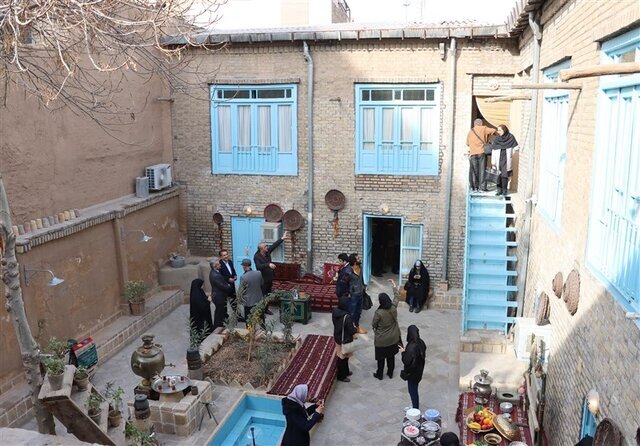
TEHRAN — Known for its rich history and central role in shaping Iran’s culture and identity, the many cities and rural villages of Khorasan Razavi province are home to traditional architectural treasures and an authentic lifestyle reflected in historic homes.
These monuments, once a testament to elite thought, commercial prosperity and knowledge exchange, are now subject to neglect and destruction, ISNA writes.
The value of historic homes lies in the collective memory and spatial identity of local people. The architecture of these houses, based on climatic factors such as the central courtyard and the use of wind catchers, represents the indigenous art of our ancestors in adapting to the Khorasan environment.
Restoration expert Mohammad Yavari said the restoration of historical houses in Khorasan Razavi will help preserve the historical identity and lead to economic and cultural development of the area.
He emphasized that the revitalization of historical houses throughout the city of Khorasan Razavi is mandatory and said that this process should be considered as a sustainable investment. He added that it has the potential to serve as a cultural destination enriching the experience for tourists and the local economy.
He explained that the economy of cultural heritage is a multifaceted marketing. “Restoring historic homes allows them to have new income-generating functions, such as turning monuments into ecolodges, traditional restaurants, handicraft shops, and art studios.”
Yavari pointed out that this resurgence will lead to direct jobs and will benefit many people, including security guards, restorers, chefs, curators and sales managers. Therefore, the abandoned monument will turn into an economic unit. ”
He said the revival of historical buildings in Khorasan Razavi could not only preserve cultural heritage but also create economic and cultural opportunities. This measure can act as a bridge between historical memory and a sustainable future and help the state’s all-round development.
The revival of historic housing is a smart strategy to combine cultural heritage with sustainable development. These homes can be transformed into dynamic centers through national will, public participation and creative management.
Also, Mohammad Nezamabadi, Director of the Bardaskan Cultural Heritage, Tourism and Handicrafts Department, said that Bardaskan’s historic houses and precious textiles are assets that can boost the local economy if they are regenerated and put to proper use.
He added that all the restored houses can be turned into accommodation facilities, productive handicraft workshops or live cultural centers.
Nezamabadi said lack of credit was one of the main obstacles, adding that cultural heritage needs a budget. The allocated credits are sufficient only for urgent work and preliminary demarcation, he added.
“We can transfer eligible monuments to the private sector for restoration for ecolodges, traditional restaurants and art galleries.”
He said there are 274 historical, religious and cultural monuments in the city and announced efforts to inscribe 24 monuments on the National Heritage List.
All nationally registered monuments have identical documentation, which illegal excavators cannot easily access, he added.
KD