
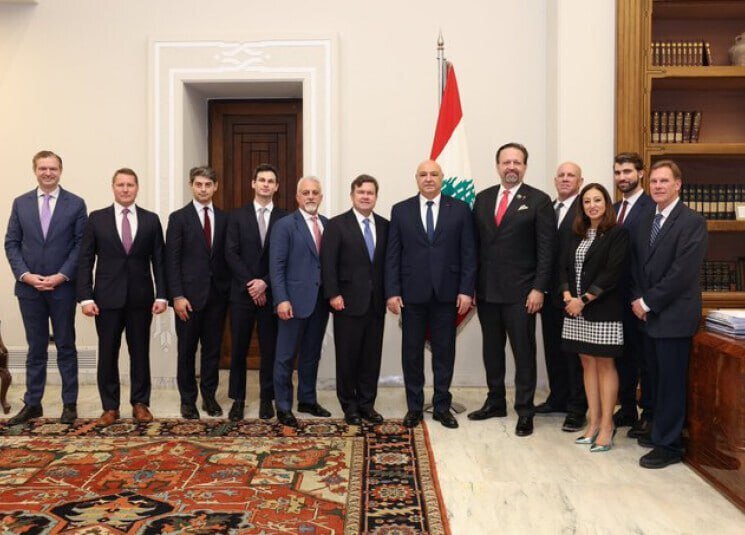
BEIRUT — Lebanon’s future is increasingly determined by outside powers, especially the United States, as the Lebanese embassy in Beirut and visiting missions from the Treasury and State departments wield decisive political, financial and diplomatic influence.
Amid economic collapse, political division, and repeated security threats, the United States is pressuring Lebanon to align with its strategic objectives, focusing on two main goals: facilitating negotiations with Israel on border and security issues and limiting Hezbollah’s political and military influence.
These measures are ostensibly an effort to “stabilize” Lebanon and restore its sovereignty, but in reality they will deepen the country’s divisions and increase Lebanon’s dependence on foreign leadership.
Senior US envoys frequently meet with presidents, prime ministers and financial regulators to demand strict compliance with international sanctions.
Although these interventions are presented as administrative reforms, they reshape the distribution of power and control of financial resources within the Lebanese state, with far-reaching political consequences.
Beyond official diplomacy, embassies are actively shaping public perceptions by portraying Hezbollah as a persistent threat.
By framing sanctions and intervention as protection for the Lebanese people, the United States normalizes that intervention, delegitimizes domestic actors, and reinforces its image as both protector and regulator.
economic and financial leverage
Economic coercion remains central to Washington’s strategy. Sanctions target Hezbollah networks and are increasingly extending to politicians, businessmen and organizations deemed to be supporting the resistance. This extensive sanctions regime strains Lebanon’s fragile banking sector and isolates it from the international financial system.
The US directive for “maximum financial vigilance” has forced Lebanese banks into over-compliance, often restricting or freezing accounts even in the absence of formal sanctions.
For example, Blombank and Credit Libanai restricted withdrawals from government compensation funds for families displaced by Israeli airstrikes.
Subjecting humanitarian aid to fiscal restrictions will delay recovery, undermine public trust, and blur the line between counterterrorism and collective punishment.
Economic coercion links Lebanon’s economic survival to political compliance with U.S. priorities. Access to international funds and IMF support is conditional on concessions such as curbing Hezbollah’s influence and participating in border negotiations with Israel.
This power relationship entrenches structural dependence, concentrates influence in the hands of Washington, and undermines domestic autonomy.
Strategic messaging and repetition
The embassy’s message is consistent and intentional. Statements over the past five years have repeatedly portrayed Hezbollah as a destabilizing force and justified sanctions to protect Lebanon.
In January 2022, the United States framed sanctions as “solidarity with the Lebanese people whose security and sovereignty remain threatened by Hezbollah’s corrupt and destabilizing activities.” Similar statements were issued in March 2022, May 2021, and February 2020, reflecting continued efforts to maintain a continuing threat narrative.
The goal is to shape public perception. The embassy has justified sanctions and foreign intervention by consistently presenting Hezbollah as dangerous. Its language (phrases like “ensuring Lebanon’s security” and “protecting regional stability”) masks a concerted effort to influence domestic politics while appearing benevolent.
The impact is serious. Reiterating Hezbollah as a threat limits domestic political space, fosters dependence on external guidance, and reinforces structural imbalances in Lebanon’s political and economic system.
More than just diplomatic statements, embassy communications serve as tools of psychological and political influence, shaping both national and regional debates.