
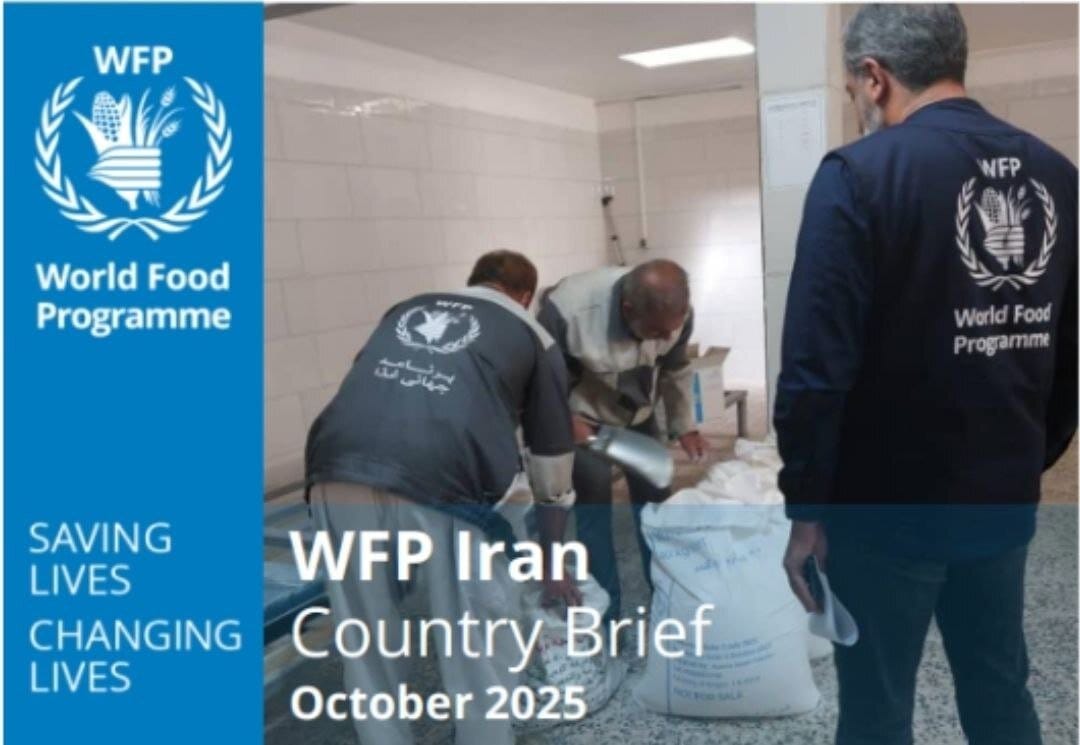
TEHRAN – The World Food Program (WFP) has released a report detailing its activities in Iran in October.
In October, WFP food aid reached 32,941 beneficiaries, including Afghan and Iraqi refugees and Iranian teachers. Refugees are being supported with staple food baskets containing fortified flour (12 kg per person per month) and vegetable oil (810 ml per person per month).
Regarding cash-based remittances, the Center for Alien and Foreign Immigration Affairs (CAFIA) confirmed adjustments to cash remittance amounts from January, following the revision of WFP’s Minimum Expenditure Basket (MEB) implemented in November 2024.
In October, WFP continued to increase cash transfers to increase support for essential living expenses. The transfer amount is IRR 5 million (US$7.1) for male-headed households and IRR 6 million (US$8.6) for female-headed households.
In October, the start of WFP’s school feeding program at the beginning of the year was delayed due to a lack of funding. Procurement for program activities will begin as soon as the necessary donations are secured.
By October, WFP Iran had helped 53 WFP beneficiaries with celiac disease ease the financial burden of their gluten-free dietary needs by providing them with an additional 9.7 million rupees (US$13.9) each in cash in lieu of their regular food entitlement.
In October, WFP Iran launched Taste of Iran, a national campaign celebrating Iran’s rich culinary traditions and cultural diversity. “Taste of Iran” is a journey from the desert to the forest, from the plains to the sea, in search of not just the taste of food, but the taste of life itself. The campaign invites people to share traditional family and local recipes along with photos and AI-generated artwork.
The initiative aims to preserve food traditions, inspire creativity and bring communities together through shared flavors and memories. The top entries will be published in a digital book and featured online.
In October, WFP supported 402 refugees with disabilities in 11 settlements, with each settlement receiving an additional monthly cash support of 3 million rupees (approximately 4.3 million yen) on top of regular assistance. The initiative was initially launched in two provinces, but gradually expanded to cover the settlements of Sabeh, Semnan, Bani Najjar, Sarbestan, Bezire, Abazar, Rafsanjan, Barsir, Jahrom, Meybod, and Turbatejam.
In October, WFP continued its support to 26 income-generating initiatives across 18 settlements to strengthen the economic resilience and self-sufficiency of 364 refugees, 50% of whom are women. Activities include welding, tailoring, baking, farming, etc.
In 2024, WFP provided a combination of in-kind and cash assistance to address the food needs of more than 33,000 vulnerable refugees in Iran. As a result, 70% of them were able to consume acceptable levels of food, a figure that remained roughly stable compared to the previous year.
Since August, WFP has successfully increased cash transfer entitlements by 25 percent, actively contributing to alleviating the pressing economic challenges reported by refugees.
WFP has maintained operations in Iran since 1987, primarily focused on meeting the food security needs of refugees from Afghanistan. Iran has been hosting refugees for more than 40 years. Most refugees live in urban, peri-urban and rural areas with people in similar situations and are often integrated into their host communities. However, the most vulnerable refugees living in 20 settlements in 13 states face precarious food security situations that require continued humanitarian assistance from WFP.
WFP provided food assistance, education support, and livelihood opportunities to eligible refugees in settlements through in-kind food distributions, unconditional cash transfers, and capacity building initiatives.
Given the economic situation in Iran in recent years, Afghan refugees are also facing many challenges, including reduced income opportunities and reduced purchasing power, particularly affecting the food security and welfare of the population in the settlements. In response, WFP adjusted the Interim National Strategic Plan (ICSP 2023-2027) to suit the needs, including amending cash entitlements and food rations, adjusting the number of beneficiaries, and extending the duration of the ICSP by two years to ensure uninterrupted support, in line with the United Nations Sustainable Development Framework (UNSDF 2023-2027).
WFP has implemented ICSP-based activities to continue supporting these refugees and respond to their growing humanitarian needs. Approximately 35,000 of the most vulnerable refugees on record live in 20 settlements in 13 Iranian provinces and benefit from food assistance provided by WFP.
MT/MG