
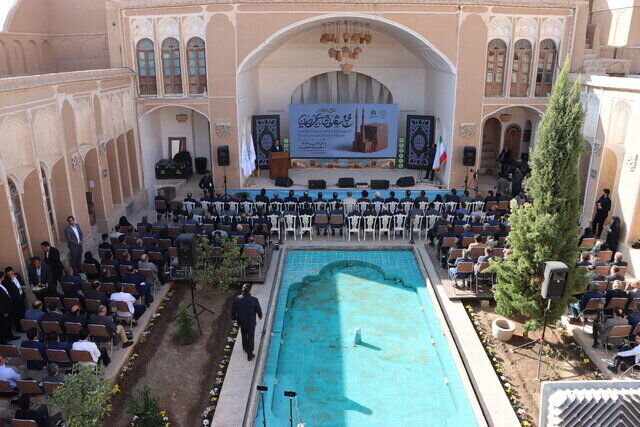
TEHRAN – The second conference on historical cities of Iran opened in Yazd on Wednesday, bringing together representatives from 43 cities across the country to discuss ways to preserve and promote urban heritage.
Mehdi Taraei-Moqaddam, deputy governor of Yazd province, said cultural heritage has great potential for job creation and economic growth, benefiting all sectors of society, according to IRNA.
He stressed that Yazd requires special attention in the areas of cultural heritage, natural and ecological resources, and tourism. The conference provides a platform for exchanging experiences between Iran’s historical cities, and an active secretariat could help foster cooperation and dialogue, he said.
Taraei Mokadam added that Iran’s cultural heritage should be viewed as an interconnected whole, noting that support for heritage and tourism in one region benefits the entire country.
Yazd Mayor Abolqasem Mohyadini said that Yazd was the first Iranian city whose historical buildings were inscribed on the UNESCO World Heritage List in 2017. “We are proud to welcome the mayors of Iran’s historic cities to Yazd.”
He noted that this year’s conference slogan focuses on investment and public participation in the preservation of historic urban areas. He added that the workshop will focus on this theme and will help convey successful experiences and build a sustainable conservation framework.
Mohammad Nasser Heydari, deputy chairman of the Yazd Islamic City Council, stressed that local culture and customs should not be limited to museums, but should be preserved and transmitted to younger generations. “In addition to individual identity, human and religious identity must also be preserved,” he said, urging local governments to take action to preserve life within historic areas.
Esmail Dehestani, Deputy Governor of Yazd, said that Yazd takes pride in maintaining authentic historical structures and rich cultural traditions. “Focusing on our heritage and history is what keeps tourism attractive,” he said, adding that such conferences play an important role in sharing expertise.
Dehestani pointed out that Yazd lies within Iran’s “golden triangle” of tourism, along with Isfahan and Shiraz, and said the “Sustainable Yazd” document aims to promote tourism and cultural heritage while ensuring long-term development.
KD