
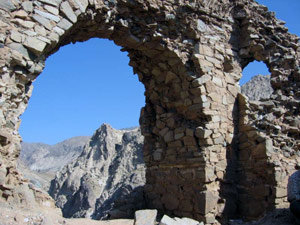
TEHRAN — The Fire Temple of Azar Bardin Mehr is located in the heart of the Rayvand Mountains and is considered one of the most important religious monuments associated with the Sassanid period.
This fire temple is located near the city of Davarzan in Khorasan Razavi province and is known as one of the three sacred fires of the Zoroastrian era. ISNA reports that the building represents the splendor and majesty of Sasanian architecture and occupies a special place in Iran’s history and culture.
Regarding the fire temple and its geographical location, researcher and history expert Ja’afar Bayesi said that the fire temple of Azar Barzin Mehr is known as the special fire for the Zoroastrian peasants and, along with two other Sasanian fire temples, Azar Faranbagh and Azar Goshasb, serves as a symbol of the Zoroastrian sacred fire.
He also said that the fire temple of Azar Bardin Mehr, with its special design, represents the high art and skill of the architects of the time. The four-arched shape of this building is a special architectural style of the Sassanid dynasty and shows the importance of fire in Zoroastrianism and the daily life of the people of that time.
He stressed that the building is a place to worship and maintain the sacred fire of Zoroastrianism, which plays an important role in the social and religious life of the people, and said that the geographical location of this fire temple is also very special. Their inaccessible location has not only given them a unique identity, but also protected them from human and natural threats.
Mr. Baesi continued that although this geographical feature makes it difficult for visitors to access this historic building, the area’s natural beauty and rich history will always have a special appeal.
He said that the Fire Temple of Azar Bardin Mehr can be considered a model for other historical buildings in Iran. He added that the building, with its beauty and value, needs support and attention to be recognized as an important point in Iran’s history.
In this regard, the preservation of this monument requires the cooperation of government agencies, the private sector and the local community, he added.
He said that the Fire Temple of Azar Bardin Mehr, with its rich history and architectural splendor, continues to receive more attention as one of Iran’s most important cultural heritage sites, waiting to be inherited by future generations.
Bayesi reminded that “The Fire Temple of Azar Barzin Mehr is not only a historical and cultural monument, but also a treasure trove of our country’s history and identity.”
Given the diversity and richness of Iran’s culture, introducing and protecting these monuments will also help in the sustainable development of tourism and improve the quality of life of the people.
He continued that given the importance of this fire temple and other historical monuments, cooperation and collective efforts are needed to preserve and showcase them.
He said that the Fire Temple of Azar Bardin Mehr should be passed on to future generations as a treasure trove of Iranian history and culture, and considered the protection of historical monuments to be a social and cultural responsibility, adding: “These monuments not only represent the identity of our country, but can also serve as a source of attracting domestic and foreign tourists.”
Mr. Bayesi emphasized, “By using new technology, we can draw more attention to the Fire Temple of Azar Bardin Mehr and other historical monuments. The use of social media and online platforms can be an effective tool to introduce and promote the culture of preserving historic monuments.”
KD