
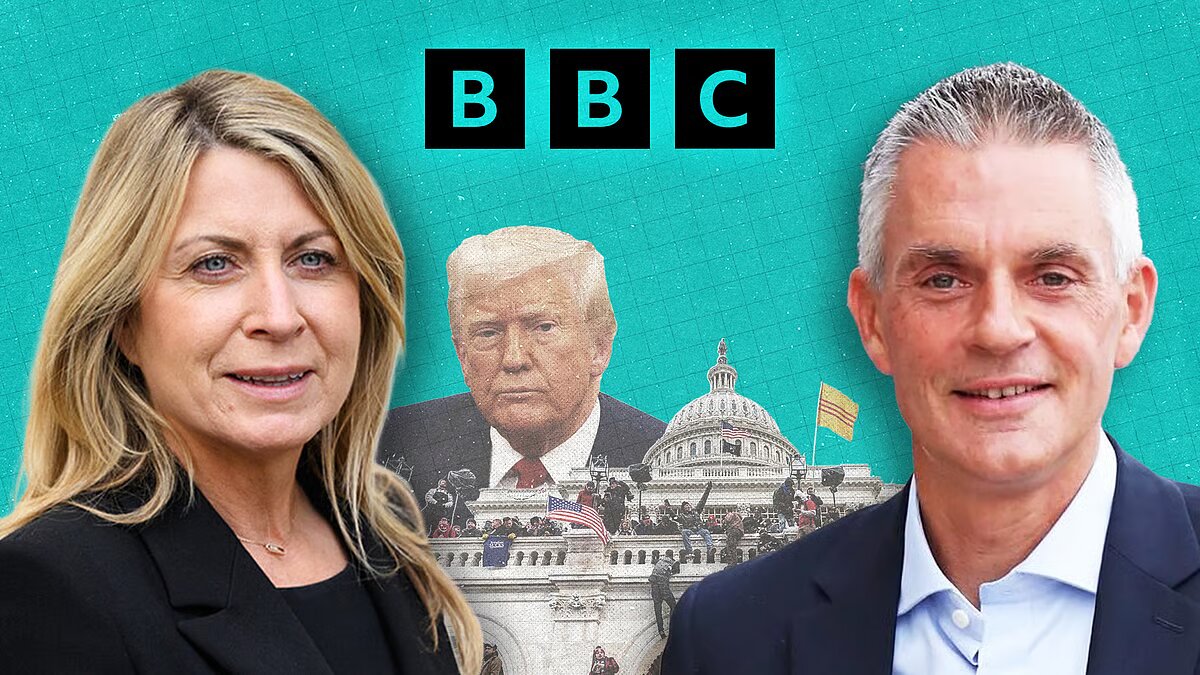
TEHRAN – The recent spat between US President Donald Trump and the BBC has drawn renewed attention to the broadcaster’s editorial practices, highlighting issues of accountability and internal oversight.
While the conflict itself played out in the American political arena, its real significance lies in the questions it raises regarding equity and governance. This issue has long shadowed the BBC’s coverage of international conflicts, particularly the Israel-Gaza war.
Trump’s position in the UK
President Trump’s state visit to the UK in September was a shocking backdrop. His arrival was met with widespread protests in London and other cities, highlighting his deep unpopularity among the British public. Opinion polls conducted during the visit confirmed this sentiment. An Ipsos poll found that more than 60% of Brits dislike Trump, but a YouGov poll found that only 16% had a favorable opinion, with the majority expressing an unfavorable or indifferent opinion.
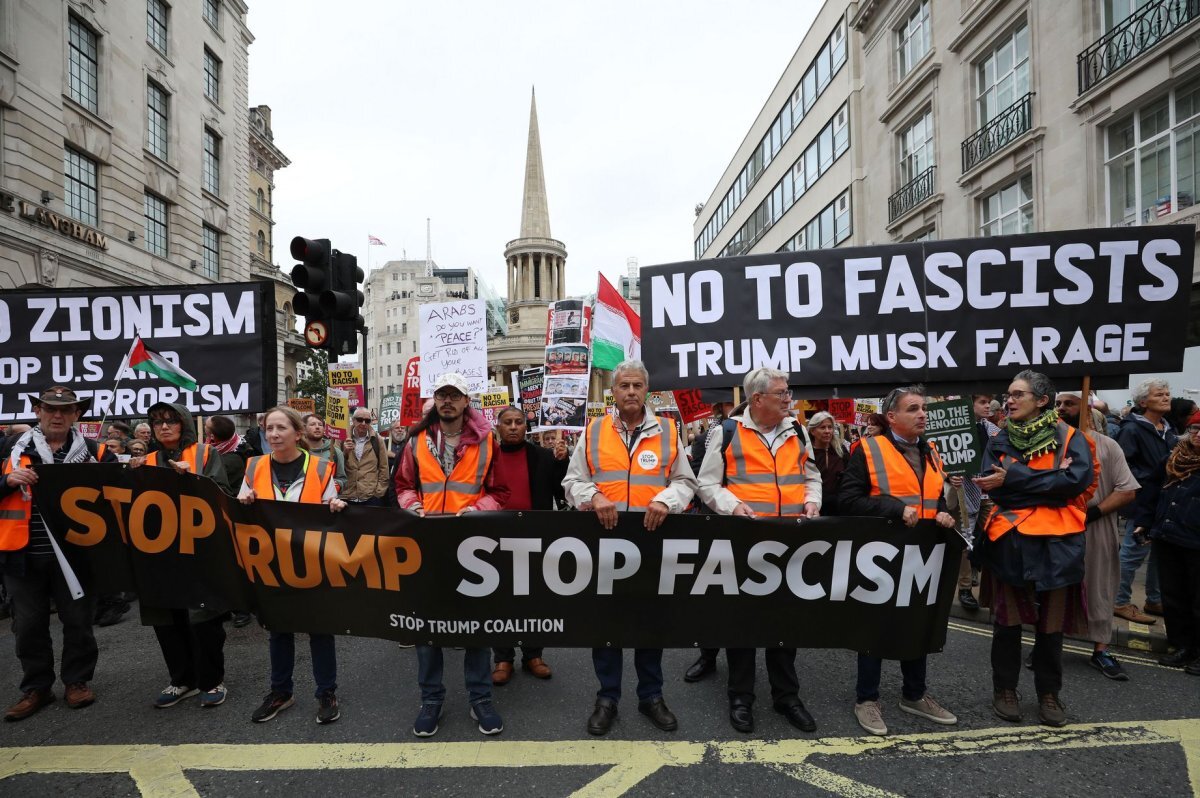
Anti-Trump demonstrators march through the streets of London to protest President Trump’s state visit in September 2025. Photo by Hugo Philpott/UPI
Demonstrators held placards with harsh slogans such as “Trump is not welcome,” “No to racism, no to Trump,” and “Throw away Trump.” The banners reflected widespread dissatisfaction with his confrontational style, legal wrangling, and policy positions on issues such as immigration and climate change. The protests, combined with polling data, reinforced the perception that Trump’s presence in the UK is deeply unwelcome.
This context has given rise to the BBC’s response to a Panorama documentary that misleadingly edited President Trump’s Jan. 6 speech. The controversy became a flashpoint and ultimately led to the resignations of Director General Tim Davie and BBC News Director Deborah Turness.
leadership crisis
These high-profile departures highlight the pressures facing publicly funded media organizations in maintaining professional standards under intense scrutiny. But a former British news editor, who spoke on condition of anonymity, said the resignations do not necessarily reflect a deepening editorial crisis. The editor also pointed out to the Tehran Times that Trump’s unpopularity in the UK means the controversy will generate little public sympathy for him, softening the impact of Davie’s decision to resign.
“There have been some high-profile mistakes, which have been rightfully amplified, but against a backdrop of enormous achievements. I believe this company is in the midst of an identity crisis. What does balance and fairness mean in a deeply divided political environment? What is the purpose of the BBC in today’s global environment? The impression is that Davey jumped at an opportunity that can’t be blamed, and there’s not much love for Trump.” ”
Regarding the Panorama documentary itself, a veteran media observer said bluntly: “This was a stupid mistake by the program makers. It was very stupid and unnecessary. The BBC’s failure to act sooner was also stupid and reflects the confused thinking and opposing forces within.”
However, the Panorama controversy was not an isolated incident and raised wider concerns about the BBC’s editorial judgment, most evident in its coverage of the Israel-Gaza conflict.
biased accusation
In late 2024, more than 100 BBC staff signed a letter condemning the pro-Israel bias in the broadcaster’s reporting. The letter, which was supported by hundreds of media experts, argued that the BBC had failed to meet its own standards of fairness and accuracy, citing selective sources, headline composition and asymmetric reporting. The signatories warned that such actions risk dehumanizing Palestinians and undermining public trust.
Critics pointed to headlines that foreground Israeli claims while minimizing the Palestinian perspective and civilian impact. Reports lacked the full context of military operations and casualties, and editorial choices were consistently described as favoring the Israeli narrative.
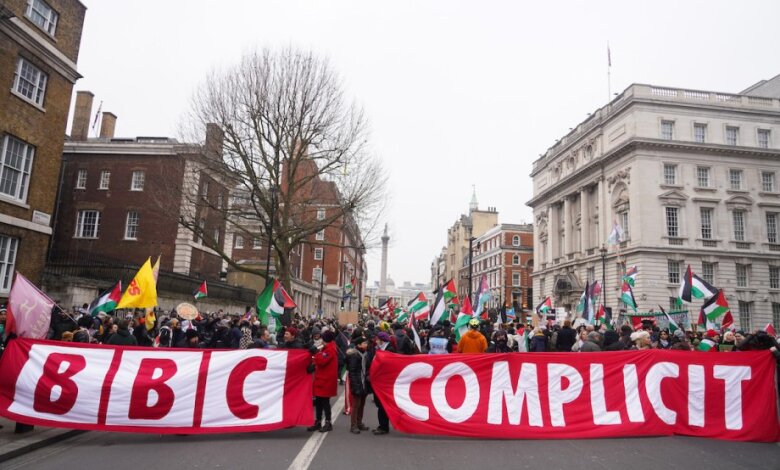
Last year, more than 100 BBC staff and 300 members of the media accused the BBC of “censorship” and “anti-Palestinian racism” in its coverage of Israel’s war in Gaza.
The political correspondent admitted he hadn’t read enough of the report to make a definitive judgment, but added: “The BBC is usually accused of bias on both sides, and we’ve even been to Gaza. The difficult thing about trying to strike a balance, even if it’s counterintuitive, is that you can end up upsetting both sides. Traditionally, the BBC has seen making both sides unhappy as proof that it’s doing the right thing, but these days it’s harder to do that.”
Nevertheless, internal dissent converged in public demonstrations challenging the BBC’s credibility. Protests were held outside the BBC’s offices in London and other British cities, accusing the BBC of “whitewashing” Israel’s actions in Gaza and failing to adequately represent the suffering of Palestinians.
past controversy
Criticism of the BBC’s Middle East coverage is not new. During the second intifada in the early 2000s, advocacy groups accused the station of unfairly framing events through the narrative of the Israeli government. Similar complaints resurfaced in 2014 during the Gaza war, with campaigners claiming the BBC’s coverage gave more weight to Israeli military statements than Palestinian civilian casualties. Each flare-up reinforced the perception that the BBC was struggling to balance its coverage of the conflict.
prescott memo
A leaked memo from Michael Prescott, a former adviser to the BBC Editorial Guidelines and Standards Board, claims that BBC Arabic exhibits systemic anti-Israel bias. But while such claims highlight the complexities of impartiality across the BBC’s various services, they do not carry the same weight in public debate as broader condemnations of pro-Israel bias in the BBC’s English-language reporting.
editorial pressure
As a fee-funded broadcaster, the BBC has a unique responsibility to its audience. Its mission is to serve the people, not politicians or foreign governments, and to ensure that reporting is transparent, balanced and reflects diverse perspectives. Recurring concerns over coverage of the Gaza Strip suggest that achieving this balance remains an ongoing challenge.
When asked if political pressure from pro-Israel groups and government officials is influencing the BBC’s editorial stance, the veteran media observer did not rule out the possibility: “Yes, I think all lobbying has some effect. And the BBC is more sensitive to criticism and lobbying than many media organizations because it values a trusted and balanced reputation very much.”
The future of the BBC will not be determined by Trump’s appeal or Mr Prescott’s memo, but by how it responds to repeated accusations of pro-Israel bias and wider challenges to the impartiality of its coverage of the conflict. Media executives’ warnings of an identity crisis, coupled with staff dissent and public outcry, suggest the station is at a crossroads. For educational institutions funded by license fees, credibility is everything. Unless the BBC confronts these charges head-on, it risks losing the very authority that has long defined it as Britain’s most trusted voice.