
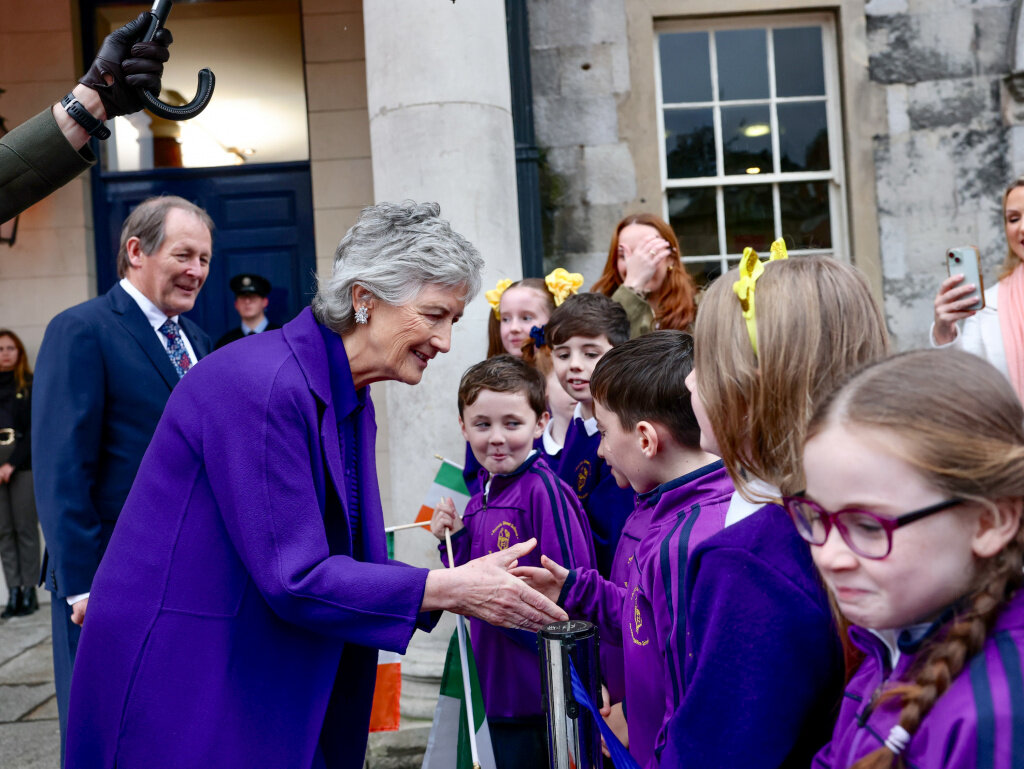
TEHRAN – Ireland’s new president, Catherine Connolly, has more than just a ceremonial makeover. Her election, which won a record majority, reflects deeper changes in Irish society, which is increasingly skeptical of the West, critical of Israel and determined to assert its own path.
Connolly has made it clear that he intends to use his presidency to speak out on issues important to voters. At the top of the list is Palestine. Ireland recognized a Palestinian state in 2024, which led to Israel withdrawing its ambassador from Dublin. That decision was not an isolated one. It was the culmination of years of public anger in Ireland over Israel’s actions in Gaza. During the war, the streets of Dublin and Galway were filled with large-scale protests, with demonstrators condemning what they saw as collective punishment of civilians. For many Irish people, the images of Gaza reflected their own history of famine, colonization and forced migration. Mr Connolly tapped into that sentiment and said the normalization of war and genocide was “unacceptable”.
Western media often downplays the scale of anti-Israel sentiment in Ireland and portrays it as a fringe activity. In fact, it has become mainstream. The government is seeking legislation to ban imports from illegal Israeli settlements, and Connolly himself speaks about the genocide in terms that leave little doubt about his position. Her language is sharper than that of her predecessor, Michael D. Higgins, who kept his tone within humanitarian law while criticizing Israeli policies.
Connolly is more direct, and her voters expect her to be. Her criticism goes beyond Israel. Mr Connolly has publicly challenged the US, UK, France and the European Union. She accused them of pursuing policies that militarize and normalize war. This is surprising since Ireland has long had close ties with Washington, particularly under President Joe Biden’s administration, which relied on its Irish heritage. However, the relationship cooled down. U.S. officials believe that Ireland benefits from U.S. defense spending while refusing to join NATO. President Trump has threatened to pull U.S. investment from Ireland’s low-tax economy. Against this backdrop, Connolly’s selection appears to be a public rebuke of Western powers.
The European Union is not spared either. Mr Connolly criticized Ireland’s growing military ambitions even as it prepares to take up the rotating EU presidency from July to December 2026. Her position resonates with a nation that values neutrality and peacekeeping over military alliances. Ireland’s refusal to send weapons to Ukraine while accepting tens of thousands of refugees reflects a balance of humanitarian solidarity without militarization.
So Connolly’s victory is not just symbolic. This shows that Ireland is willing to chart a course that deviates from the West. Anti-Israel protests, recognition of Palestine, skepticism of NATO and American power, all these currents now have a say in the presidency. Although the office has limited formal powers, Ms. Connolly’s overwhelming mandate gives her moral authority. She represents an Ireland that is tired of being told to conform to Washington and Brussels and wants to speak in its own voice on issues of justice and peace.
Western media may frame her as a radical or subversive figure. But in Ireland, amid a housing crisis at home, endless wars abroad and a world order that seems blind to the suffering in Gaza, her election feels like the natural outcome of years of setbacks. Connolly’s presidency is not just about her. This is a story about a country trying to say “no” to the West and “yes” to a different vision of solidarity.