
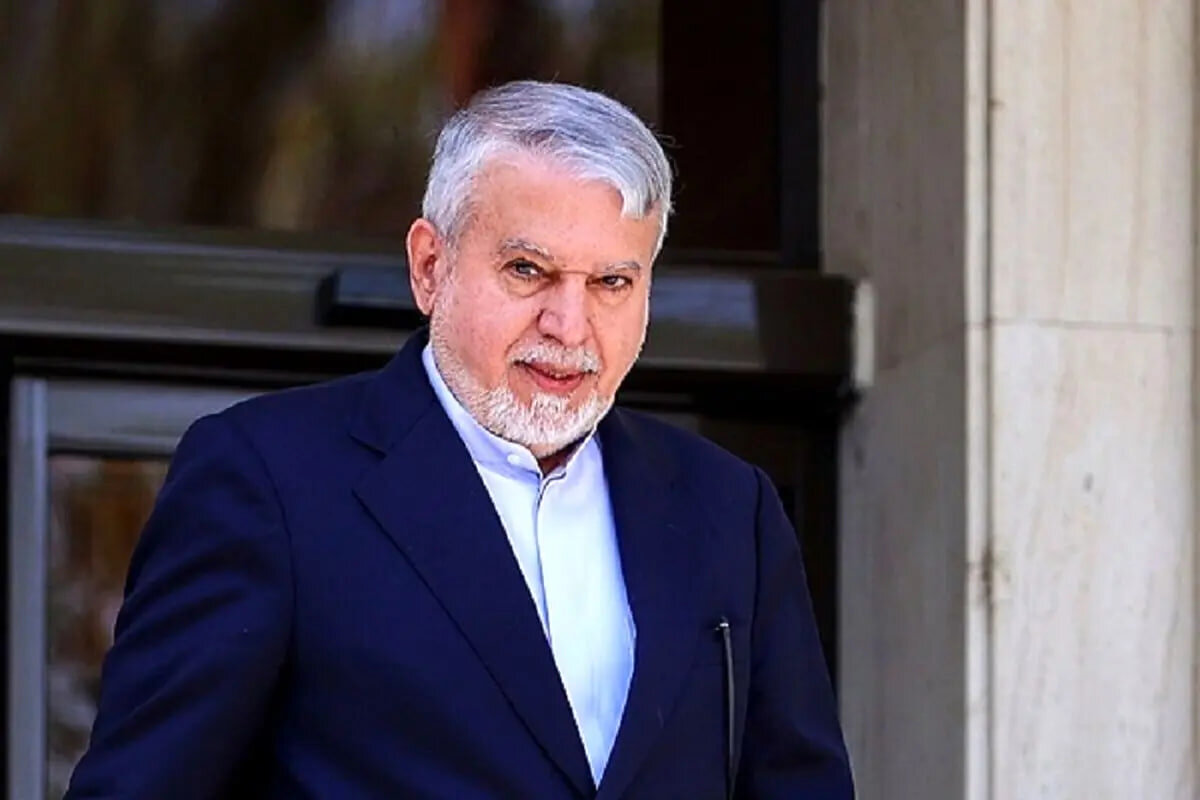
TEHRAN — Minister of Cultural Heritage, Tourism and Handicrafts Reza Salehi Amiri announced at the 25th meeting of the Strategic Council of the Ministry of Cultural Heritage that the first meeting of tourism ministers of countries celebrating Nowruz will be held in Tehran.
According to Mehr News Agency, the 25th meeting of the Strategic Council of the Ministry of Cultural Heritage, Tourism and Handicrafts was held on Monday in the presence of Salehi Amiri, Director of the Islamic Cultural and Related Institution Mohammad Mehdi Imanipur, and senior managers and experts in the field of culture and tourism.
He announced approval to hold a meeting of tourism ministers from Nowruz countries in Tehran. This is a rare event that could start a new phase in cultural and tourism cooperation in the region.
Emphasizing that Nowruz is a common heritage of the countries of the region and one of the most deeply rooted human rituals, he said that Nowruz, which has a history of several thousand years and is listed as a UNESCO Intangible Cultural Heritage of Humanity, has the unique ability to showcase Iranian culture and strengthen solidarity among countries that celebrate this ancient festival.
He said that holding this summit at the government level will not only increase social vitality in the country, but also promote cooperation in the fields of cultural exchange, sustainable tourism, and protection of historical and spiritual assets of countries celebrating Nowruz.
Salehi Amiri considered that turning Nowruz into a reputable global brand is the main goal of this initiative, adding that Iran, as the origin and mainstay of this ancient ritual, must play a leading role in the development of cultural tourism in the region.
He explained that within the framework of this summit, programs such as professional Nowruz tourism conferences, training workshops, and visits of participating delegations to Nowruz-related historical sites such as Persepolis and Pasargadae are designed to present a comprehensive and documented picture of Iran’s cultural capabilities.
He said that the country’s main focus is on the Nowruz region so that the flow of cultural tourism can be developed more consistently and the introduction of Iran’s attractions in the international space can be carried out in a scientific, systematic and targeted approach. Salehi-Amiri said that as one of the complementary axes of this policy, thinkers and experts familiar with the common cultural heritage will be invited to consider leveraging the capabilities of prominent cultural figures in the region and strengthen the flow of Iranian studies and cultural dialogue in the region.
In a separate development, Salehi Amiri said Iranian diplomacy regarding attracting tourists was completely different before and after the country’s 12-day war with Israel.
He also said that “the situation in our country before the war was such that we followed this path to visit all the countries of the region and attract tourists, from Tajikistan, Azerbaijan, Uzbekistan, Georgia and other countries to Egypt,” ILNA wrote.
“But during the war, there was an interruption due to Iranophobia and the psychological anxiety it created. We began to neutralize Iranophobia in order to rebuild that trust and start again.”
Salehi Amiri continued, “As I am speaking to you right now, fortunately the diplomatic situation with neighboring Iraq has taken shape. Currently, Iraqi tourists, whether pilgrims or tourists, are staying all over Iran.Recently, our agency, Hotel “About 80 people from the private sector, including business owners and tour operators, were in Iraq. Last year, almost half of our tourism capacity was connected to Iraq and the Persian Gulf countries, and we are rebuilding this capacity.”
“In the post-war situation, we should gradually return to the previous situation within six months. We have foreseen three situations and have laid down plans for all three situations. The first is the continuation of the current situation (no war, no peace) and what we should do, the second is “In terms of the possibility of instability and how we should behave, and the situation of returning to a stable situation, we have predicted all three situations. In a stable situation we will experience 25 percent growth, which means we will reach an 8-2 boundary.” We predict that the number of tourists will return to last year’s figure in Iran in the current situation, at 9.5 million. ”
Regarding the protection of ancient sites, Salehi Amiri said, “All historical sites are under the supervision of our base. Officials from our department are stationed in the province and everything is monitored.”
Deputy Minister of Tourism Ali Asghar Sharbafian also said that more than 231 projects had been identified in each province, 16 of which were approved to receive loans of up to 8 trillion rials ($8 million) from corporate tax dollars.
He said that coordination of policies and programs at the national and local levels is one of the key axes of cooperation.
Meanwhile, Deputy Minister of Cultural Heritage Ali Daravi said that holding an online meeting with each province in the presence of their patrons is one of the measures planned for the restoration of historical monuments.
He emphasized the importance of leveraging economic capacity in supporting the protection and restoration of historic buildings and sites, and said close interaction between the two sectors could pave the way to revitalize priority projects in each state.
Commenting on the need to protect historic buildings more effectively, he said that the use of new investment methods can improve the productivity of cultural heritage management and pave the way for sustainable conservation of cultural and historical buildings and sites.
KD