
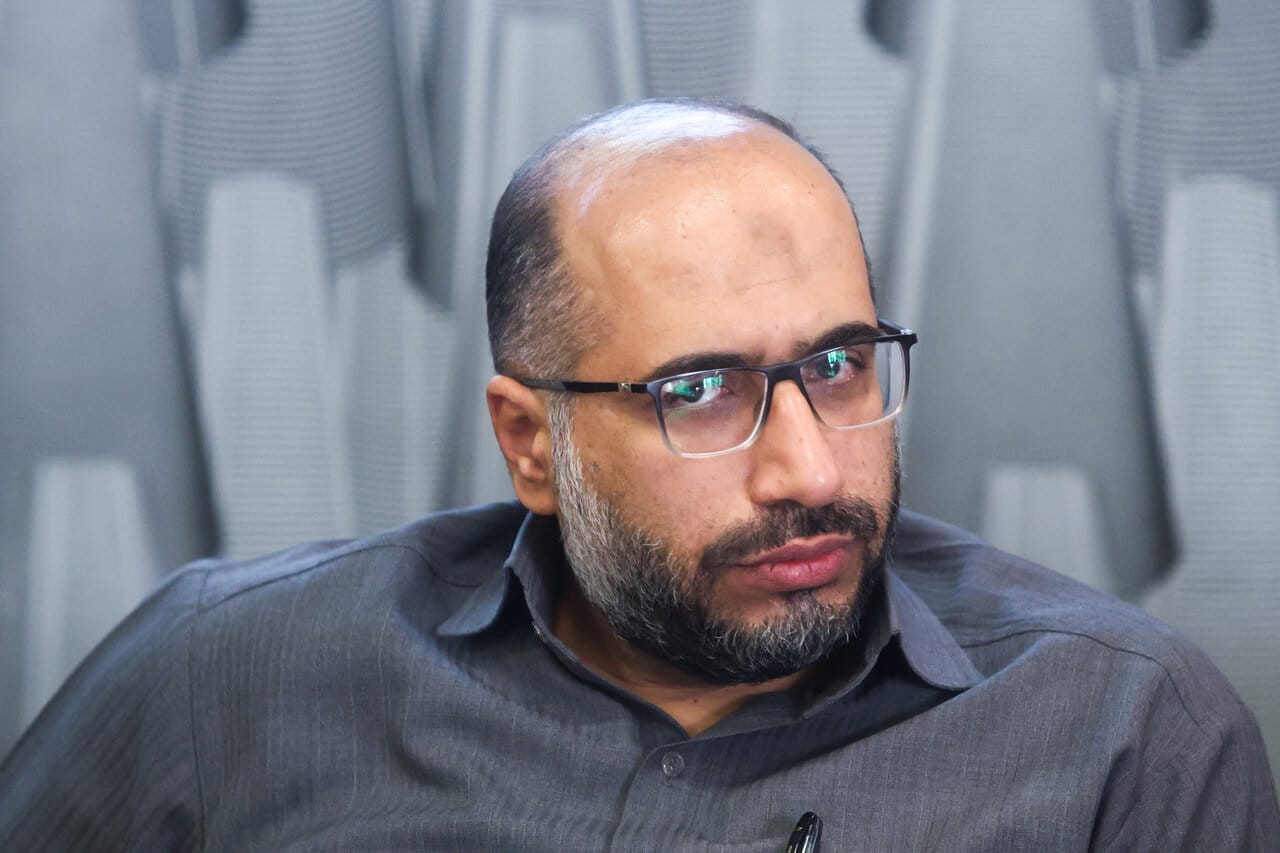
TEHRAN – Dr. Hamed Haji Heydari, a prominent sociologist at the University of Tehran, used Wednesday’s major academic conference to present extensive data suggesting strong public support for resistance policies in Iran, as well as criticize Western conceptual frameworks that insist on vague objective analysis.
Dr. Haji Heidari, who spoke at the conference on “Resistance as a Social Phenomenon,” based his analysis on years of empirical research on social capital and public opinion.
He cited a comprehensive national study that tracked social capital from 2005 to 2015 and reported that despite visible fluctuations, the indicator remains “above average.” While he acknowledged that there was a “variation” between trust in formal institutions and broader societal connections, he detailed specific findings, such as the 55% level of trust in institutions like the Basij.
But the core of his presentation focused on recent polling data. He highlighted a 2023 survey conducted by the Ministry of Culture’s Center for Culture, Arts and Communication Research that revealed overwhelming public sentiment on the Palestinian issue.
“According to the survey results, 77.5 percent of Iranians approve of the right of the Palestinian people to fight for their land,” said Dr. Haji Heydari. He further pointed out that 76.9% felt an obligation to support Islamic countries, and more than 70% emphasized the need to reclaim Palestinian land. He also presented statistics showing that more than 60% of Iranians perceive Israel as a direct threat to their security.
Sociologists also noted conceptual challenges, arguing that Western definitions, particularly of “terrorism,” are being used to “eliminate the role of religion,” which in turn creates ambiguity in social analysis. He called for a more precise application of postcolonial theory to properly understand developments in the region.
Dr. Haji Heidari places Iran’s current position within the long historical arc of the World Resistance Front, tracing its origins to India’s independence in 1947 and the founding of the People’s Republic of China in 1949. He described it as an ongoing intellectual and political movement that has adapted and strengthened over the decades.
In conclusion, he pointed to the digital realm as a new frontier. “The social capital of resistance has transcended borders,” he said, citing grassroots support movements in Lebanon and Gaza. He also noted that digital activism and artificial intelligence are now playing a key role in helping resistance movements “reproduce and strengthen in new contexts.”