
BEIRUT — On November 22, Lebanon marks Independence Day, not as a ceremonial day but as a reminder of the century-long struggle in which resistance was at the forefront of ousting foreign occupiers and establishing sovereignty.
Since the Declaration of Greater Lebanon in 1920, the French Mandate has sought to make the country a “buffer zone” rather than a truly free homeland. However, this design clashed with a society that did not want to abandon its fate.
In Jabal Amer (also known as the South), the first sparks of organized resistance were ignited under leaders like Sadiq Hamza and Addam Khanjar. Although the resistance leaders were despised by the French as “bandits,” they were actually the first defenders of a people determined to protect their land and true identity.
From the beginning, this resistance was national and pan-Arab. The Southern Uprising of 1920 coincided with Iraq’s revolt against Britain, and King Faisal’s government in Damascus provided arms and support to Syria’s independence struggle, recognizing that it was intertwined with southern Lebanon.
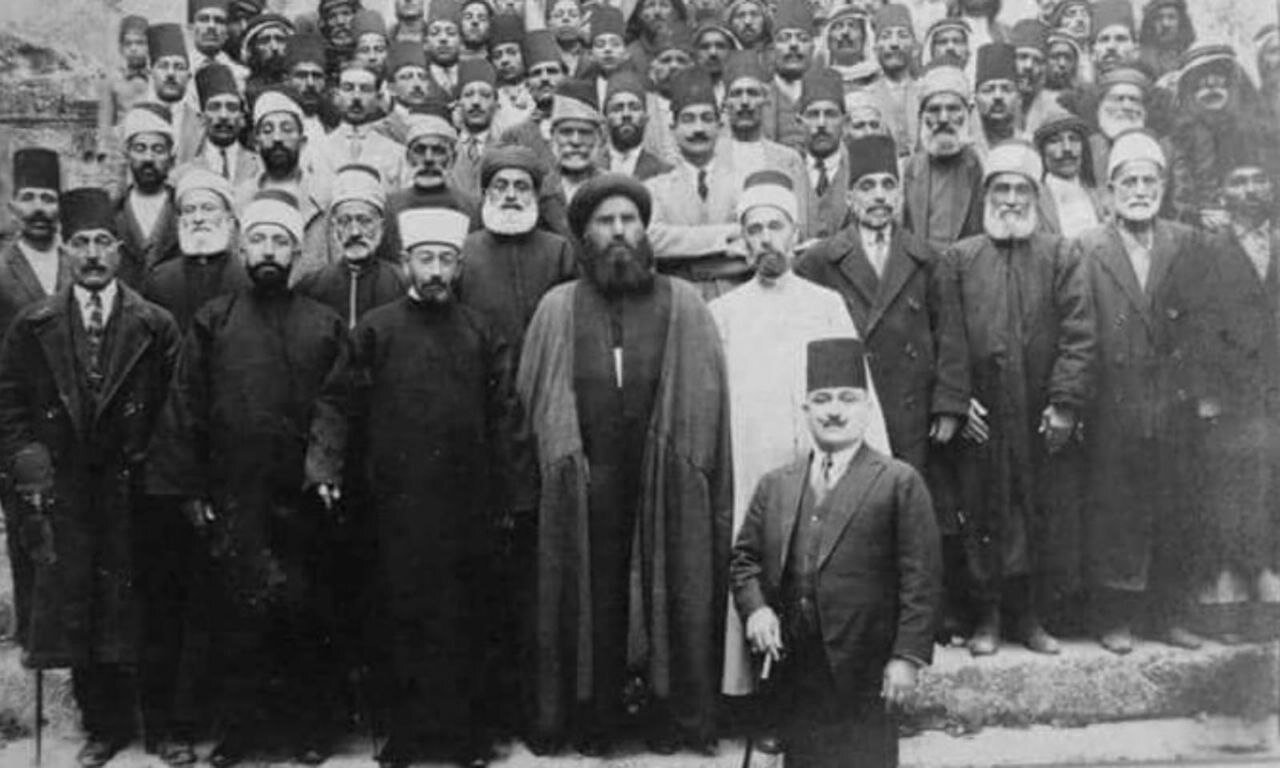
In the midst of this turmoil, Said Abdul Hussein Sharafeddin (RA), a revolutionary cleric and champion of Arab unity and independence, emerged as a leading intellectual.
On April 24, 1920, Said Sharafuddin convened the Wadi al-Hajr Conference, which categorically rejected foreign protection and guardianship and declared instead the need for complete and unyielding independence.
This assembly became the “constitution” of freedom and laid the ideological basis for resistance, including armed struggle, intellectual activism, cultural defense, and political mobilization.
Said Sharafeddin understood that effective opposition requires a core of military resistance, a backbone that supports broader social efforts.
He oversaw armed forces led by figures such as Hamza and Khanjar, and carried out daring operations against the French army.
The resistance then faced manipulation from colonial forces who sought to turn the struggle into a sectarian conflict and undermine the legitimacy of the Sharafeddin. However, he defeated these plans, educated the public’s consciousness, prevented internal divisions, and united the community against foreign plans.
Said Sharafeddin declared, “Either unconquerable dignity or unrelenting humiliation. A life of freedom or wasted depravity in the quagmire of humanity. Either independence without guardians or enslavement to sit as an orphan at the table of the vile.”
Sharafeddin’s vision extended beyond Jabal Amer. He warned of partition and fragmentation, seeing it as a means of making Lebanon and Syria vulnerable to imperial, especially French and British, designs.
He vigorously promoted Syria’s complete independence within its natural borders and cultivated a revolutionary consciousness that planted the seeds of sovereignty in the collective consciousness of “Greater Syria.”
History will repeat itself under Israeli occupation. From 1978 to its liberation in 2000, to its consolidation in 2006 and 2024, Lebanon’s sovereignty depended less on the state itself than on resistance, a society that rose to defend its identity, honor, and homeland when external aggression and internal weakness intersected.
Today, remembering this legacy reaffirms the meaning of independence.
Lebanese sovereignty was never a slogan. It’s a stance, a principle, a sacrifice. Syed Sharafeddin’s struggle and the generations of resistance that followed remind us that freedom is earned and defended by those who are willing to act, not just claim it.
As Shakespeare wrote, “this blessed parcel, this earth, this realm,” the homeland, is defended not simply by those who claim it, but by those who have the courage to liberate it.