
TEHRAN – When the International Criminal Court (ICC) last November issued arrest warrants for Israeli Prime Minister Benjamin Netanyahu and former Defense Minister Yoav Gallant on suspicion of war crimes in Gaza, the move was hailed by many as a historic step toward accountability.
The charges include using starvation as a weapon of war, intentionally targeting civilians, and obstructing humanitarian aid, which are fundamental violations of international humanitarian law.
By directly naming Netanyahu and Gallant, the ICC signaled that responsibility for wartime policy lies not only with military operations but also with the political leadership that authorizes them. This was an unusual and bold assertion of judicial independence, challenging the perception that the judiciary remains beyond the reach of powerful states and their allies.
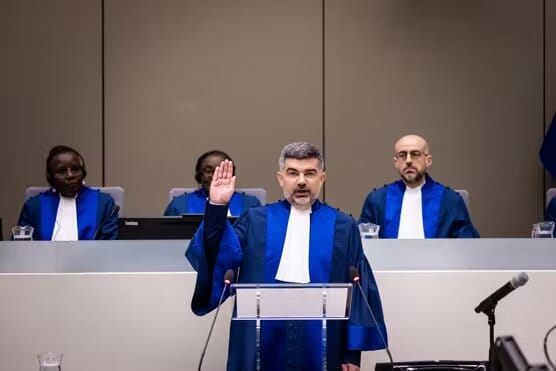
The United States responded by imposing sanctions on nine ICC judges, including Nicolas Guillou, rather than interfering with the evidence. His testimony reveals the suffocating scope of American power. “These sanctions are affecting every aspect of my daily life… being under sanctions is like being sent back to the 1990s,” he said, describing canceled hotel reservations, frozen accounts and exclusion from the global banking system. Overnight, Mr. Guillou lost access to Visa, MasterCard and other U.S.-controlled systems, demonstrating how America’s dominance in finance and technology can be weaponized to intimidate judges and prevent further action against Israeli authorities. The sanctions were not symbolic. They were designed to make those targeted feel anxious and helpless, isolate and punish.
Israel has rejected the legitimacy of the ICC, arguing that the court is biased and hostile. The refusal reflects past efforts to evade scrutiny of military operations in the Palestinian territories. With US support, Israel has placed itself beyond the reach of international justice and relies on political protection to protect its leaders from prosecution. The Palestinian Authority’s reaction was markedly different, with the ICC warrant hailed as a belated recognition of Gaza’s suffering. Human rights groups also praised the move, saying it was historic and necessary to strengthen accountability for war crimes. However, opinions among European governments remain divided. While some defended the ICC’s independence, others balked at U.S. pressure, exposing the fragility of international agreements when powerful states are involved.
This conflict highlights the imbalance of law and power. The ICC seeks to uphold universal principles, but its authority is undermined when judges themselves are subject to sanctions. Guillou’s call for European “blocking regulation” reflects broader demands for sovereignty in digital and financial systems, without which international justice remains vulnerable to coercion. The episode highlights how Europe continues to rely on US-controlled infrastructure, from payment systems to online platforms, and how this dependence can be exploited to silence judicial independence.
The ICC’s warrants against Netanyahu and Gallant marked a turning point in efforts to hold leaders accountable for war crimes. But the US and Israeli responses have shown how power can be used to suppress justice. Unless Europe and the wider international community defend the independence of the courts, the victims of Gaza’s devastation risk being abandoned and the principle that no one is above the law will be further undermined.