
TEHRAN – Nearly a year after Israel and Lebanon agreed to a ceasefire, and just weeks after their ceasefire with Hamas in the Gaza Strip, the situation on the ground shows that neither deal has brought lasting calm.
Across Lebanon and Gaza, civilians continue to face the threat of airstrikes, assassinations, and displacement. Many observers believe that Israel, with the determined support of the United States, is using the ceasefire as a political tool to control international surveillance while continuing its military operations largely unhindered.
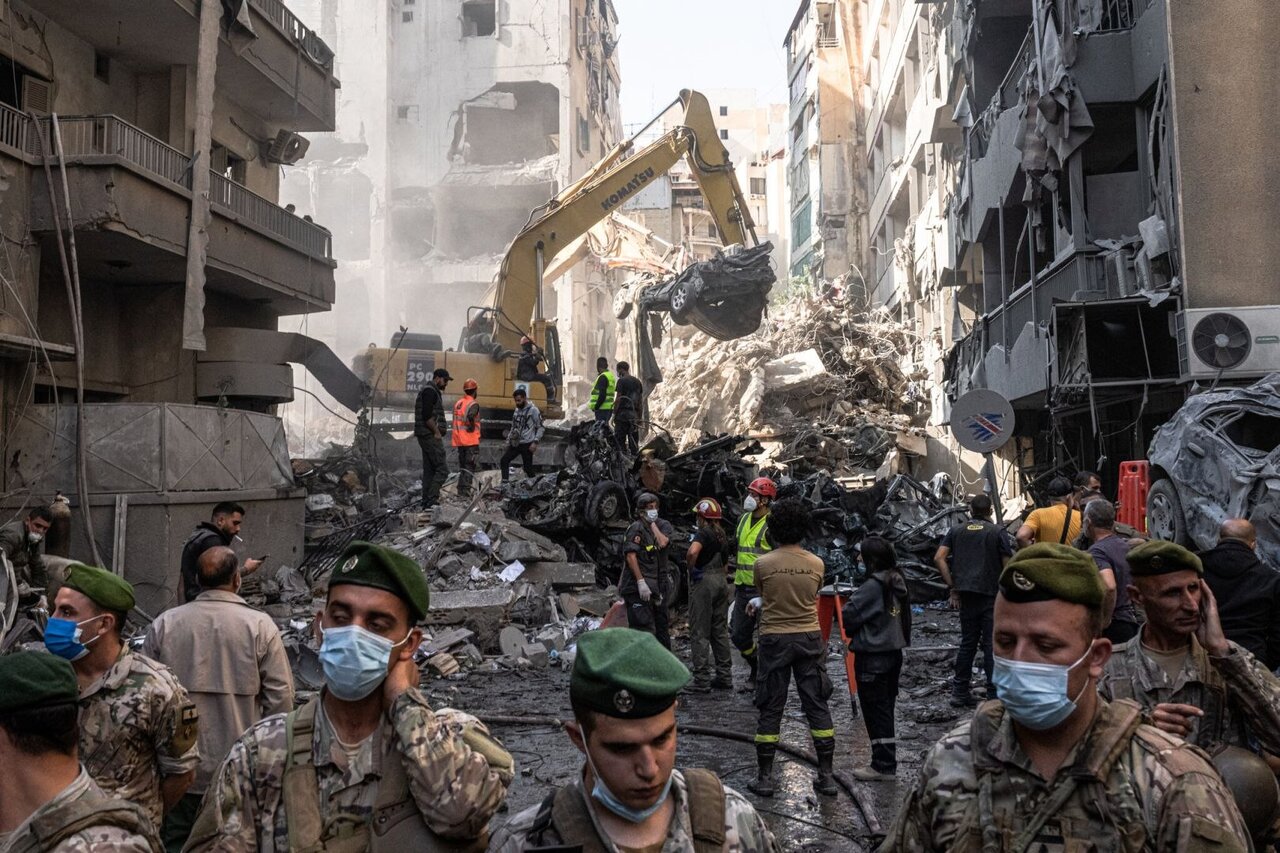
On Sunday afternoon, an Israeli airstrike targeted a residential apartment building in Dahieh, a southern suburb of Beirut, killing several people, including Hezbollah military leader Haitham Ali Tabtabai.
Lebanese authorities condemned the attack as a serious violation of the November 2024 ceasefire. Israel also continues targeted operations, airstrikes, and military patrols in the Gaza Strip despite the October 10, 2025 ceasefire. Analysts argue that such ceasefires primarily serve as diplomatic cover, allowing Israel to project an image of restraint while maintaining operational freedom.
strategic perspective
International relations expert Mohammad Bayat told the Tehran Times that a pre-emptive military strike could deter Israel from attacking Lebanon. He argues that such actions should be guided by a “unity of the battlefield” strategy.
Bayat believes that the attack on a vital Israeli center and the disruption to regional energy security resulting from the conflict could lead the White House to conclude that prolonging the crisis before the US midterm elections will damage the Republican Party and Vice President J.D. Vance’s political future.
US strategic support
Despite President Donald Trump’s pledge to end “endless wars,” the United States has provided Israel with advanced weapons, intelligence sharing, and political protection at the United Nations.
This support enabled Israel to operate simultaneously in Lebanon, Gaza, and Syria, shielding military action from meaningful responsibility. Critics argue that this US-Israeli collaboration has institutionalized impunity and escalated the humanitarian crisis across the region.
Lebanon’s human cost
Lebanon has endured devastating consequences since the conflict flared up on October 8, 2023, the day after Israel launched the Gaza war. The Israeli attack killed around 4,000 people and displaced more than 1.2 million.
In southern Lebanon, homes, farmland and critical infrastructure have been extensively destroyed. Attacks continued even after the ceasefire on November 27, 2024. Recent Israeli attacks on Palestinian refugee camps in Lebanon left more than a dozen civilians dead. Lebanese authorities estimate that up to 300 people have been killed in ceasefire violations by Israel, and around 400 violations have been recorded.
The threat of Gaza-style destruction
Israeli officials have repeatedly warned of Gaza-style destruction in Lebanon. For the Lebanese people, this is a terrifying threat. Gaza endured one of the bloodiest and most destructive military operations in recent history, with entire neighborhoods razed and tens of thousands of people killed.
Such rhetoric signals Israel’s willingness to use overwhelming force and emphasizes that the ceasefire does not limit Israel’s operational ambitions.
targeted killing
Tabtabai’s assassination is a continuation of Israel’s campaign to eliminate Hezbollah leaders, including Hezbollah’s lieutenant Syed Hassan Nasrallah and commanders such as Fauld Shukr.
These assassinations may have disrupted Hezbollah’s chain of command, but they did not eliminate the movement or damage its popularity. Analysts say such attacks reinforce the perception that Israel’s strategy is aimed at destabilizing Lebanon rather than negotiating peace.
Expanding business in Syria
Israel’s tactics in Lebanon reflect its expanding military presence in Syria. Since the fall of Bashar al-Assad’s regime in December, Israeli airstrikes and ground incursions have sought to secure strategic corridors and weaken resistance.
Despite its close ties with Syria’s new politicians, the United States has remained largely silent, indicating tacit approval. This consensus reinforces the perception that American policy prioritizes Israel’s strategic objectives over regional stability and civilian protection.
Geographical expansion risks
West Asia is currently in an unstable situation. Israeli operations across Lebanon, Gaza and Syria, coupled with US support and threats of Gaza-style destruction, risk provoking a wider conflict. Analysts warn that the ongoing escalation and repeated ceasefire violations could spark a conflict that could spread far beyond the immediate theater of war, destabilizing the entire region and affecting Israel and the United States itself.
Israel’s assassination of Tabtabai may have removed a key Hezbollah commander, but history and the group’s organizational depth suggest the move could strengthen rather than weaken the movement. Such attacks often galvanize internal cohesion, strengthen political legitimacy, and accelerate adaptation strategies that make confrontation with Hezbollah difficult.
Far from destroying groups, these operations tend to further strengthen their resolve, demonstrating that beheading tactics can backfire in the face of deeply entrenched networks and popular support.