
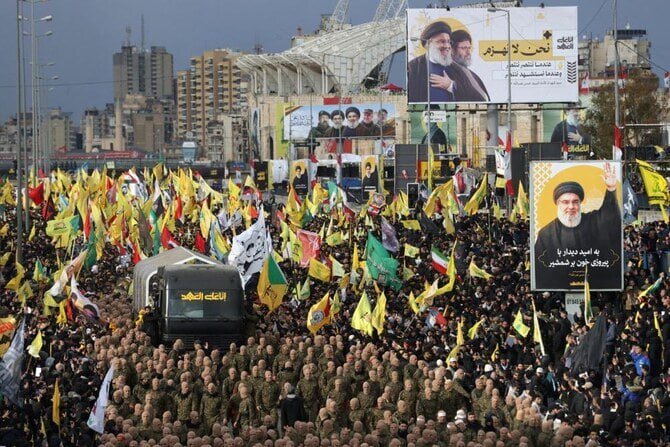
[South Lebanon]Hezbollah has never fought on a traditional equal footing. It has always faced an enemy with overwhelming technological capabilities, vast information resources, and almost unlimited Western support. But history has established a stubborn truth. Despite the asymmetry, the Zionist enemies repeatedly failed to translate their intellectual superiority into decisive victory or reoccupation.
In the last war, that “total information advantage” collapsed in the face of the resistance’s decentralized structure, covert tactics, and ability to adapt faster than foreign planners had expected.
Meanwhile, the struggle is entering a new and more dangerous chapter. The chapter is not defined by deterrence, but by mutual competition to shape the conditions for the next inevitable conflict. Both the Resistance and the Zionist enemy are in a strategic sprint.
For the enemy, this assassination campaign serves the express purpose of weakening the resistance before a broader conflict erupts. This is not just a tactical attack. It is an attempt to change that balance before the next war begins.
Eliminating key commanders, disrupting coordination networks, and targeting veteran veterans reflect efforts to secure a more favorable battlefield. But resistance is neither idle nor reactive. The approach is the opposite of impulsive escalation, and is a strategy of deliberate patience, rebuilding capabilities piece by piece, and adapting its structure.
Each passing day brings new provisions to the resistance. These include an enhanced command network, a new generation of fighters, a larger missile stock, improved air defense components, and evolving battlefield algorithms.
This timeline is why the enemy is “craving” for war. It seeks to shorten the process of rebuilding the resistance and take action before the U.S. midterm elections in April, which could bring about a change in the political landscape in Washington.
If some in Congress see political value in reconsidering unconditional support for Tel Aviv, even if only symbolically, this would represent a historic shift in American consensus. The Zionist establishment cannot risk going to war while its strategic backers are distracted, divided, or with less consistent support.
Resistance pays a heavy price in martyrs, commanders, infrastructure, and constant political pressure. But this sacrifice is not without purpose. This is part of a calculated exchange aimed at imposing much greater costs on the enemy in the future. The Resistance aims at two intertwined goals.
1) Reconfiguring the battlefield so that the final confrontation yields the best outcome.
2) Strategically, not symbolically, ensure that the enemy pays a price at each stage of the invasion.
This is not just a balance-building stage. It is a preparation for decisively curbing Zionist expansion, which has expanded deeper and faster in recent years than at any moment since 1982.
Clearly, West Asia is currently at what can only be described as a historic turning point, a situation in which deterrence alone is insufficient. The resistance is bracing for a confrontation that may not be limited to Lebanon’s southern border.
If the enemy miscalculates, the war could escalate into a regional, existential conflict involving multiple fronts.
Add to this the evolving security landscape, and the old days of slow penetration and information gathering are over. The battlefield is now digital.
Artificial intelligence engines analyze real-time indicators, and a single mistake such as a heat signature, communication anomaly, or supply pattern can reveal a target within minutes. In this new era, both sides operate under the constant threat of algorithmic detection.
One of the enemy’s biggest misconceptions has always been that assassinating the leader will render the resistance powerless.
This belief led the enemy in the last war to target a group of experienced commanders, believing that the organization would be thrown into chaos. But the Resistance didn’t just survive, it adapted.
We learned from that experience and are now preparing that leadership through dozens of layers. Every commander has a well-trained successor. All operating units have a parallel structure that allows them to take on commands without delay.
What the enemy once considered a fatal blow is now nothing more than a tactical hindrance. Assassinations cause temporary chaos, but not dissolution. This is why the enemy is now facing a new generation of commanders who are younger, more disciplined, more technically professional and battle-proven.
During the final battle, the enemy quietly evaluated some of these emerging leaders and realized that killing one generation had only paved the way for another, sharper, more adaptable, and less predictable. The replacement cycle is faster than the targeting cycle.
Today, Lebanon is living through a “prewar war.” At this stage, every assassination, every leak, every political maneuver, and every month’s gains or losses shape the battleground of the coming conflict.
The Resistance knows what will happen. So do the Zionist enemies. One side tries to buy time. Another person tries to steal it. And when that moment finally arrives, it will not be a limited skirmish. It would be a decisive war that would shape history. The outcome will determine whether Western hegemony retains its grip on the region for the long term, or whether a new balance emerges, one rooted in the will of the people rather than foreign power.