
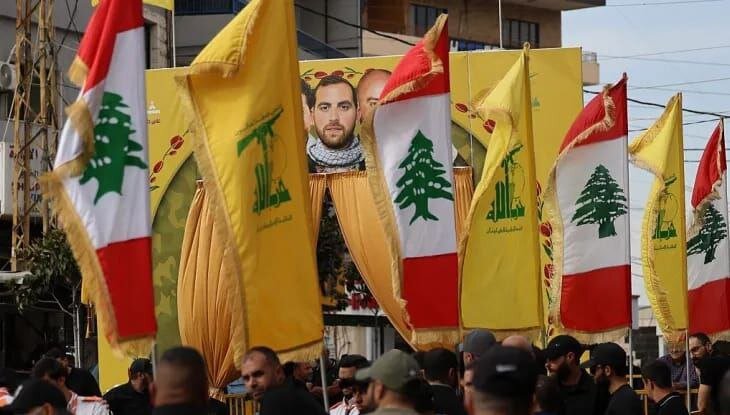
BEIRUT — A year after a ceasefire was declared between Lebanon and Israel, the country remains in a fragile limbo, caught between persistent security threats, deep political rifts and growing international pressure.
A so-called ceasefire ended the 66-day conflict, but it did not bring true stability. Rather, it has frozen a volatile situation where Israel continues to violate Lebanon’s sovereignty, leaving southern Lebanon in ruins and diplomatic efforts vacillating between conditional offers and implicit threats.
South Lebanon leaves indelible scars
On the ground, South Lebanon has visible and indelible scars. More than 96,000 displaced people remain unable to return to their homes due to Israel’s continued occupation of frontline areas, sporadic shelling, and widespread destruction of villages.
Twenty-four border villages are now partially or completely empty, and reconstruction efforts have been piecemeal at best.
The economic damage has been staggering, with damage to buildings and infrastructure exceeding $3.4 billion, and the broader impact on southern Lebanon exceeding $5 billion.
For many communities, this trauma is not new. Since 1948, waves of displacement from the Fula genocide to Operation Litani in 1978, invasion in 1982, long-term occupation until 2000, war in 2006, and conflict in 2024 have created a “double memory”: one of uprooting and one of reconstruction. Homes are rebuilt not just as shelters, but as vessels of identity, resilience, and resistance.
Israeli work
The military aspects of the conflict remain central. Since the ceasefire, Israel has committed more than 10,000 violations against Lebanese territory, including thousands of airstrikes and invasions, systematically violating UN Resolution 1701.
Tel Aviv’s goals are very clear. The goal is to control five strategic zones: Brat, Jal al-Dair, Dawavir, Hammam, and Al-Buna. Its elevated topography gives it a fire protection advantage over the southern villages up to the Litani River.
Historically devastated and subject to a ban on rebuilding, these areas form what Israel envisions as a “military belt” protecting colonial settlements in Upper and Western Galilee.
Even a single rocket fired from south of the Litani River, however rudimentary, threatens these settlements and fuels Israel’s enduring ambitions to reshape reality on the ground.
At the same time, Israel is testing the Syrian front and demonstrating a willingness to regionalize the conflict. This shows that Israel is never seeking genuine negotiations, but instead seeking tactical leverage for broader strategic goals.
illusion of mediation
Lebanon’s political negotiations are similarly complex. External actors, particularly Egypt, are attempting to mediate in their role to prevent any major escalation by Israel. Discussions often focus on the “removal of pretexts” that Israel can use to justify deeper incursions, even as far as the Awari River.
But behind the façade of mediation lies a deeper truth. That is, Israel’s ambitions are unapologetically maximalist. The goal is not to compromise, but to rewrite the legacies of 2000 and 2006 and impose a vision of “border security” rooted in a Greater Israel ideology.
Such ambitions have always been promoted by the United States, turning Israel into a regional instrument for the reorganization of the Middle East according to Washington’s strategic blueprint.
Meanwhile, there are actually three variables that define Lebanon’s current vulnerability.
1. Internal fragmentation: Lebanon’s fragmented political landscape weakens its negotiating position, exposing state institutions to pressure from the United States and Israel to concede sovereignty, while domestic factions compete to reshape the country’s balance of power in the name of reform. This is directly related to the external objective of eroding the popular base of the resistance and leading Lebanon towards a weakened solution.
2. The latest conflict: Critics emphasize losses in southern communities while downplaying military gains. For 66 days, the Israeli military was unable to hold strategic positions, reaffirming its rocket deterrent capabilities.
3. Regional mediation: Arab involvement, especially Egyptian involvement, increasingly resonates with US messages warning that Lebanon will slide into collapse and isolation if it rejects Israeli “guarantees.” Rather than protect Lebanon, this integrates the region into a broader US-Israeli project aimed at redefining the Middle East at the expense of Arab sovereignty.
A year after the ceasefire, Lebanon exists in a suspended reality. The war is not over yet, diplomacy has not been successful, and pressure is still forcing us to surrender. The real struggle is domestic. Lebanon must reflect on the past year, strengthen its unified national strategy, and reaffirm its sovereignty to protect its territory.
Without such a readjustment, other countries, primarily Israel as a proxy for the United States, would decide Lebanon’s fate, cementing its weakness to sovereignty and vulnerability to deterrence.
Here, the words of the martyr Hezbollah Secretary-General Saeed Hassan Nasrallah resonate deeply. “The outcome of this battle will be a great historic divine victory. Netanyahu, Galan, Ben Gvir, and Smotrich, in their own writings, are leading their own organization into ruin and into a third collapse. This reckless, selfish, narcissistic, erratic leadership will lead this organization to deep ruin.”But looking ahead to the future of this great battle, I say this. Days, nights, weeks, months, and perhaps years, this is a long and unfathomable battle with this being, but the fighters, believers, patients, people of conscience, and the wounded have seen it, and today the martyrs from above are witnessing it. ”