
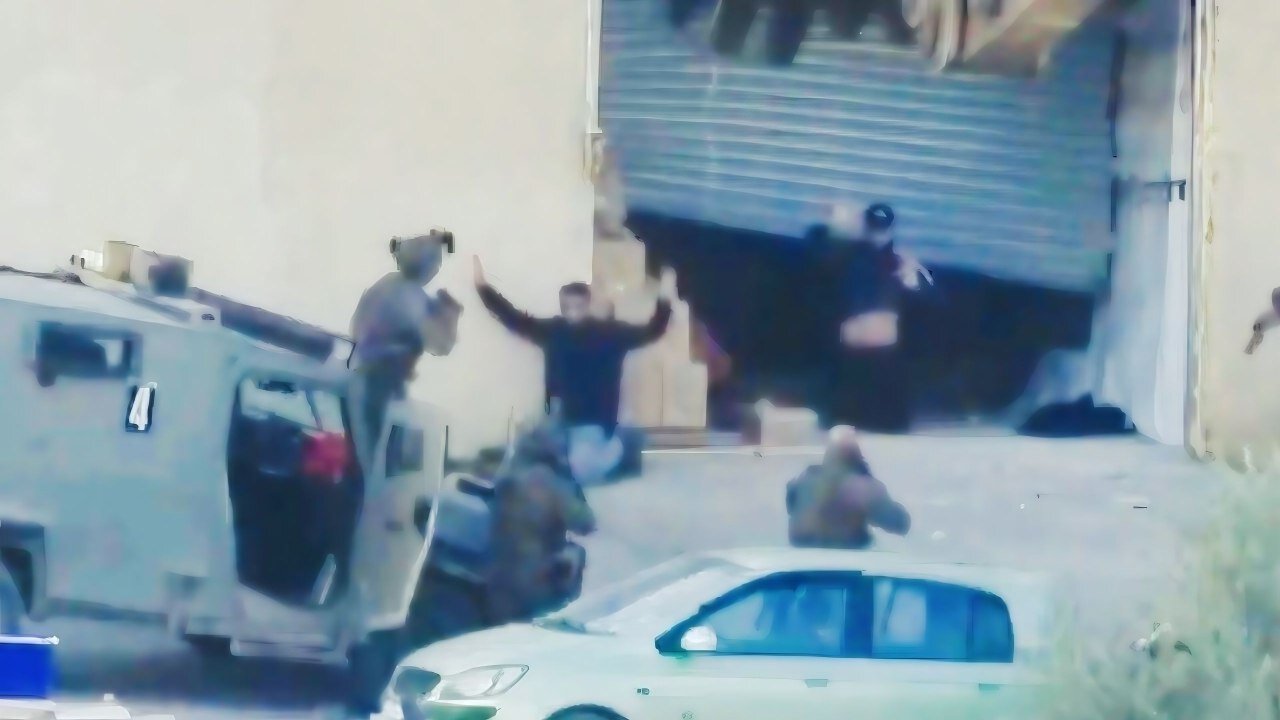
TEHRAN – The execution-style killing of two unarmed Palestinian men in Jenin, shot at point-blank range after they raised their hands in surrender, has sparked international outrage and renewed scrutiny of Israel’s entrenched culture of impunity. But for Palestinians, this atrocity hits tragically close to home, the latest chapter in a long story of unbridled state violence.
The victims, Al-Muntashir Billa Abdullah and Youssef Asassa, complied with all orders. They raised their arms, pulled up their shirts to show they were unarmed, and crawled back toward the building as instructed. None of these saved them. Israeli soldiers shot and killed both men at close range. The moment was clearly captured on video, which spread around the world and forced Israeli authorities to announce an investigation.
However, the far-right National Security Minister Itamar Ben Gvir made the government’s position clear. The soldiers acted “exactly as expected,” he declared. In his view, and Israeli security principles, any Palestinian, armed or not, is to be treated as a legitimate target.
Human rights activists in Israel warned that such killings were not unusual. The deputy director of the Israeli Physicians for Human Rights pointed out that this violence stems from decades of occupation, isolation and the systematic erasure of Palestinians from the moral horizon of the Israeli people.
Jenin’s murder fits into a long and painful pattern. In March 2024, two unarmed men were shot dead in Gaza as they tried to surrender, and another incident was caught on camera. In 2018, Israeli soldiers in Tulkarem shot and killed Mohamed Habari, an intellectually disabled man who was walking away. In 2020, Eyad al-Halak, an autistic Palestinian who was attending a special needs school, was murdered in Jerusalem (al-Quds). In December 2023, three Israeli prisoners of war in Gaza were even shot dead by soldiers trying to surrender, one of them waving a white flag.
Although Israel regularly announces investigations, meaningful accountability is virtually non-existent. From 2018 to 2022, the Palestinian Army received hundreds of complaints regarding violence against Palestinians. Only a small percentage of cases resulted in criminal investigations, and even more rarely prosecutions. Of the more than 200 fatal cases that came to the military’s attention, only one led to prosecution. These numbers reflect a system in which Palestinian lives are treated as disposable.
This incident occurred amidst new alarm bells ringing at the international level. A UN commission recently reported evidence of what it described as a “de facto state policy of systematic and widespread torture and ill-treatment” against Palestinians, increasing the urgency of the warning from October 7, 2023. The report, based in part on submissions from Israeli human rights groups, documented that Palestinians were shackled and blindfolded, subjected to deliberate starvation, and in some cases forced to wear diapers because they were denied access, even during treatment. toilet. Although Israel has denied all allegations, international concerns continue to grow.
Following Jenin’s murder, the Office of the United Nations High Commissioner for Human Rights condemned the incident as a “clear summary execution” and called for a credible and independent investigation. The Palestinian Authority called the shooting a war crime and called on the international community to intervene. Human rights groups around the world said the video was clear evidence of extrajudicial executions, part of years of organized violence, apartheid and state-sanctioned brutality.
The deaths of Abdullah and Asassa in Jenin are not a new beginning. These are warnings of how degraded the system has already become. It just so happened that the camera was recording, so the world saw their last moments. Countless other Palestinians have been killed far from the lens, in late-night raids, on roadsides, interrogation sites, prisons, bombed-out homes, and fields patrolled by armed settlers.
What happens next will depend on whether the international community ultimately chooses to confront Israeli impunity as a crisis that requires decisive action. The alternative is obvious. More bodies, more videos, more investigations that lead nowhere, and a system that continues to treat Palestinian lives as expendable.