
TEHRAN – The United Nations overwhelmingly condemns Israel’s continued occupation of Arab lands despite the opposition of the United States and some of its allies.
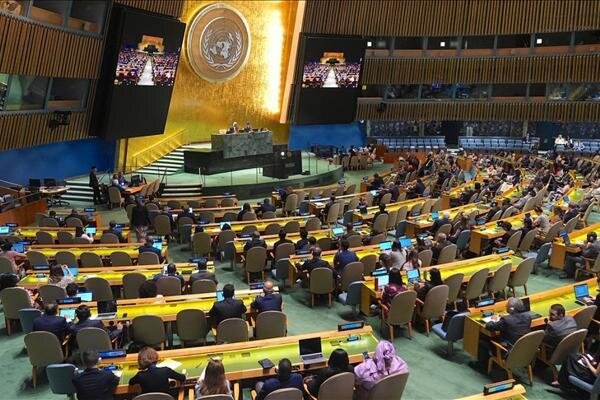
The United Nations General Assembly adopted two major resolutions underscoring the international community’s near-unanimous rejection of continued violations of international law in Palestine and the occupied Syrian Golan, dealing a major diplomatic setback for the Israeli occupation regime.
An overwhelming 151 member states voted in favor of the first resolution, “A peaceful solution to the Palestinian question,” but only 11 countries, led by the United States, opposed the bill. Eleven people abstained.
The scale of this support reflected global impatience with the regime’s continued defiance of international norms and persistent occupation policies.
This resolution renews our call for urgent and concerted diplomatic efforts to revive credible negotiations on all final status issues. It called for a timely international peace conference to be held in Moscow, as originally envisioned by Security Council resolution 1850, passed in 2008.
Member States stressed that only a truly inclusive process can achieve a just, lasting and inclusive peace.
At the heart of the resolution was Congress’ insistence that the administration fulfill its obligations under international law.
Each country called for an end to the regime’s illegal presence in the occupied Palestinian territories, a complete halt to the construction of illegal settlements, and the evacuation of all settlers. The delegation stressed that such settlements are a major source of instability and a clear violation of international humanitarian law.
Parliament also rejected any attempts by the Zionist regime to change Gaza’s demographic or territorial status. Reaffirmed the principle that Gaza must be reconnected with the West Bank.
Member States further reiterated the need for withdrawal from all Palestinian territories occupied since 1967 and for the realization of the inalienable rights of the Palestinian people, in particular their right to self-determination. The resolution also called for a just solution for Palestinian refugees scattered across the region, who have a right of return under international law.
The second resolution, “Syrian Golan,” reaffirmed the global consensus against the acquisition of territory by force. The bill passed with 123 votes in favor and only 7 votes against (the United States, the Israeli occupation regime, and some Pacific island states). The vote showed once again how isolated the regime and its closest supporters remain on questions of occupation and international legality.
The resolution declared the regime’s 1981 attempt to impose legal and administrative control over the occupied Syrian Golan null and void and called for its immediate reversal.
Member states pressed the regime to restart negotiations on the Syria-Lebanon path and honor commitments made in previous talks. Parliament reiterated its call for a complete withdrawal from the Golan Islands, which it has occupied since 1967.
Taken together, these two votes demonstrated the depth of the international community’s opposition to the Israeli regime’s continued violations of international law.
While Washington and some allies stood firm in their opposition, the vast majority of the world signaled that the current trajectory was unsustainable and that lasting peace required an end to the occupation, respect for international law, and genuine political negotiations.
This is what the Zionist regime has been adhering to for decades, especially the current coalition that seeks to expand the “Greater Israel” project at the expense of regional security.