
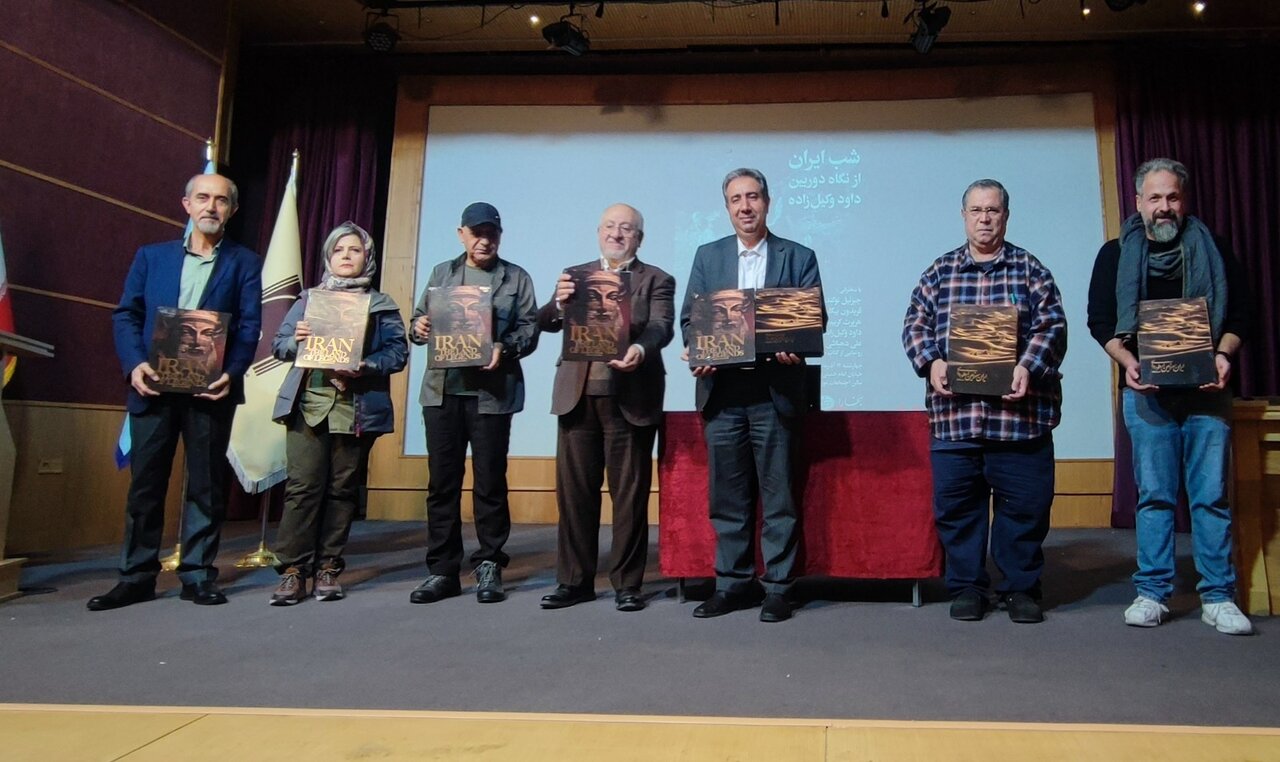
TEHRAN – The unveiling ceremony of the book “Iran, Land of Legends” was held on Tuesday evening at the National Museum.
The event, part of the long-running cultural series “Bukhara Nights”, attracted an enthusiastic audience of culture enthusiasts, academics and photographers, highlighting the public’s strong interest in Iran’s rich heritage.
The ceremony featured speeches by prominent figures, including Jebrael Nokhandeh, director of the National Museum of Iran. Mr. Fereidun Biglari, deputy cultural affairs officer of the museum; heritage photographer Herbert Karim Masihi; The author of this book is Davoud Vakirzadeh. and famous cultural figure Ali Debashi. The program culminated with the official launch of the book celebrated by the author along with the assembled guests.
In his keynote address, Nokande hailed the publication as a monumental cultural achievement. He said this moment is one of great pride for the National Museum, whose main mission is to tell the story of Iran’s glorious past. Mr. Nokandeh expressed his deep admiration for Mr. Vakirzadeh. Vakirzadeh’s decades of dedicated research have resulted in a series of publications that piece together the vast and grand puzzle of Iran’s history, culture, and natural landscape.
He also elaborated that “the legendary land of Iran” is the culmination of this lifelong journey. This large-format book, published in separate volumes in Farsi, English, and Spanish, reflects a deep understanding of the world’s interest in ancient Iranian civilization and is purposefully created for a worldwide audience.
Mr. Nokande further highlighted the book’s deep connection with the museum, noting that the book’s early chapters on prehistory and mythology are richly illustrated with images of iconic artifacts from the National Museum’s own collections. This deliberate choice creates a powerful dialogue between contemporary photographic art and ancient heritage, he said.
The museum director also clarified that true heritage preservation goes beyond protecting objects in archives and display cases. It is necessary to actively introduce and communicate its meaning to current and future generations. He asserted that the book fulfills that important role by serving as a “mobile museum,” a trusted visual document that conveys the essence of Iran’s greatness to homes and libraries around the world. He praised the book as a successful model of interdisciplinary collaboration, combining professional photography, historical research, and elegant design.
Finally, Dr. Nokande expressed the hope that the “Legendary Land of Iran” will serve as a timeless cultural ambassador and convey the message of Iran’s beauty, peace, and depth of civilization to every corner of the world.
morning