
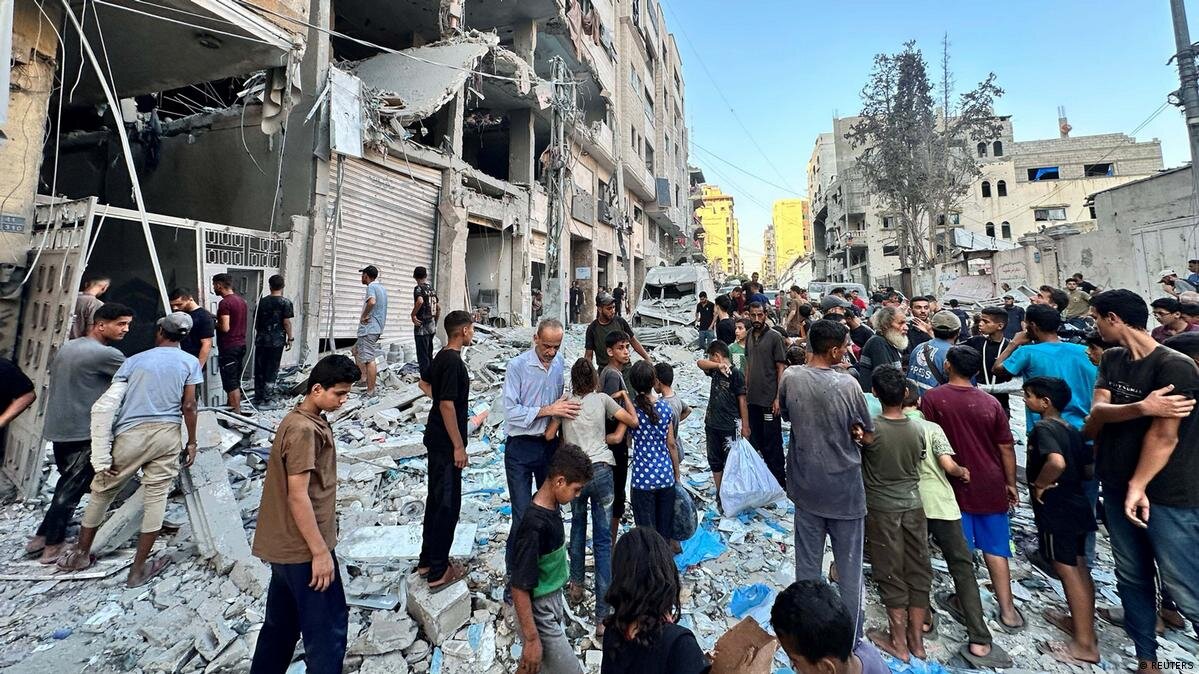
TEHRAN – The Israeli Occupation Forces (IOF) have carried out new attacks in eastern Gaza City and the Khan Yunis area, as violations of the ceasefire agreement continue in the Gaza Strip.
Local authorities reported multiple attacks across the territory, resulting in the death of a civil defense officer. Reporters in Gaza say IOF continues to demolish the remains of civilian housing across the so-called “yellow line” in the enclave.
IOF artillery also attacked areas east of Khan Yunis in southern Gaza, and airstrikes targeted eastern Khan Yunis, parts of Gaza City, and al-Breij refugee camp. According to reports, the Shejaya area of Gaza City has been completely destroyed after more than two years of genocidal operations.
The Zionist regime’s continued attacks in Gaza appear to be aimed at diverting domestic and international attention from the most tumultuous political and security crisis Gaza has faced in recent decades. Rather than projecting strength, the Israeli regime is revealing deep fissures that can no longer be hidden.
Since the US ceasefire agreement went into effect on October 10, 2025, the Israeli occupation regime has violated the agreement with repeated ground, air, and sea attacks across the Strip, resulting in hundreds of casualties.
Benjamin Netanyahu, the government’s prime minister and a war criminal wanted by the ICC, now faces a complex set of political and security challenges that amount to a complete strategic failure.
Domestic divisions have widened, military deterrence has been undermined, public trust in the leadership has plummeted, and the regime has become increasingly isolated under growing international pressure. Taken together, these developments reveal how fragile the Zionist regime’s political and security foundations have become.
This instability did not begin with the current Gaza massacre. In fact, the situation has become even more intense since Prime Minister Netanyahu established an extremist coalition government in 2022.
The situation then escalated dramatically with the Al-Aqsa flood operation on October 7, 2023, which marked a decisive turning point for the regime at home and abroad.
The occupation regime’s confusing political and military response through its genocidal attacks on Gaza only exacerbated the crisis within Gaza.
Prime Minister Netanyahu’s leadership is currently undergoing a period of severe instability, characterized by an inability to manage domestic political dynamics or maintain consistent external relations.
This marks a historic break for a regime that has relied for decades on three core pillars: overwhelming military superiority, unwavering international support, and stable domestic cohesion. Currently, all three pillars are being eroded at the same time.
International outrage, public mobilization, and sustained pressure from global civil society have further amplified the regime’s sense of fragility, proving unable to survive this environment.
There is a perception that Netanyahu’s only path forward is to continue his invasion of Gaza and stoke broader regional tensions in order to redirect domestic anger and attention.
However, this strategy has already failed on the world stage. Human rights organizations, United Nations agencies, and global movements continue to condemn the Zionist regime’s ongoing genocide, suffocating blockade, and devastating humanitarian impact on the 2.4 million Palestinians in the Gaza Strip.