
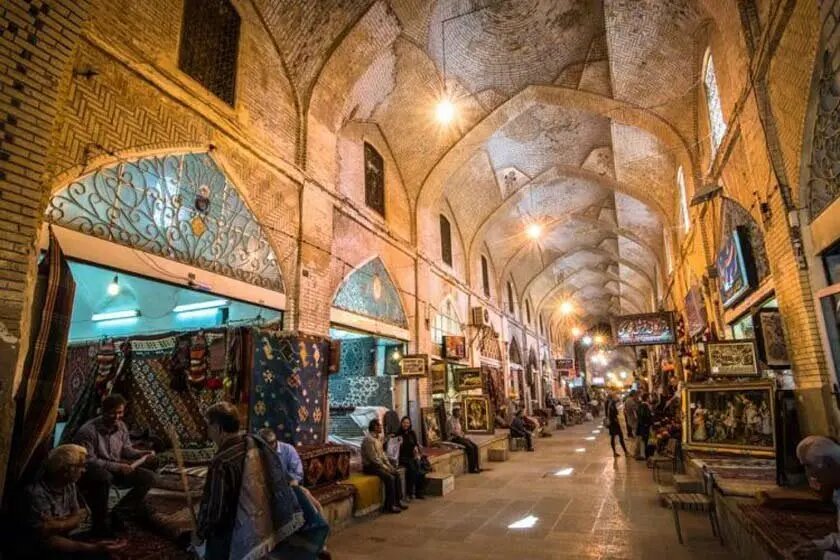
TEHRAN – Iran’s tourism minister said on Saturday that the historic bazaar of Arak is in need of urgent restoration work as the government aims to add it to UNESCO’s World Heritage List.
Tourism Minister Seyyed Reza Salehi Amiri told reporters during a visit to the centuries-old bazaar that the site has more than 1,700 shops and 22 caravanserais and timchehs, making it one of the country’s largest traditional commercial complexes. (Timche can be thought of as a short, broad, covered market, but this is a dead end for both parties.)
Salehi Amiri said the bazaar was already on the country’s UNESCO candidate list and a preliminary on-site evaluation had been carried out. He added that the visit was aimed at reviewing the situation and coordinating restoration plans with the Markazi provincial government, Arak Municipality and the provincial cultural heritage department.
He said the priority was to protect the value of the site and prevent further alterations. “The capacity of the bazaar is extraordinary and it needs greater financial and conservation support,” he said, urging merchants to avoid any new interventions that could affect the UNESCO process.
Salehi Amiri said that if the bazaar is successfully registered, it has the potential to become a major cultural asset in Markazi province. However, he cautioned that the nomination and evaluation process is complex and time-consuming.
He added that UNESCO experts could only be invited for further inspection once important structural and physical repairs have been completed.
He pointed out that currently is not the right time for a UNESCO visit considering the situation in the bazaar.
Salehi Amiri said that the government will summarize its plans for cultural heritage in Markazi District at a meeting of the Provincial Executive Council after the visit.
The historic bazaar of Arak is located in the center of the city and was built by Mohammad Yousef Khan Golji Sepadari during the early Qajar period. The complex includes commercial corridors, timche, mosques, baths, reservoirs, caravanserais, and sepadari schools. Its architecture is characterized by domed walkways, brick facades, and decorative Rasmi Bandi patterns, and it is the main intersection where the two major corridors of the bazaar intersect, with two large Chahar souqs at its main intersections.
morning