
TEHRAN – The second Trump administration released a 33-page national security strategy document released under the banner of “America First” and centered on redefining Washington’s role in the world.
The document clearly states that the United States no longer wants to serve as the world’s policeman, abandoning its past extensive military interventions, regime change operations, and regional order operations.
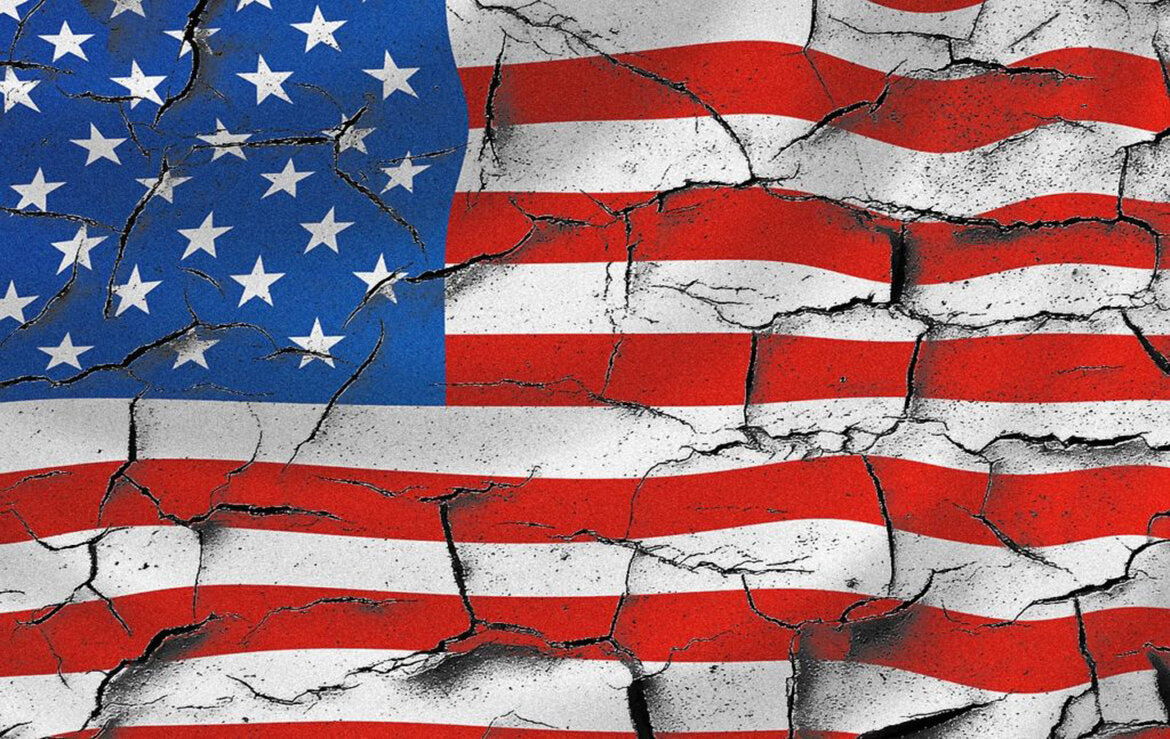
At first glance, this change appears to be a return to realism. But a closer look reveals the decline of American power and the structural constraints that currently bind America on the international stage.
Over the past two decades, the U.S. government has squandered trillions of dollars of economic and human capital in consecutive defeats in Afghanistan, Iraq, Libya, and across West Asia.
Two decades of war in Afghanistan, which began with promises of stability and democracy, ended in a withdrawal with no meaningful gains.
These repeated setbacks have cost the United States enormous economic, political, and social costs and deepened the country’s divisions.
The document depicts today’s world as a landscape of threats rather than opportunities, and argues that Washington must now prioritize defending the homeland and borders, reviving industry and technology, and protecting core national interests.
This posture is fundamentally defensive and inward-looking, indicating that the United States can no longer maintain its role as the unparalleled global hegemon.
Crises like the 2008 financial collapse, soaring public debt, a hollowing out of the middle class, and widespread inequality reveal not only America’s failures abroad but also the erosion of its power base at home.
Strategic competition with China and Russia, highlighted as a major challenge in the document, actually exposes Washington’s inability to win.
In Europe, too, long-time allies are exhausted and mired in economic and political troubles. U.S. demands for increased military spending are straining the historic relationship.
The Ukraine crisis is a clear example. The United States is unable to exercise direct and decisive control, and Europe is steadily increasing its own security burden.
In the Western Hemisphere, the document calls for curbing external influence from China and Russia, but the harsh truth is that America’s declining economic and diplomatic influence allows for only partial control, not complete control.
In West Asia, it is clear that US ambitions are shrinking. Aid to Israel and protection of the energy corridor are now the only priorities. There is neither the ability nor the will left to fully intervene in Syria or Iraq, let alone contain Iran.
Two decades of regional defeat and the rise of independent actors have stripped Washington of its former ability to dictate regional order.
The reduction in military forces and the shifting of responsibility to regional partners such as Saudi Arabia and the Emirates are clear symbols of the decline of hegemony, a reality that the new strategy openly acknowledges.
What emerges is a picture of an America that has taken a step back from global management and now sees the only viable path forward as a focus on domestic revitalization and narrow national interests.
Industrial revival, border security, and economic resilience are presented not as means to maintain advantage, but as desperate measures to arrest internal decline.
This slow-motion setback, compounded by battlefield failures, an inability to contain China and Russia, and a growing domestic crisis, signals the arrival of an era in which the United States will not be able to assert its global power without paying exorbitant costs.
In essence, President Trump’s second-term national security strategy signals a fundamental shift in American foreign policy. States can no longer play the role of world policeman and are therefore turning to hard power, resource control, technological superiority, and domestic economic reconstruction simply to maintain some of their former status.
The document highlights America’s vulnerabilities in both Europe and Latin America, with Europe as an exhausted and declining partner and Latin America demanding greater direct oversight.
The underlying message of this document is the decline of American unipolarity, an implicit recognition that the country can no longer shape the world order without paying a heavy price and is therefore forced to choose between domestic power and global presence.
Prioritizing homeland security, downgrading West Asia, sidelining Europe, refocusing on the Western Hemisphere, and engaging only selectively with China—all of these undoubtedly signal the decline of Washington’s hegemonic dominance and the steady shift toward global multipolarity.
Of course, it should not be overlooked that some powerful and wealthy Americans, as well as Israel itself, are by no means keen on such an approach.
Their interests and interests lie in dragging the United States into military and security interventions around the world. The Zionist influence on President Trump’s decisions is so pervasive that some analysts have said that President Trump’s operational strategic slogan is “America first, after Israel!”
Source: Sedaye Iran, Online Newspaper of the Islamic Revolutionary Institute of Iran, December 6, 2025