
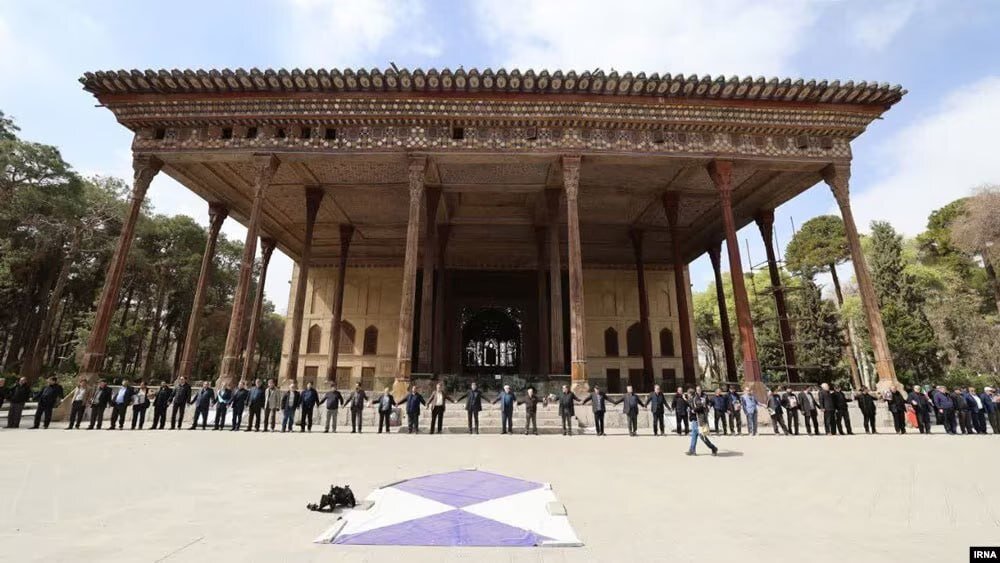
TEHRAN – US and Israeli airstrikes have damaged more than 130 cultural sites across Iran, including museums, palaces and UNESCO World Heritage sites, according to the country’s Minister of Cultural Heritage.
Iran’s Minister of Cultural Heritage, Tourism and Handicrafts Seyyed Reza Salehi Amiri said on Sunday that 131 historical sites were damaged, with the heaviest damage recorded in the capital Tehran.
“These attacks damaged 131 historical sites across the country, with the highest losses recorded in Tehran,” he said.
Among the damaged sites were parts of Golestan Palace, a UNESCO world heritage site dating back to the Qajar period, which sustained structural and decorative damage, as well as the Saadabad Palace complex, where 14 museums were affected, he said.
In the central city of Isfahan, the Chehel Sotoun Pavilion, a 17th-century Safavid-era structure, suffered major damage, Salehi Amiri added. Other sites in and around Naqsh-e Jahan Square, a UNESCO World Heritage Site, including the Shah Mosque and Sheikh Lotforah Mosque, were also reported to have suffered damage, with cracks in the structures and damage to decorative elements.
Iranian authorities said damage was also recorded in several provinces, including Kermanshah, Khuzestan, Fars and Kordestan.
In the city of Kashan, the historic Finn Garden, one of Iran’s oldest surviving gardens built in the late 16th century, suffered damage to its pavilions and water area.
Salehi Amiri said Iran had contacted international organizations such as UNESCO, ICOMOS and the United Nations, but responses were mainly limited to expressions of concern.
Iran’s Foreign Ministry also announced that dozens of universities and research centers were attacked, including Iran University of Science and Technology and Isfahan University of Technology.
Cultural heritage is protected under international treaties, including those overseen by UNESCO, which designate particular places as of outstanding value to humanity.
morning