
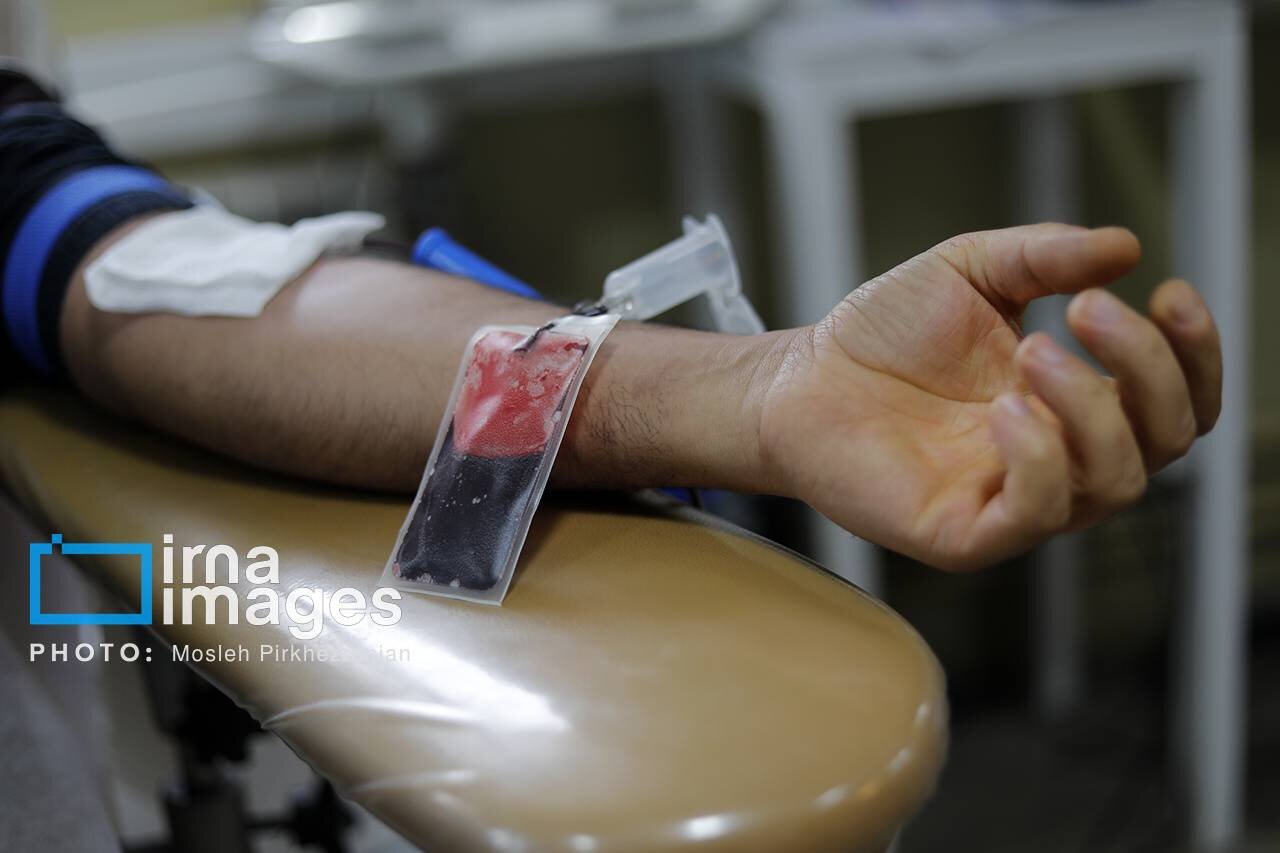
TEHRAN – Since the start of the US-Israeli-imposed war on February 28, there has been a notable increase in the number of women and first-time blood donors referring to blood donation centers across the country, blood transfusion organization officials said.
IRNA quoted Ahmad Karabaghian as saying that first-time blood donors accounted for more than 63% of all blood donors, and contributions from women increased by 79%.
From February 28 to April 4, more than 268,000 Iranians referred blood donation centers across the country and donated more than 220,000 units of blood.
With the outbreak of the illegal war between the United States and Israel against Iran, citizens of Tehran from all walks of life are visiting blood donation centers in large numbers to donate blood and help treat injured citizens.
Mehul News Agency quoted Babak Yektaparast, an official at the blood transfusion organization, as saying that the number of referrals and blood donations increased by 15% and 10%, respectively, last month.
He told ISNA that there is a “waiting list” for blood donations. “We are witnessing queues forming at some blood donation centres,” he said, adding: “We apologize to the public as queues to donate blood at the centers may result in longer waiting times and delays.”
He said the blood donation process takes time, and it takes about 40 minutes from registration to completion. “We are using all human resource capacity, but in some centers the number of visits for blood donations exceeds human resource capacity.”
The invasion has so far martyred more than 1,300 civilians and destroyed 9,669 civilian facilities, including 7,943 residences, 1,617 commercial and service centers, 32 medical and pharmaceutical centers, 65 schools and educational facilities, 13 Red Crescent buildings, and numerous energy supply infrastructures.
The Geneva Conventions and their Additional Protocols are at the core of international humanitarian law, the international legal system that seeks to regulate the conduct of armed conflict and limit its impact.
They especially protect those who are not taking part in the fighting, such as civilians, medical workers, relief workers, and those who are no longer participating, such as the wounded, sick, shipwrecked soldiers and prisoners of war.
The Convention and its Protocols require that measures be taken to prevent or deter all violations. These include strict rules for dealing with so-called “serious violations”.
While the country is at war, blood donation centers across the country are witnessing scenes of sacrifice and solidarity.
In the first two weeks of the current Iranian calendar, which began on March 21, the number of blood donors in Isfahan province increased by 34 percent compared to the same period last year. Interestingly, female participation increased by 106%.
In Golestan province, the blood donation rate increased by 28%. 21% of donors were donating blood for the first time. Women accounted for 10% of all donors.
During the Nowruz holiday from March 21 to April 2, blood donations in Ilam province increased by 12.5%, and the proportion of women increased by 113%.
According to Ektaparast, a total of 2,111,476 Iranians donated blood during the first 10 months of the past Iranian year (March 2025 to March 2026).
The growth in blood donations was highest in Zanjan (about 13%), Sistan-Baluchestan (about 10%) and Isfahan (about 8%), the Health Ministry’s website quoted officials as saying.
Over the same period, the country’s sustained blood donation growth rate increased by more than 55%. He pointed out that Semnan province (more than 69%), Golestan province and Qom province (about 67%) each have the highest rate of continuous blood donation.
In January 2025, former World Health Organization (WHO) Director Jafar Hussein praised the leadership of the Iranian Blood Transfusion Organization (IBTO) in blood safety and blood transfusion services, highlighting the organization’s remarkable achievements of a 100% voluntary and non-remunerated blood donation system, which is proof that the principles of universal health coverage are put into practice.
He also thanked blood donors, saying their dedication is an inspiration to everyone.
The official praised IBTO’s efforts and expertise in serving patients with rare blood types and highlighted Iran’s ability to serve as a model for other countries in the field of blood transfusion and rare blood management.
Speaking on National Rare Blood Day, Hussain guaranteed that no one is left behind, regardless of blood type, and praised the country’s steadfast commitment to equitable access to healthcare.
He praised the country’s unwavering dedication to tackling the unique challenges surrounding rare blood, and stressed the importance of cooperation, innovation and unwavering determination in this global effort.