
TEHRAN – Iran’s foreign minister has slammed Israeli Prime Minister Benjamin Netanyahu’s recent comments, calling Tel Aviv a “root of instability in the region.”
Abbas Araghchi’s reaction on the X Platform came after Prime Minister Netanyahu said in an interview that the United States “wants a strong and independent Israel, because Israel is the cornerstone of security in the Middle East.”
Iran’s top diplomat pointed out in the X-Post that the so-called “keystone of security in the Middle East” is wanted on charges of genocide and war crimes.
In a ruling that drew worldwide attention last November, the International Criminal Court (ICC) found “reasonable grounds” to conclude that Prime Minister Netanyahu and former Israeli army minister Yoav Gallant bear “criminal responsibility” for systematic war crimes and crimes against humanity in Gaza. A court later issued arrest warrants for the two officials.
Prime Minister Benjamin Netanyahu denounced the ruling as an “anti-Semitic decision.”
Israel asked the court in May to set aside the warrant, raising another objection to whether the ICC had jurisdiction. The court rejected the request on July 16, saying there was “no legal basis” to set aside the warrant while the jurisdiction issue was pending.
In his remarks, Aragushi also said that Israel had bombed seven countries in the past year and slammed Netanyahu for ordering acts of aggression against other countries.
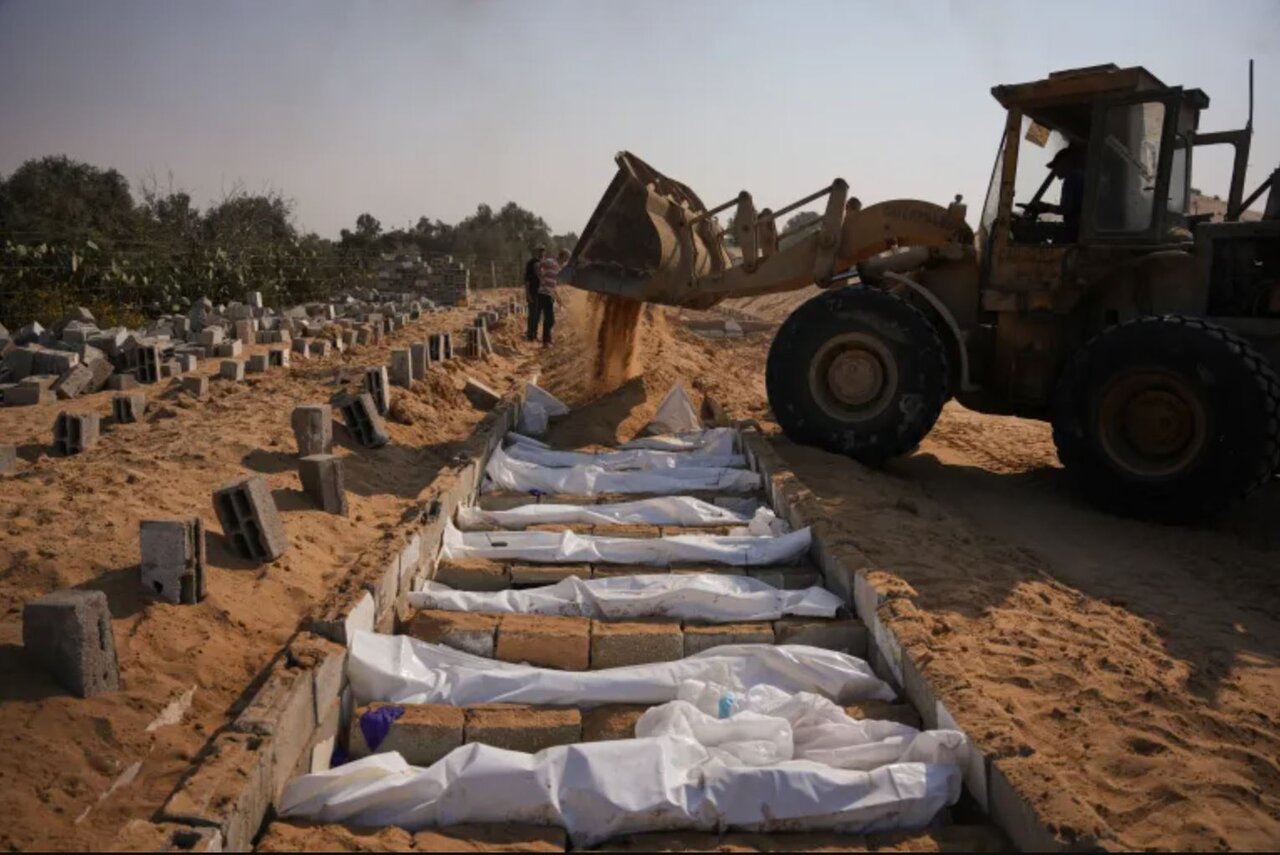
Israel has killed nearly 70,000 Palestinians since it began its genocidal war in the Gaza Strip on October 7, 2023, before reaching a ceasefire agreement there last month.
The Tel Aviv regime also carried out attacks in Qatar, Lebanon, Syria, Tunisia, and Yemen.
In Qatar, Israel launched what it called an “assassination operation” airstrike on Hamas’s headquarters, killing several members of the movement and Qatari security officials. Hamas members were meeting to discuss a US proposal for a ceasefire in Gaza.
In September, leaders of Arab and Islamic countries warned that Israel’s attack on Doha posed a serious threat to peace and stability in the region.
Tunisia became another victim of Israeli attacks. The government attacked the Global Sumud Fleet (GSF) heading for Gaza, but Tunisia dismissed this as a “pre-planned attack.” But the convoy vowed to continue sailing toward the besieged Palestinian territory despite successive Israeli attacks. They were eventually arrested by Israeli forces and prevented from providing aid to Gazans.
Prior to this story, the Israeli regime launched an unprovoked war against Iran on June 13th, assassinating many high-ranking military commanders, nuclear scientists, and civilians.
In his post, Iran’s foreign minister also condemned Israel’s occupation of Palestinian, Lebanese and Syrian territory.
Israel has occupied Palestinian territory for decades.
In a recent development, Israeli forces have captured approximately 17 acres of Palestinian land in the occupied northern West Bank, despite growing international condemnation of the ongoing land-grabbing policy.
Earlier this year, Volker Turkey, the UN High Commissioner for Human Rights, said Israel’s policy of expanding and consolidating settlements across the occupied West Bank amounted to a “war crime.”
Since October 2023, Israeli forces have gradually occupied parts of southern Lebanon and new areas of Syria, adding to the Syrian Golan Heights, which the regime has occupied since 1967.
Tel Aviv is supported by Western countries, particularly the United States, and continues to carry out its crimes with impunity despite international condemnation. Analysts believe Israel is likely to continue its aggression and launch new wars against Iran, Yemen and Iraq in the coming months.