
TEHRAN – Iran has entered a drought for the fifth consecutive year due to an unprecedented decline in rainfall, severe drops in dam levels and reduced groundwater. Some areas of Tehran experience water cuts of up to 12 hours. This situation is exacerbated by climate change caused by global warming.
July 23 was declared a national holiday in Tehran to save electricity and water. Iran has experienced the hottest week of the year, with temperatures above 50°C in some areas.
One of the few places to cool was the swimming pool. Tehran’s Water and Wastewater Company announced on Wednesday (July 24) that the provision of water to the city’s public and private swimming pools will be suspended until notification. As a result, the city’s swimming pool remains closed.
At the Cabinet meeting on July 20th, President Masuud Pezeskian issued a harsh warning. “The water crisis is more serious than what is being discussed today, and without urgent action now, we will face a situation where we cannot find any remedies in the future,” he added, “the water sector needs to go beyond management and planning to deal with excessive consumption.”
Last year, Pezeshkian called for the relocation of Iran’s political economic centre away from Tehran, citing environmental and infrastructure challenges in the capital.
In the case of water resources, Iran mainly relies on a combination of surface water from rivers and streams, groundwater from aquifers, and more and more desalinated water from coastal regions. Traditional methods such as Qantas (groundwater channels) also play a role, especially in rural areas. Uneven precipitation adds to the challenge.
According to some estimates, the ground below Tehran sinks up to 22 centimeters each year due to acute water shortages. The main reason is that subsidence is an overextraction of groundwater.
There is no easy solution in the future. A good place to start is to raise awareness among the public to reduce waste and excessive consumption of valuable resources. As public awareness grows, water usage patterns can be changed. Tehran’s per capita water consumption exceeds national standards, with most usage concentrated on alcohol and hygiene.
Population growth
Iran’s unidentified population growth is another factor. Iran’s population has more than doubled from 37 million to 80 million in 40 years.
Water shortages are a common problem in Iran, but the situation is serious in Tehran. The population in 1979 was 2 million, and today the larger Tehran metropolitan area has 16.8 million residents. Tehran is the most populous city in Iran and Western Asia.
The five main reservoirs in Tehran are the dams of Ra, Latian, Mamloo, Talegan and Amir Kabir (Karaj). These reservoirs play an important role in supplying Tehran with water.
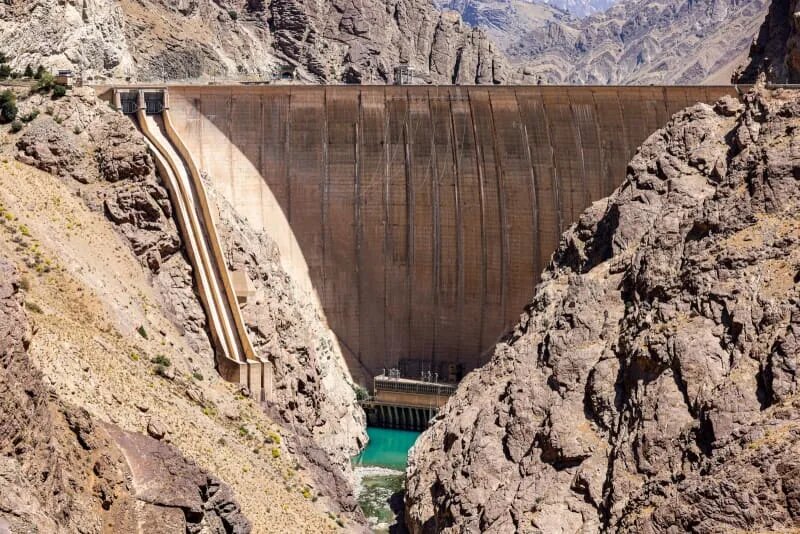
Amir Kabir Dam, passing through the Karaj River, has been reduced to the lowest level in history to 220.9 billion cubic meters, a spokesman for Iranian water resource management company Isa Bozorgzadeh. The concrete dam, 30 km northwest of the capital, was built in 1961 to supply water and electricity to Tehran.
Latian Dam is a Buttless Dam located within 25 km of Tehran, south of Labasan city. Built between 1963 and 1967, it is one of Tehran’s main sources of water and electricity. With a capacity of 95 million cubic meters, the dam has been in operation since 1967.
70% of Tehran’s water comes from five nearby dams, including Amir Kabir and Latian. As of March 5th, the reservoirs were only 13%, according to state media reports.
Looking back at five years ago, in May 2019, Mehr News Agency reported that Amir Kabir Dam was filled with 93%, an increase of 4% compared to the previous year. The significant improvement was attributed to exceptional water rapids that covered almost all states sixty years later.
Unfortunately, this year’s water shortage was also due to low precipitation, which the Department of Energy said was not at 93.8mm from early October to mid-March.
Extreme weather events such as water scarcity, desertification, sandstorms, floods, lake depletion and wetlands have caused internal evacuation, forcing many people to leave their homes and move to other regions, including northern provinces and cities around Tehran.
Three-quarters of Iran’s total land area are thought to be completely dry. Only 7% of Iran’s total land area is covered in forests. Most of these forests are located in the northern region along the Caspian Sea. The northern green pastures and their abundant waters due to their proximity to the Caspian Sea attracted many climate migrants.
Solution
There is no easy solution for a dry country like Iran. Long-term solutions require a combination of technology, infrastructure and policy changes.
Energy Minister Abbas Ali Abadi announced last week that negotiations are underway to import water with Turkmenistan, Afghanistan, Tajikistan and Uzbekistan.
Previously, Alibadi outlined efforts to address the water security of Sistan Balchestan by pursuing diplomatic cooperation with neighbouring Afghanistan and by pursuing to secure water rights on the Hillmand River. The Hillmand River is shared by Iran and Afghanistan and is an important source of water in the region.
In 1973, both countries agreed to allow Iran to flow 26 cubic meters per second (equivalent to 820 million cubic meters per year). However, due to political upheavals, including the 1973 coup in Afghanistan, the agreement has not been fully implemented.
Another proposal for the table is the relocation of the agricultural and industrial sectors along with the capital. This may not be a long-term solution, as relocation itself consumes water and resources.
Modernising agriculture, which uses 90% of Iran’s water resources, is a good place to start. Implementing water-saving technologies and better management systems for water allocation in this sector is a good investment to replace aging infrastructure and water leaks. This also helps to preserve the water.
While a record-breaking heat wave has plagued the nation, the situation in Tehran remains even more severe. The main reason is consumption in the country’s largest cities. Tehran’s water consumption reached 4 million cubic meters per day.
Regarding urban water shortages, there may not be a need to raise public awareness as everyone in Tehran has been talking about power outages and water shortages these days. Public education on how to avoid excessive water use and waste can go a long way. Another change in the paradigm is delegating more control to local governments about how water is allocated and managed.
Photo: Amirkabir dam passing through the Karaj River has been reduced to the lowest level in history.