
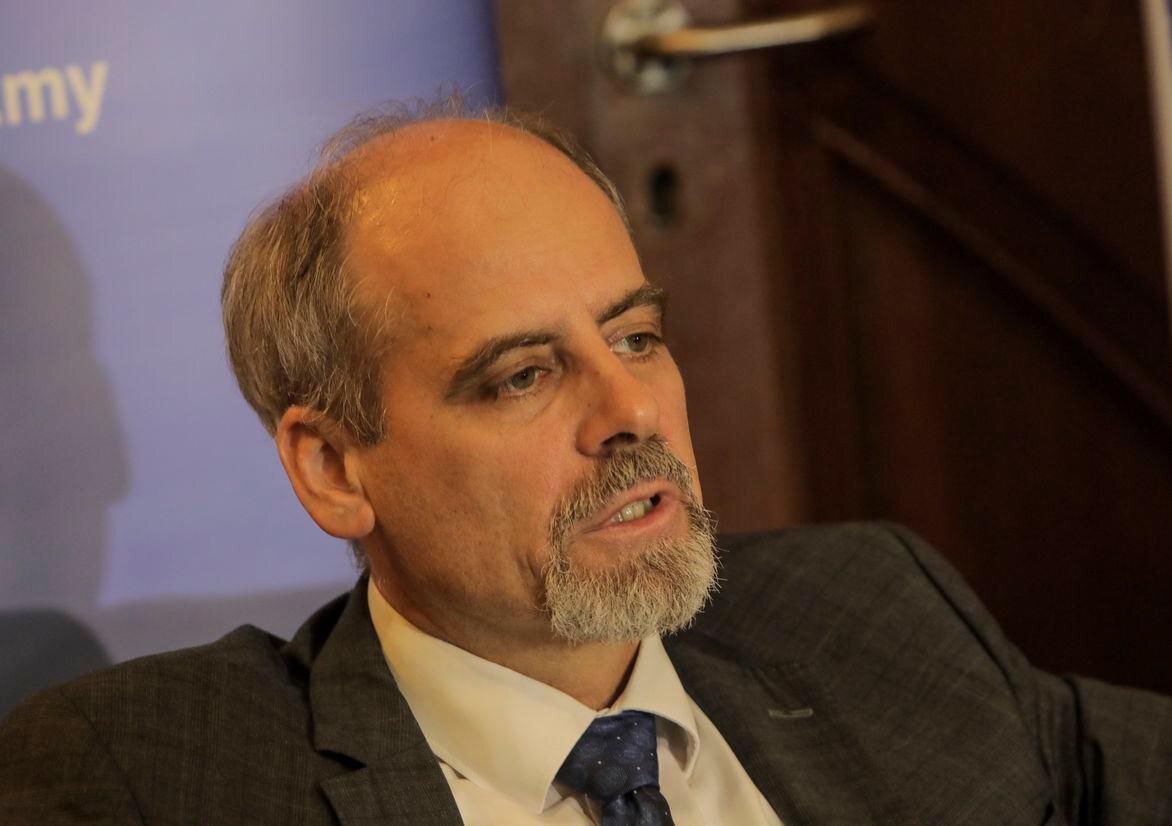
TEHRAN – Iran’s UN resident coordinator Stephen Pleenor said Iran’s aid budget needs to be at least doubled following the war Israel has imposed on the country.
On June 13, Israel launched a massive bombing campaign against Iran, killing top military commanders and nuclear scientists.
The Israeli strike has collided with military bases, nuclear sites and residential areas in Iran.
Iran retaliated against a wave of missile and drone strikes, striking Israeli cities. The ceasefire came into effect on June 24th.
“We’re currently preparing the budget,” Prienor told a press conference in Geneva for 2025, San Malaysia reported.
“It’s been a huge increase,” he said. “It’s a bit early to say exactly what you need, but we’re certainly going to expect double the funds.”
He hoped that the international community would raise more funds.
Officials said last year the UN budget for Iran’s development and humanitarian issues was $75 million, with around $50 million for refugees and $25 million for development programs.
Iran hosts the world’s most refugees (approximately 3.5 million).
Speaking from Tehran, Priesner said he hopes aid and development are seen as separate from other issues and that the situation hopes that the international community will increase support.
Pleenor said in 2022 the UN and Iranian government agreed to a five-year programme on public health, socioeconomic resilience, environmental protection, disaster reduction and management, and drug management.
The UN is currently in discussions with Tehran on “how to adapt programs to meet new needs” following the conflict with Israel.
The Prienor showed that the UN usually has 50 international staff and about 500 local staff in Iran.
When Israeli fire began, some employees and their families had to leave the house, but he said normal operations had resumed on Sunday.
UNSDCF 2023-27
In March 2023, the priorities for the work of the United Nations in Iran, which constitutes the United Nations Framework for Sustainable Development Cooperation (UNSDCF) 2023-27, were officially announced, paving the way for the next five years of activities by the national UN organizations.
The UNSDCF was the focus of the conference on March 12, 2023, with UN agencies, funds, programs and government ministries from the Islamic Republic of Iran. The conference, which featured around 130 participants, attracted over 80 delegates from 30 government agencies and attracted about 50 staff from 18 UN entities in the country.
The conference was jointly organized by the office of the UN Resident Coordinator and the Iranian Ministry of Foreign Affairs with the aim of strengthening cooperation and coordination between the UN entities and related Line ministries.
The UNSDCF signature is not the end of our collective work. “The document implementation phase has now begun,” said Mohammad Hassani Nejad Pirkowhi, Director of International Environmental and Sustainable Development Affairs, Ministry of Foreign Affairs, who is co-chaired by the conference.
“Adjusting and maintaining interactive approaches in the definition and implementation of collaborative activities over the next five years is the most important factor for our collective success,” he added.
The Prienor also reaffirmed the alignment of the cooperation framework and the country’s development aspirations.
“The new cooperation framework is in good alignment with national planning, particularly with a socioeconomic resilience approach, with a focus on intersectoral programs,” Pleenor said. “The UN in Iran can use its convening role to promote regional and international cooperation, including north-south and triangular cooperation.”
During these challenging times, we believe that transformative and innovative policies are needed to tackle complex challenges and support the more vulnerable, more vulnerable,” the UN resident coordinator added.
During the meeting, Iran’s achievements in human development over the years were recognized, and development trends and priorities for collaboration were investigated.
The UNSDCF covers the period 2023-2027 and is consistent with Iran’s 7th National Development Plan. This document focuses on five strategic pillars of public health management. Socioeconomic resilience, environmental protection, integrated natural resource management, climate change, disaster risk reduction and management, and addressing drug management.
The UNSDCF also enables the United Nations to coordinate with national authorities to provide humanitarian assistance to host communities.
The UNSDCF’s socioeconomic resilience pillar is based on policies to support the employment economy and to help realize “demographic dividends” by focusing on education and skills development.
Under the UNSDCF, UN agencies will help promote inclusive growth by supporting the strengthening of the country’s development plans and programs. This includes promoting human and social capital development, as well as increasing and access to institutional capacity to integrated social protection services.
The Pillar of Public Health Management will work towards an improved public health management system that promotes all health through all health systems, addressing the wide range of vulnerabilities of diverse environments and emergencies, and ensuring that all partners address health determinants and risk factors and contribute to promoting healthy lifestyles and settings.
This includes supporting service delivery and health information systems, developing healthcare professionals, and increasing availability and affordability of pharmaceutical and healthcare services.
The third pillar is dedicated to environmental conservation, sustainable use of natural resources and the ability to address climate challenges.
The environmental pillar works to promote the integration of environmentally friendly policies into all sectors, promote improved management of natural resources and biodiversity conservation, and to enhance national capabilities to address international capabilities, including climate advocacy.
In the field of disaster risk reduction and management, the cooperation framework supports programs that integrate disaster risk reduction into development plans and programs, enhancing the ability of people to work in the fields of disaster resilience, risk reduction and preparation, while strengthening institutional capacity for effective disaster response, response and recovery.
This pillar helps integrate disaster risk reduction into development plans and programs among various stakeholders, and works to enhance institutional capacity to manage disaster risk reduction, preparation, response and recovery.
From a drug management perspective, the collaboration framework will help strengthen national capabilities in drug transport management, including effective border control and drug transport management, by supporting evidence-based drug prevention, treatment, harm reduction, and improving access to drug-related services, and providing effective international financial and technical assistance.
The United Nations Partners will work to increase and improve the services available and work with the government to address issues of border control, illegal drug trafficking and drug-related crime.
In all these subject areas, the UN’s contribution to achieving the government’s national development goals will take several forms, as laid out by the UNSDCF.
These include support for institutional and entities’ development, but also provide technical support for outcome-based programming, facilitating and strengthening multi-sector approaches to data collection, analysis, reporting, and solving problems, identifying and delivering global best practices, including north-south and triangle collaboration, through Basenologal Support to promote knowledge transfer and technical support.