
TEHRAN – Germany’s attack on Poland on September 1, 1939 marked the beginning of World War II. On September 17, 1939, the Red Army crossed the borders of the Republic of Poland, implementing the provisions of the Hitler-Stalin alliance, the Ribbentrop-Molotov Pact, an agreement between the Soviet Union and the German Empire.
The Secret Protocol provided for the division of my country between the Soviet Union and Germany and the establishment of spheres of influence in Central and Eastern Europe. Poles fought a heroic but unequal battle against two totalitarian despots. In the occupied countries, Germany and the Soviet Union introduced large-scale terror and repression.
The most widespread and devastating form of repression used by Soviet Russia was deportation to the Soviet hinterland. Between 1940 and 1941, at least 315,000 Polish citizens were deported. Their tragedy began with a weeks-long journey in a cattle truck through extreme Siberian winter and summer temperatures. Many sick and elderly people and many children died on the journey. Most of the deportees were sent to work in harsh climatic conditions in forests and mines. Polish soldiers and police officers captured by the Soviet Union in 1939 were held in special NKVD camps in Kozelsk, Starobelsk, and Ostashkov. They were executed as part of the Katyn Massacre, based on a resolution of the highest Soviet authorities of March 5, 1940.
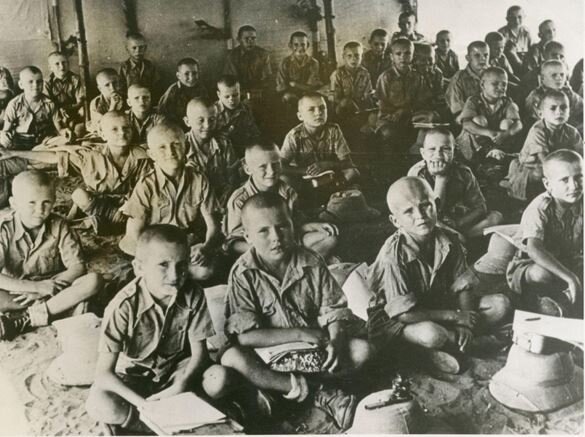
Only after Poland was invaded by its former ally Germany in 1941 did the Soviet Union recognize Poland’s government-in-exile and, after long negotiations, grant an “amnesty” to Polish nationals held in Soviet custody. They were allowed to leave the labor camps, join the newly established Polish army, and eventually leave Soviet territory for Iran.
Many of the soldiers of General Anders’ army and their families who came to Iran from Soviet Russia were emaciated and diseased as a result of years of starvation, extreme labor, and poverty. Despite suffering from wartime occupation by British and Soviet forces, the Iranian people showed remarkable hospitality to the newly arrived Poles, providing medical care, clothing, and food.
Poles have never forgotten Iranian hospitality and will never forget it
Poles have never forgotten, and will never forget, the warmth and hospitality provided by Iranians during that dramatic year of 1942. This very special bond between Poland and Iran will be celebrated with official commemorative events such as the visit of the Polish Foreign Minister to Tehran in 2022. Zbigniew Rau made an official visit to Iran in 2022 to commemorate the 80th anniversary of the arrival of Polish refugees. This high-level visit once again demonstrated the special nature of Polish-Iranian relations.
The events of 1942 are facts well known to ordinary Poles. Many Polish families have memories of relatives who were “deported by the Russians, survived Soviet prison camps, and were saved in Iran.” And these memories about Iran are always positive. As recently as this year, a group of Polish bikers traveled to Iran and visited Polish cemeteries in Ahvaz, Bandar Anzali, Mashhad and Tehran to remember these events and express gratitude to the Iranian people.
The Polish cemeteries in Bandar Anzali, Tehran, Ahvaz, Isfahan and Mashhad are not only historical sites marking the presence of refugees, but also remain living symbols of compassion and mutual respect between the Iranian and Polish peoples.
Perhaps the case of Iranian truck driver Farid Kazemi best illustrates the vivid memory and gratitude of Poles. In December 2019, his old truck finally broke down in Poland. After learning about an Iranian’s plight, his Polish colleagues and members of the public started an online fundraising campaign that enabled them to buy a new truck, which he happily drove home. This rather unusual story was widely reported in Polish and Iranian media.
Why would Russia want to have a say in Polish-Iranian relations?
Our Minister’s speech in the UK Parliament was not focused on Iran. It was entirely dedicated to the threat Russia posed to European peace. He stressed that Russia’s aggression goes far beyond conventional war and amounts to a systematic campaign of annihilation that ignores both international law and basic humanitarian principles.
In his speech, Sikorski condemned Russia’s use of drones, many of which reached Polish territory in September, and stressed the dangers posed to world peace by the use of indiscriminate force by permanent members of the United Nations Security Council.
Drone attacks in Ukraine have become common, frequently deployed against residential areas, schools, hospitals, and critical infrastructure, causing civilian deaths and widespread destruction. The consequences of Russia’s invasion of Ukraine under the guise of “liberating Ukraine from fascism” are clear for all to see. Shells tore through residential areas, civilians were executed during raids, and thousands of Ukrainian children were abducted by Russia.
In this context, we appreciate Iran’s refusal to adopt Russia’s narrative of a “just” war against fascism. On the contrary, it has consistently emphasized respect for Ukraine’s sovereignty and territorial integrity and unequivocally condemned acts of aggression against the country. It is precisely within the context of this devastating war of extermination, characterized by indiscriminate violence and systematic targeting of civilian areas.
Regardless of Russian rhetoric aimed at sowing mistrust between the countries, relations between Poland and Iran have always been positive and based on mutual respect.
Amid global tensions, these bilateral relationships demonstrate that diplomacy based on respect and understanding is sustainable and can resist attempts by third parties to manipulate or destroy partnerships.
Poland and Iran, which boast more than 550 years of diplomatic relations, will soon celebrate the 100th anniversary of the 1927 Treaty of Friendship, which has remained in force ever since.