
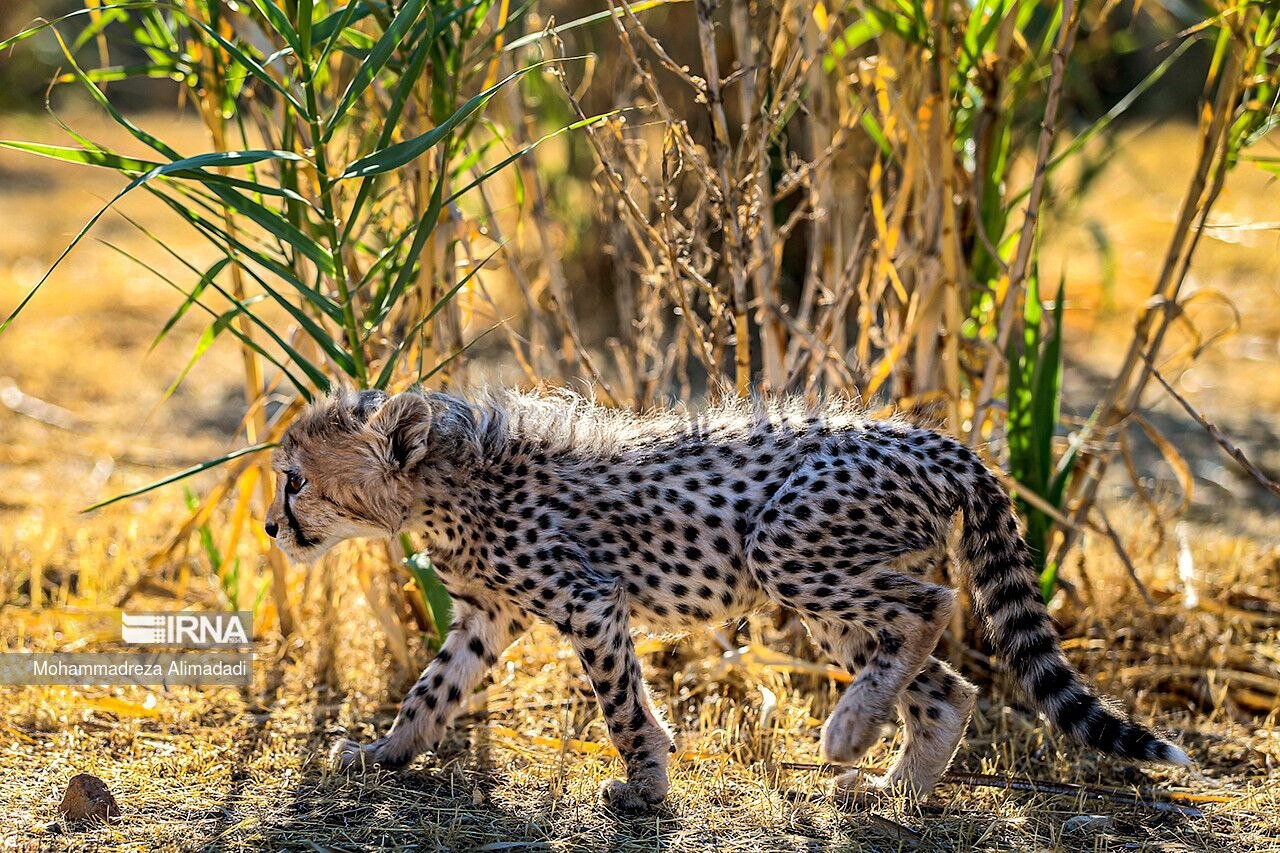
Tehran – Utilizing expert science and capabilities is essential for species conservation as it plays an important role in dealing with critical situations in endangered species.
Iran has a wide range of animal and plant species thanks to its geographical locations, climate diversity and enormous water resources of the Caspian Sea, Persian Gulf and Oman Sea.
However, over the past few years, many of these precious species, such as the Persian lions and Mazandalatigers, have died due to various threats. If nothing is done, species in extinction trajectories like Persian cheetahs, Persian zebras, yellow deer and black bears in Baluchistan will disappear, Irna quoted Hamid Zoharbi as saying.
Thanks to the established committee of experts to make technical decisions, measures taken over the past year are extremely effective in protecting species such as Great Bastard, Yellow Deer and Black Bear, Zohrabi said.
These committees employ expert scientific methods to develop effective approaches for animal conservation. He noted that they will follow up with decisive decisions to ensure that these plans will be implemented.
Officials continued to emphasize the role of foresight in species conservation, saying the lack of foresight regarding sustainable financial resources has led to many challenges.
Preservation of endangered species
In May, President Masoud Pezeshkian issued an order and was obliged to the Ministry of the Environment (DOE) to develop a strategic plan to maintain the country’s endangered species.
According to the latest report from the International Union for Conservation of Nature (IUCN), around 154 Iranian vertebrates are extremely at risk of extinction.
“The country needs a comprehensive and operational plan in the environmental sector covering a variety of environmental sectors. It should include goals, assumptions, operational measures, financial resources and results,” the IRNA quoted as saying by the president.
Iran is a rich country in terms of biodiversity, with around 37,500 species and over 8,000 plant species. Additionally, it is home to 579 bird species, 214 mammal species, 284 reptile species, 23 amphibian species, 309 freshwater fish species, and 763 marine fish species from the Persian Gulf, Oman Sea and Caspian Sea.
In addition, approximately 35,283 invertebrates have been identified in the country, of which more than 32,600 are arthropods. Over 94% of the country’s animal species diversity belongs to invertebrates, with less than 6% for vertebrates. At least 26,800 species of insects account for more than 70% of the country’s total species.
Asian cheetahs and ostricis are one of the species that has lost their natural population to under the age of 25, but are at risk of extinction. Furthermore, there are five species of Caspian sturgeons, which are unique in the world, disappearing from the waters of Caspia.
Extinction of species is a natural phenomenon, but the rate at which they disappear is a concern, according to experts. Unfortunately, the current rate of extinction is accelerating in the present era due to human activity. It will have serious consequences for ecosystems and planetary well-being.
Referring to the country’s biodiversity, Zorabi said:
Officials made their remarks on the occasion of World Biodiversity Day, celebrated annually on May 22nd.
DOE is in charge of the Convention on Biodiversity. The three main objectives of the treaty include saving biodiversity, promoting sustainable use of natural resources, and equal sharing of biodiversity benefits.
To realize these goals, community involvement is required. Environmental protection must be sustainable and social and economic factors must be taken into consideration in the planning, officials noted.
mt/mg