
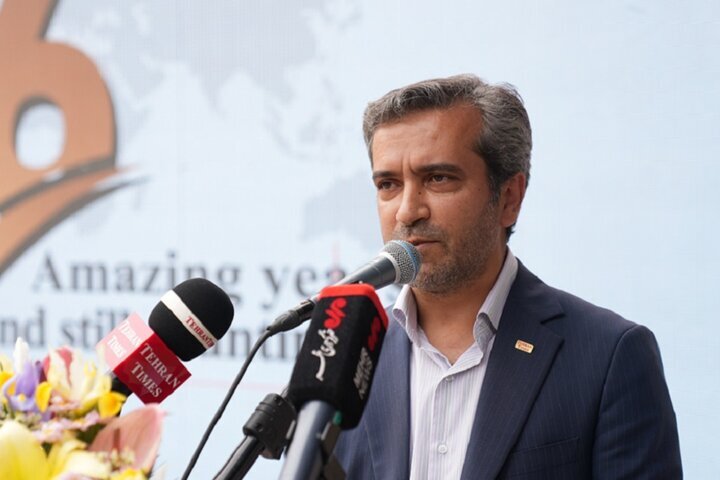
Tehran – In an age characterized by an escalating conflict and an increasingly polarized international landscape, the role of independent, truth journalism has never been more important. Amid the recent wild attacks by the Zionist regime on Iran, the Tehran Times emerged as a constant voice committed to presenting an inclusive, unfiltered narrative to the world.
When Western media stories often distort or sensationalize Iran’s position, English newspapers from the centre of Tehran have in themselves embraced a mission of clarity, resilience and human-centered storytelling.
As Iran faced direct attacks and international pressure, the Tehran Times found themselves at the forefront of the media’s battlefield. Mohammad Sarfi, editor-in-chief of the publication, mirrors the pivotal moments when his team stepped into the fight.
“We realized early on the importance of not only reporting on events, but also shaping a narrative that reflects the legitimate stance of Iran and the courage of its people,” Sarfi noted. “Our main purpose was to make it clear that Israel was deceived and offensive, and that Iran’s actions were rooted in self-defense and sovereignty.”
Sarfi emphasized that the media strategy was meticulously created to counter Western distortions. “We tried to convey that Iran and its troops were protecting their homeland with unwavering determination,” he explained. “We used a variety of formats such as articles, videos, and social media to ensure that the message reached quickly and accurately. It was a tough period and this experience taught us invaluable lessons about the importance of agility and determination in journalism during times of crisis.”
One of the decisive moments in this turbulent era was a threatening message from the US president, urging Iranian citizens to leave Tehran amid escalating tensions. In response, Mohammad Sarfi joined social media and tweeted a rebellious message. This bold statement resonated with many Iranians who viewed it as a symbol of immobility and national pride.
Reflecting this response, Sarfi said the message was a response to the enemy’s audacity. “We brought our greatest strength to the forefront and tried to protect our hometown against the empire of falsehoods from the enemy and the trench of its media.”
Faced with relentless war and propaganda, the Tehran Times is dedicated to humanizing women, children, innocent civilians, especially victims of conflict. The paper front page heading, “They are not numbers,” fully encapsulated this mission. Sulfi explained the importance behind this powerful phrase. “The enemy and its Western supporters aim to portray victims as mere statistics.
He emphasized that these stories are important in countering the falsehoods propagated by those who deny the casualties of human war. “They claim they are not hostile towards the Iranian people, but their bombs and missiles destroy our cities, kill innocent people, and destroy our families,” Sulfi said. “This contradiction must be exposed to globally. Our headlines and stories serve as a reminder that the humans behind all victims – mothers, fathers, children – are deeply important to life and stories.”
The decision to introduce the headline “They are not numbers” was spontaneous yet profound. “Inspired by the memories of the Martian, a Palestinian writer and poet of Gaza, I came to me all of a sudden,” Sulfi said. “He was an influential figure, and his work highlighted the importance of individual lives. This phrase symbolizes our commitment to sticking to me and honoring the humanity of each victim.”
“Even if the military conflict is stable, there is little, but we must realize that the media war is just beginning,” he warned. “Our work needs to evolve. Our strategy must be re-evaluated. We must prepare for future challenges.”
He emphasized that self-satisfaction is not an option. “If we go back to the old ways, if we are satisfied, it will be a betrayal of the sacrifices made by our martyrs and the harm to our country,” Sulfi argued. “War at the media arena requires continuous adaptation, integrity and a deep sense of responsibility.”
sab/