
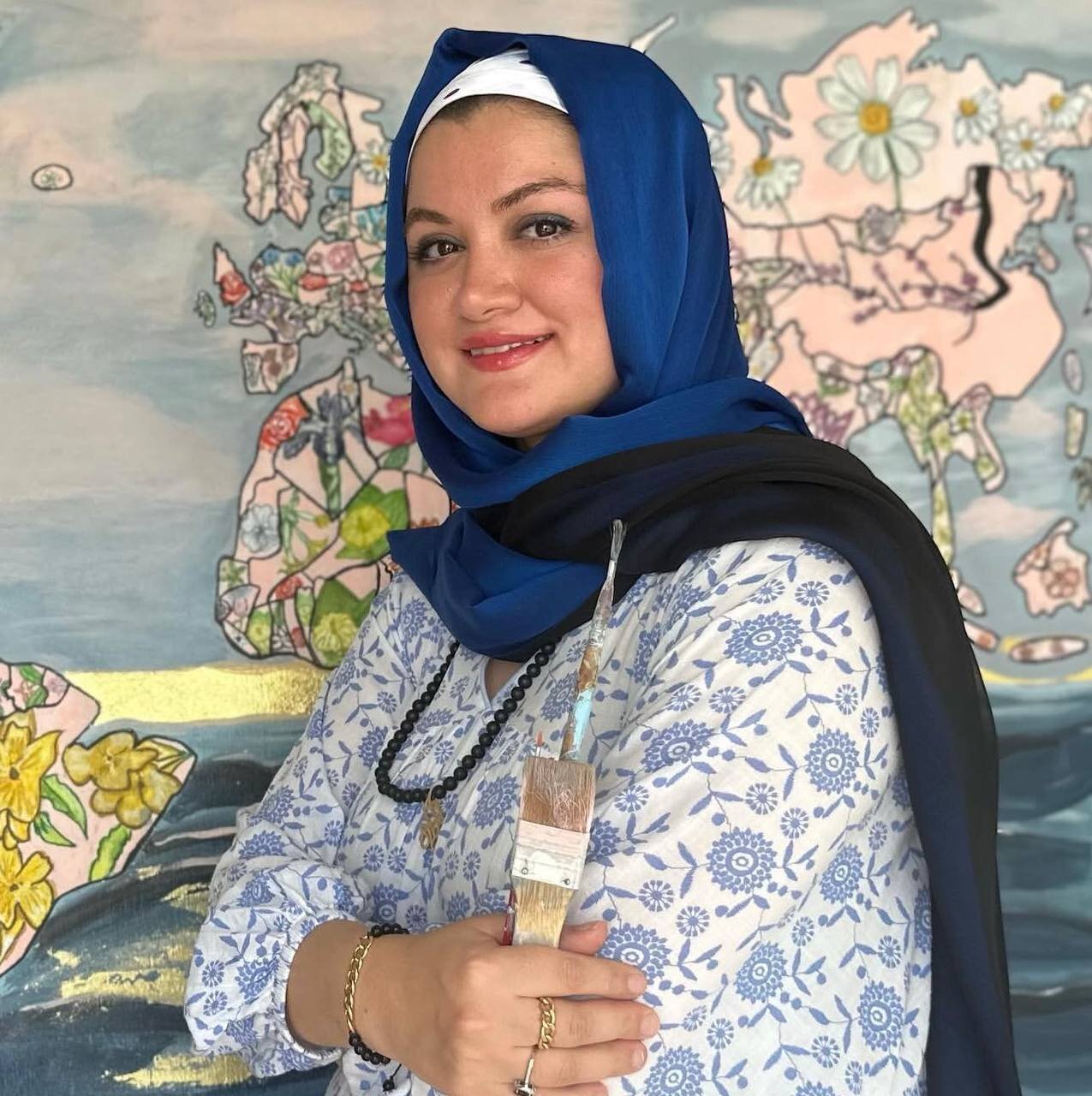
Tehran – Artwork painter and creator Fatemehi Ahi said in “The Symbols of the World and the People of the World.”
Speaking of the inspiration behind the work, Ahi explains: “I’ve always been deeply concerned with issues like peace and the environment. The core idea behind “flowers and the symbols of the world’s nationals” was to find ways to visually express them in ways that were familiar to the audience.
She added: “I decided to create this painting. I spent a year studying and studying various cultural and natural symbols. The last piece, 180 x 120 centimeters, was completed in July 2023 after two years of continuous work.”
Discussing the symbolism of the core, the artist states: “Broadly across cultures, continents, and languages, flowers have always conveyed one shared message: Peace. Perhaps the other symbols are universal, boundless, and have no emotional resonance. Flowers are not understood everywhere, but not flags or slogans. That’s why they have become the most concrete symbol of peace in the story of humanity.”
She continued. “It reminds me that peace is not an abstract ideal. It’s a daily choice. I choose to be kind in a tough world. I accept differences and choose to live without domination. If the world was just a bit like a little war, and if it was less, forgiveness would increase.
Reflecting the state of the world, she states: “We live in an age of complex environmental crises, systematic violence and deep cultural fragmentation. Creating images of unity, empathy and mutual respect is a way to remind people that we can coexist with each other.
Visual tales of cultural diversity and peace through art
Ahi explained: “In this painting, we aimed to place each flower and the symbol of the nation within our own geographical boundaries. The result is a visual narrative of cultural diversity, ecological consciousness, and peace-loving spirit that exists throughout the nation. Beyond the artistic aspects, the work has a global message.
She emphasized. “The flowers and symbols of painting are far from decoration. Each represents a part of the country’s cultural and ecological identity. Native plants are in harmony with the soil, climate and natural cycle of their own land. They do not require chemical fertilizers, excessive irrigation, or synthetic pesticides. Water pollution.”
Explaining further, she added: “One example is Damask Rose, an Iranian national symbol that has been deeply woven with Iranian traditions and rituals for centuries. By drawing this flower in the heart of Iran on a map, its beauty and vulnerability rivals its resilience. Blessing, the protection of thousands of years of civilization.”
Art as the last fortress of hope
She concluded: “I truly believe that art is the last fortress of hope in today’s world. If artists could remember viewers of nature, humanity, kindness and mutual respect for a while, they served their true purpose.”
Digital projection of the artwork of Azadi Tower
The artist also announced that her work will be featured publicly: “The digital projection of “flowers and the symbols of the world’s citizens” will be exhibited at the Tower of Azadi in collaboration with the Ministry of Culture and Islamic Leadership, the Ministry of Foreign Affairs, the Roudaki Foundation and the Azadi Cultural Complex.
She emphasized: “This cultural event aims to spread the message of peace and global solidarity, providing an opportunity to reflect the power of art to strengthen dialogue between nations.”