
Tehran – Before the accumulation of colonial wealth and the rise of institutional gatekeeping, art existed in a form that was raw, localized and intimately bound by living experiences. It emerged through formal complexity and market logic through craft, ritual, oral expression, and joint aesthetics.
These early forms were not simple in meaning, but only in structure. They conveyed the sadness, celebration, cosmology and survival of language, shaped by the environment and needs. There were no academies to prove, no gallery to curate. Artistic legitimacy stems from shared participation and resonant expression, not technical proficiency. This was an art as an existence, not as a performance.
During that period, the economy of arts unfolded in two different modes. It took shape in social life itself, including tea houses, village gatherings, and domestic spaces. Here, the artwork was neither priced nor sold, but was exchanged through mutual presence and the need for sharing. The artist’s relationship with the audience was similar to the economy of gifts, not for charity, but because the fulfillment of human needs replaced monetary value. There was no market. In contrast, the second mode belonged to the courts and churches, where art was assigned, paid and owned by monetary value. It became a financial asset and was incorporated into systems of price, ownership and display.
Colonial expansion promoted the accumulation of wealth and created a class of merchants and capitalism that could commission art. These committees did not reflect deep cultural insights, but served as visual affirmations of financial position and social rank. Art entered the bourgeois home through transactional displays rather than aesthetic intimacy. However, as market demand grew, so did the perception that creative possibilities were distributed far beyond elite circles. The gap between vast creative capabilities and grown but limited demand has led to structural problems. The system requires mechanisms to regulate and limit the artistic supply.
As wealth was accumulated and artistic production became wider, individuals and institutions began to construct aesthetic rules that argued to define legitimate art. These rules were central to technique, complexity, and pedigree, and were tools of exclusion rather than neutral guidelines. By presenting their criteria as universal, they created a framework for sifting and sorting artists, examining the few selected while alienating the rest. The academy and tastemakers have formalized these codes and transformed them into standards of economic access and cultural perception. Through this system, aesthetic control became economical control. Art was no longer an open expression. Compliance has been filtered.
As the aesthetic hierarchy solidified, dominant centres like Athens, and European continuity in Vienna, defined and presented it universally through its own cultural lens. This framework alienated forms of artistic expression rooted in everyday life: home art, pastoral crafts, and teahouse aesthetics. These were excluded because they did not reflect the concept of elites of refinement, not material shortages. Depth claims have become a tool of restraint. Complexity, as defined by the centre, made living experience irrelevant. Through this manufactured standard, power dismissed what it could not own and silenced art that was born outside its approved territory. Art was now a concept that could be completely absorbed into the logic of a money-centered economy.
As academic art integrated its authority, iconic figures emerged to embody the sanctioned ideals: Beethoven in music, Goethe in literature, Ingles in painting, Rodin in sculpture. These names have become more than an artist. They were symbols of mastery, depth and cultural legitimacy.
Around them, artistic circles formed: salons, cafes and gallery scenes curated their tastes, and affiliations indicated their status. These spaces promoted not only aesthetic exchange but economic integration. Culture producers (writers, composers, painters) are in a clear class in line with wealth and institutional power. Europe, then America, and then after that, art was no longer a profession. It was a profession embedded in capital.
The label “naive” was made to exclude, rather than explain, as used by institutions to prohibit unauthorized creators from entering the cultural economy. This allowed gatekeepers to dismiss rural, domestic and preschool art as lacking depth, protecting elite spaces from confusion. However, academic control was not absolute. When demand suddenly surged through market spikes or collector trends, the Institute responded by creating small, iconic openings rather than expanding access. Naive art was allowed at the marginal angle of the gallery. Not as recognition, but as containment. These gestures absorbed surplus demand without threatening the hierarchy, turning aesthetic tolerance into a calculated tool for economic regulation.
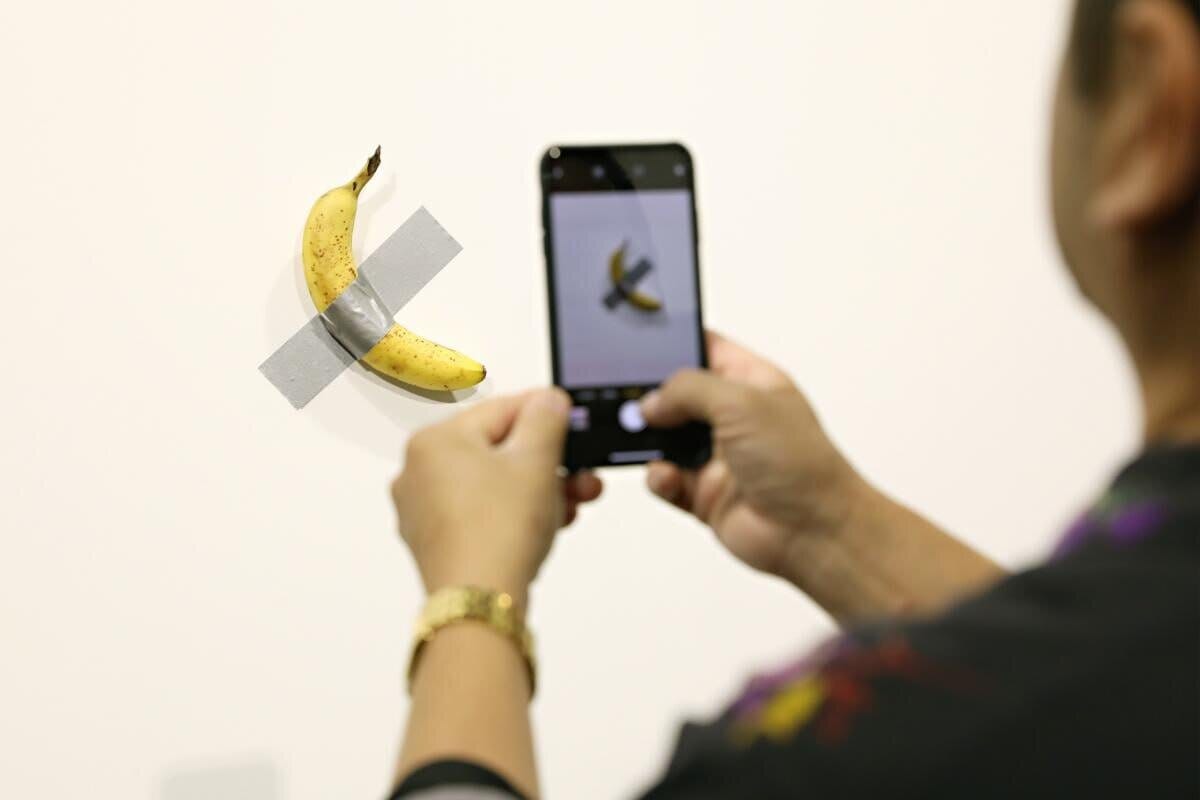
As the Athenian and Bieren models of cultural refinement became tools for exclusion, their authority worked not by the depth of authenticity but by the strict dismissal of human taste. The framework is covered in intellectual prestige, but was cruelly indifferent to the living preferences of emerging viewers. The wealthy American cowboys and their oil-rich cop, renewed empowered by capital, rejecting the domination of meaning, with country music, more favorable than Bach and Beethoven, as the sole standard of artistic value. Their preferences revealed the artificiality of elite standards. In response, the creator class opened up a strategic detour, the rise of anti-minded movements, rather than wanting to abandon its iconic control. In literature, this included surrealism and absurd theatres. Music, atonal composition, minimalist repetition. Visual arts, cubism, dadaism. These movements did not democratize art, but reasserted control by declaring irrelevant meaning. Thus, exclusion persists and is now disguised as radical openness.
Once internet access became universal, all individuals became broadcasters. There is no need to flatten the gatekeeper for the slots of curated media. At the same time, the rise of credit-based currencies and cryptocurrencies has caused an artificial surge in purchasing power. Today, the art market, which combines entertainment, is expanding beyond recognition. Those who remained within the old framework retained academic authority, but abandoned the economic terrain to Instagram girls and viral personalities. The iconic capital of art was theoretically preserved, and its financial capital has shifted into the realm of algorithmic visibility.
As sociological and anthropological analyses of artistic transformation grew, prominent silence surrounded the economic aspects. The economy of art – pricing, its commodification, its market logic – was an obscene invasion into the sanctified realm of aesthetic discourse, treated as a contaminant. Like urine and feces, it is something that is expelled from careful analysis, and is too vulgar to name. This omission was not a coincidence. It was ideology. By refusing to confront the economic substrate of artistic change, these fields were forced to interpret development through complex, often inconsistent parameters. The results ignored the very power that the body of theory tensed to explain cultural change shaped them.
A more human future for art is not a utopia, it is a rehearsal that can be started today. In this future we will stop tagging prices on gestures and stop pretending that their meaning and depth are culture gatekeepers. The old excuses – the fame of Athenians, the finesse of Vienna – are already crumbling. So we chased the infertility appeal of legal Instagram porn and stopped going back to the floor we started. We sit in circles. Someone plays a mouth harp. Someone else sings from the song. We applaud and not perfect.
Children draw biased houses and giant dogs. We bend their paintings against the wall and hang them down. Next month we will pull them down and hang new ones. And no one asks if they smell like Kant, Heidegger, Plato, Wall Street. They smell like breath after tea. Like a nail with pigment underneath it. Like a human child, like a human, like a person who tries to try and try again. And with laughter and joy, we kick the temple’s reply table.