
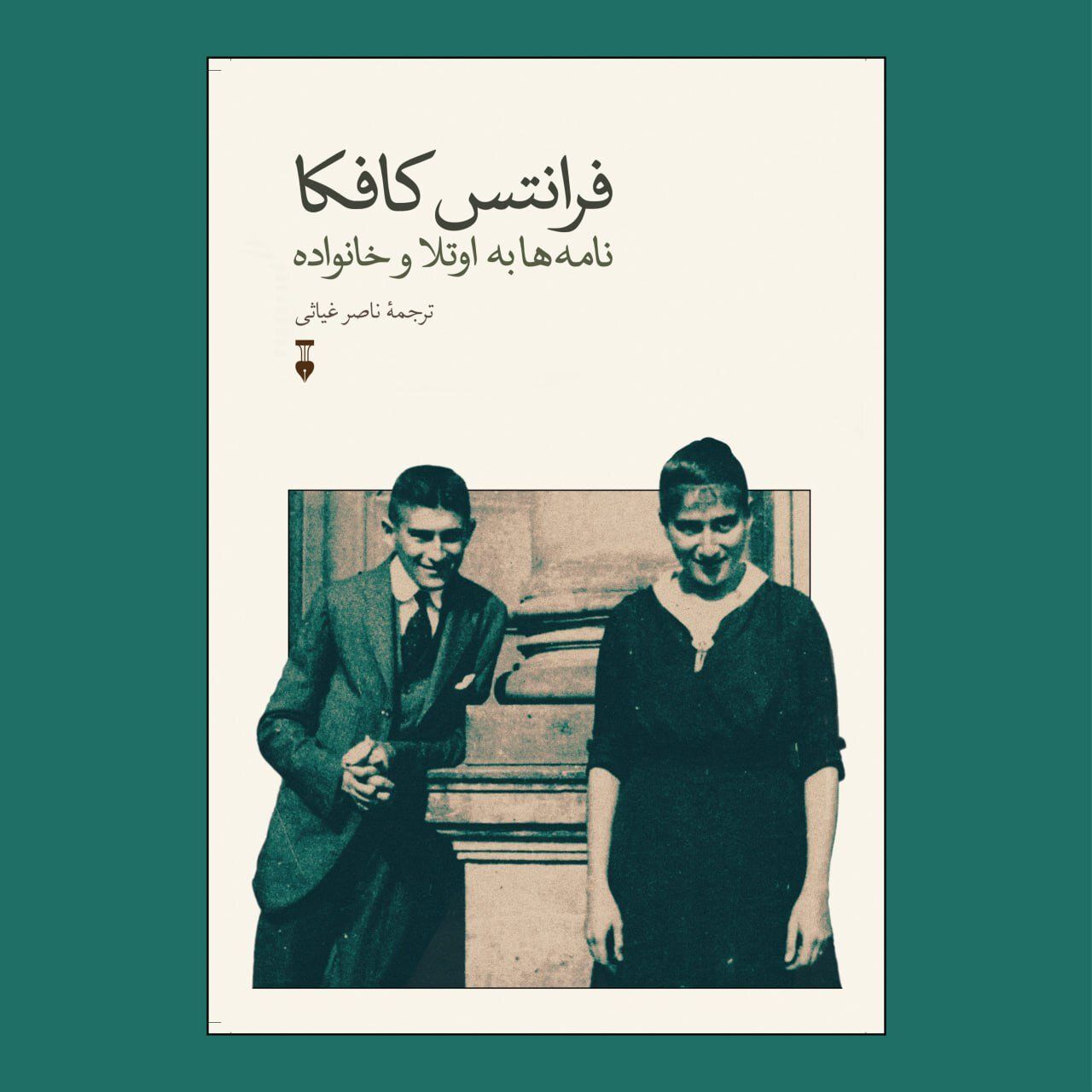
Tehran – Persian translation of the Persian “Letter to Ottola and Letter to Family.” This is a collection of letters by Franz Kafka to his sister Ottora, with letters to his parents Julie and Hermann Kafka released in bookstores in Iran.
Nasser Ghiasi translated the book from the original German text, and now the publication has been published with 241 pages, Ilna reported.
Written by the authors of “Pervert” and “Judiciary” these letters provide unique insight into the work of the Kafka family, their relationship with the Prague Jewish community, and Kafka’s own feelings about his parents and siblings.
Ottora Kafka, an elegant but shy woman and a quiet rebel to the bourgeois society she lived in, was the brother Kafka felt closest to. He had a special affection for her simplicity, her integrity, her ability to listen, and her pride for his work.
Ottora was deported to Teresienstadt during World War II and volunteered to accompany Auschwitz in 1943 with the child transport. She did not survive the war, but her husband and daughter saved her brother’s letter. They were published in original German in 1974 and in English in 1982.
Franz Kafka (1883-1924) was a German-language Jewish Czech writer and novelist born in Prague, the Austro-Hungarian Empire.
Widely regarded as a leading figure in 20th century literature, his work blends elements of realism and fantasy, featuring isolated protagonists who are usually faced with strange or surreal predicaments and uncomprehensible social-job forces. The term Kafkaesque entered the Lexicon to describe the situation as depicted in his writings.
Kafka’s writing attracted little attention before his death. During his lifetime he published several short stories and never finished his novels except for a very short “pervert.”
At the time of his death, Kafka’s works were probably only known to a small circle of Czech and German writers. Kafka left the work both published and unpublished, leaving his friend and literary enforcer Max Brod with explicit instructions that it should be destroyed in Kafka’s death.
However, Brod ignored his requests and published novels and collected works between 1925 and 1935. Brod defended his actions by claiming that he told Kafka “I will not carry out your wishes.”
Novels and short stories written by Kafka are usually summoned in his plesis, but he is also celebrated in his short f-tales and aphorisms. Like his long fiction, these sketches may be brutal in some respects, but their horrors are often funny.
Kafka’s influence is evident in his frequent acceptance of his writing as a form of prophetic or a form of pre- and post-vision, predicting the future character of totalitarianism in the nightmare logic of the presentation of his living being. These perceptions manifest in a way that guides the world in which his characters live, with his commentary written in diaries, letters and sayings.
Kafka’s work has influenced many artists, composers, filmmakers, historians, religious scholars, cultural theorists and philosophers.
SS/