
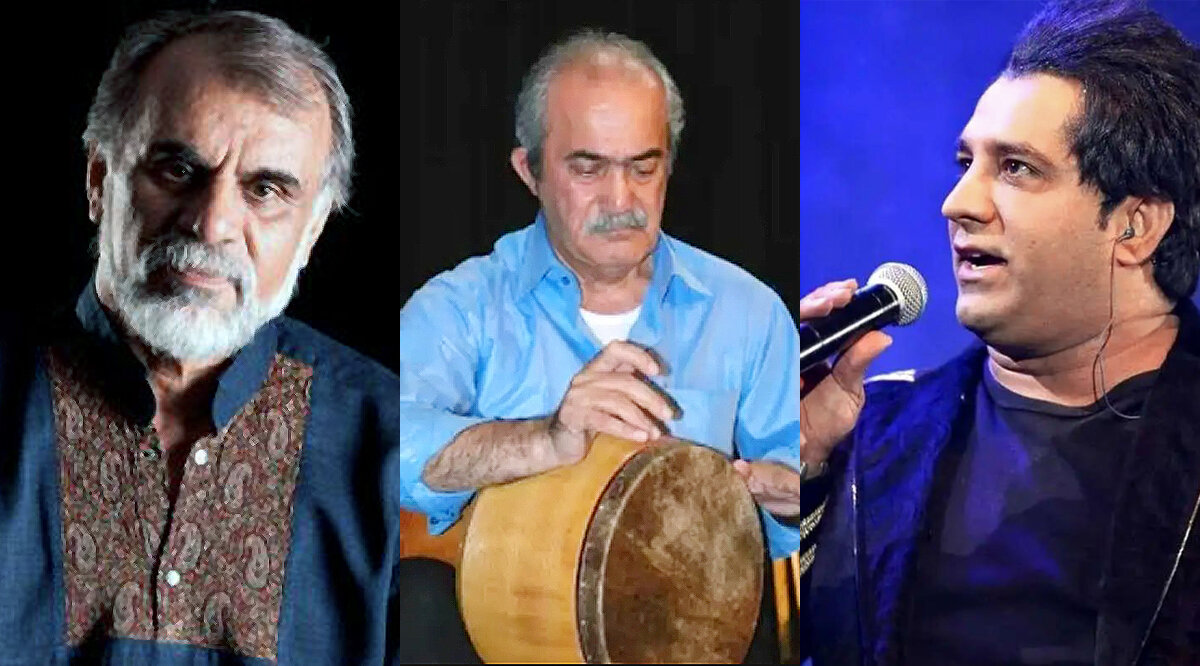
Tehran – The Iranian music community has been impressed by the loss of three prominent figures from different generations and genres over the past few days. Jamushid Azizhani is a famous Kurdish singer and composer. and Omid Jahan, a well-known pop singer.
Berman Rajabi passed away on Wednesday, September 10th, at the age of 86.
Born in Rasht, Gilan, Rajabi began his professional career in 1971, focusing on solo and duo performances at Tonbak and integration with melodic instruments.
He remembers widely in his signature composition “Left and Right Dialogue,” published in the second volume of his Tonbak Act.
His performances can be heard on groundbreaking albums such as “Savaran-e Dasht-E Omid” (composed by Hossein Alizadeh) and “Golchin 1 and 2” (composed by Reza Shafieian).
Beyond performance, Rajabi has written important educational works such as “A perspective on rhythm from a different angle to Tonbak” and the second volume “The Tonbak Method,” which remains an essential reference for instrumental students.
On Thursday, September 11th, Jamshid Azizkhani died at Tehran Hospital at the age of 68 after a period of illness.
Born in Kermansha, a center in Kermansha, Azizhani began his career in 1974 and quickly became famous, winning number one singing position at the Ramsar Music Camp.
His early works, “Safarnameh-ye Kurdistan” and “Rivar,” which were released in several years following the Islamic Revolution in 1979, were widely praised. During the Iran-Iraq War of 1980-1988, Azizhani became a familiar voice on regional radio, playing dozens of Kurdish and Persian songs dedicated to fighters and displaced people in western Iran.
During his career, he has produced nearly 800 works, many reflecting the joys and sorrows of the people of Zagros. His contributions helped to maintain and promote the Kurdish musical heritage, while shaping the wider folk and national musical landscape of Iran.
The recent shock was accompanied by the sudden death of Omid Jahan, who died at the age of 44 in Bam, Kerman state, after a heart attack on Saturday, September 13th.
He had just collapsed on Friday night at the opening night of the city’s date festival as he left the venue. Despite repeated efforts to resuscitation, he died in the hospital the following morning.
Born in Abadan, Hazestan Province, Jahan was the son of the late Mahmoud Jahan, a legendary figure in music from southern Iran. Growing up under the influence of his father, he began his career in the early 2000s. His breakthrough occurred in 2004 with the release of “Pesare Jonoobi” (“Southern Boy”), followed by the 2006 album “Papati,” which solidified his position in Iranian pop music.
Jahan’s energetic style and deep connection to Southern music have gained him a wide fan base, especially among younger listeners. His body is transferred to Tehran for burial in the Artists section of Behesht-E Zahra Cemetery.
Photo: From left: Jamshid Azizkhani, Bahman Rajabi and Omid Jahan
SS/