
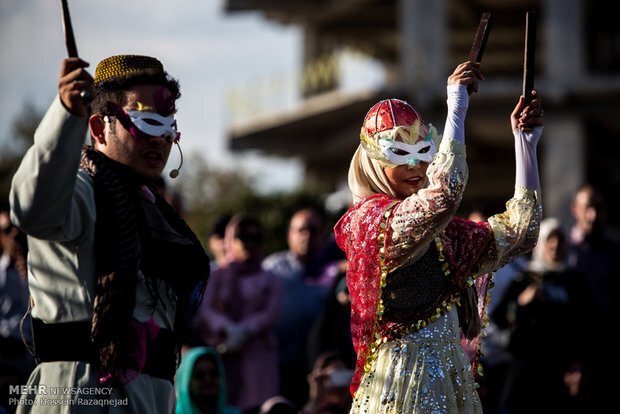
Tehran – The 22nd edition of the International Ceremony and Traditional Theatre Festival is scheduled to take place at Mashahir Hall, Tehran’s City Theatre Complex from September 25th to 29th, with five specialized research sessions being held daily from 3pm.
These academic gatherings explore various aspects of Iran’s rich cultural heritage, including storytelling in traditional performances, the evolution of rituals into modern drama, and the global tradition of puppet theater.
Prominent scholars and artists from Iran and abroad participated, and the session was moderated by renowned experts such as Davoud Fat’hali-Beigi, Rahmat Amini, Fahimeh Mirza Hosseini, Nazila Nourishad and Mohammad Hossein Nasserbakht.
Among the famous participants at the festival are Louis Andre Cervini from Brazil, Stefano Junci from Italy, Amela Visenovich from Serbia, and Nazri M. Uritt from Turkey.
Their presence enriches the event and promotes the valuable exchange of ideas and cultural perspectives between Iran and the international community.
The festival will also host the 10th international seminar on rituals and traditional performances, hosted by Ebrahim Galehadalzadeh, who continues the tradition of passing on researchers, students and artists from around the world.
The 22nd International Ritual and Traditional Theatre Festival, chaired by Siavash Sattari, will be held in three sections: educational research, outdoor and stage performances.
The education course will be concluded on September 15th, with festival seminars and sessions running until October 3rd, with non-competitive performances taking place from October 4th, documenting the closure of culturally important events.
The 22nd International Ritual and Traditional Theatre Festival is an important cultural event specializing in celebrating and preserving the rich heritage of Iran’s indigenous performing arts.
The festival aims to showcase the deep spiritual and cultural essence of Iran through a variety of traditional performances rooted in local beliefs, rituals and languages. These vibrant traditions are not only relics of the past, but also living expressions that continue to flow through Iran’s cultural fabrics, contribute meaningfully to the present and shape the future.
The festival is organized with an educational and research-oriented perspective that focuses on the preservation, reinterpretation and continuity of these traditional art forms. Under the slogan “Iranian Performance for All People in Iran,” the event will have three main sections: workshops and training courses, research seminars and stage performances.
The workshops and training courses aim to discover and nurture new talent in a variety of traditional performance genres in different states of Iran. These genres include fun performances such as Shadow Puppet Show, Siah-bazi, and narrative arts such as Naqqali, Pardeh-Khani, Shahnameh Recitations, traditional puppet shows, folk dance and more. Students selected from these workshops have the opportunity to introduce their work to national symposiums, promoting a competitive environment that promotes excellence.
In addition to training, the festival has several performance categories. The indoor stage performance includes a new production designed specifically for indoor venues based on Iranian rituals and theatre laws, with up to 10 selected pieces.
These works are non-competitive, but will receive financial support depending on the scope and needs of the project. External performances include outdoor shadow puppet shows, lively performances, storytelling art, traditional puppet shows and folk rituals.
The festival also highlights the production of virtual content, inviting creators to develop innovative digital content such as videos, animations and podcasts depicting Iranian folk traditions, rituals and storytelling. The top three creators in each category receive a financial award, and their work will be displayed over the next year to promote broader awareness and appreciation for Iran’s intangible cultural heritage.
sab/