
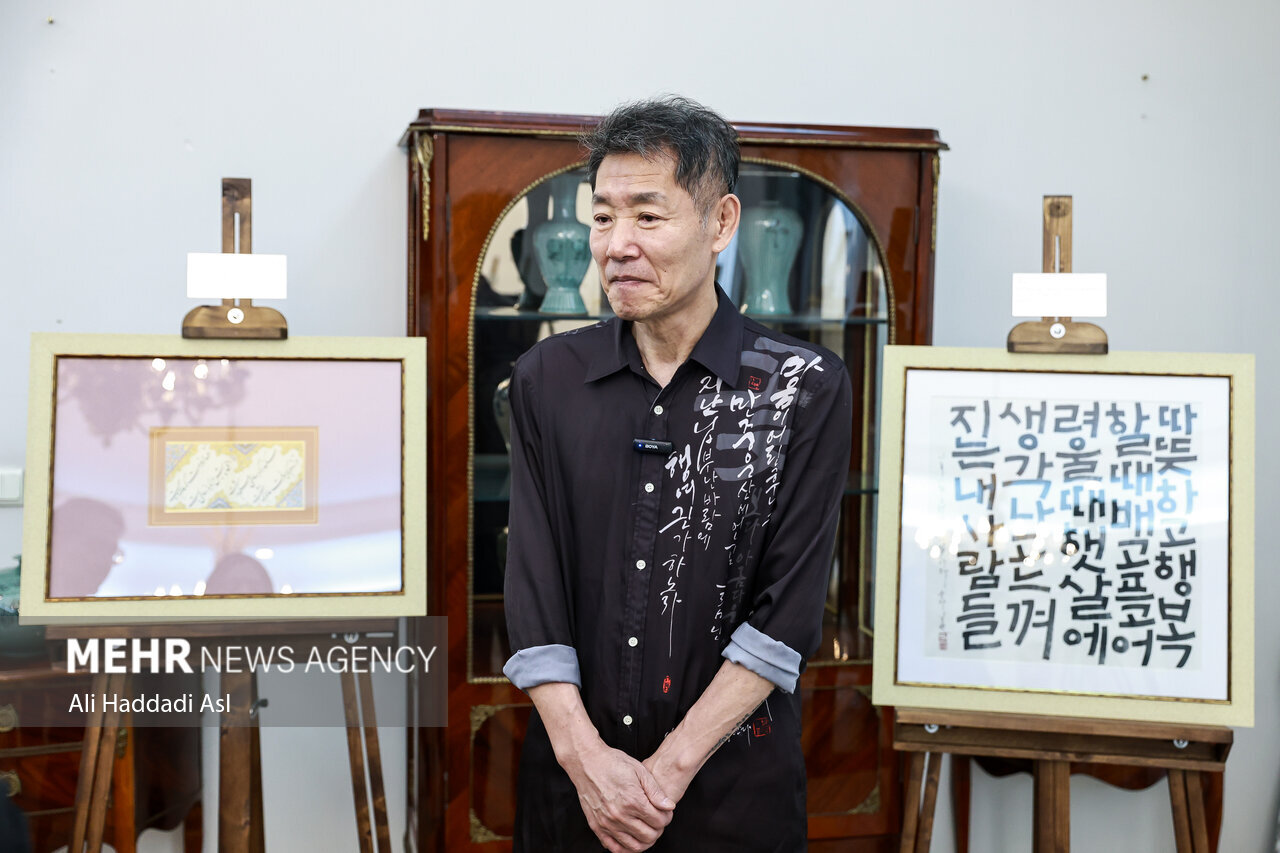
TEHRAN – To commemorate the 63rd anniversary of the establishment of diplomatic relations, the Embassy of the Republic of Korea in Tehran held a vibrant Korea-Iranian calligraphy exhibition at the ambassador’s residence on October 23, celebrating cultural ties.
The exhibition, co-organized with the Cultural Coordination Center under the Asia Cooperation Dialogue, was developed around the poignant theme of “family” and served as a dynamic platform to deepen mutual understanding and expand cultural exchange.
This exhibition featured a compelling dialogue between two different calligraphy traditions. From South Korea, 12 artists from the Korean Calligraphy Association, led by Chairman Yoo Hyeon-deok, participated, demonstrating a sophisticated harmony of art. The delegation’s visit was particularly meaningful as it was the first time in nine years that Korean calligraphers visited Iran for such an event.
During the event, Tehran Times conducted an exclusive interview with Yoo Hyung Deok.
Q: How has the theme of this exhibition, the universal concept of family, influenced your artistic practice?
A: Actually, I chose the theme of family for this exhibition.
The concept of family has a really special place in relationships and life.
In my opinion, there is no need to know the language at all. The existence of the concept of family in relationships means that relationships come together easily.
In fact, we faced many ups and downs and many difficulties in organizing this exhibition, but we were able to carry out this work precisely because of the concept of family. This concept still holds value and its meaning is very beautiful.
Q: What are the similarities between Korean and Iranian calligraphy?
A: The main understanding and the main commonality between Iranian and Korean calligraphy is that they don’t necessarily write just to leave something behind and record it. We express our hearts, emotions, imagination, and logic through calligraphy.
Q: How does holding such exhibitions and carrying out cultural activities strengthen cultural relations between Iran and South Korea?
A: Actually, I don’t really use the concept of cultural exchange. Because I believe that when people connect with each other, and when that connection is established beautifully, normally, and smoothly, this cultural transmission will also occur. As a result, I prioritize relationships.
When I return to Korea and think about Iran and Iranians, I’m sure my heart will beat faster and I’ll be encouraged.
I record my art with this feeling, and when art is recorded with this feeling, it becomes a valuable work.
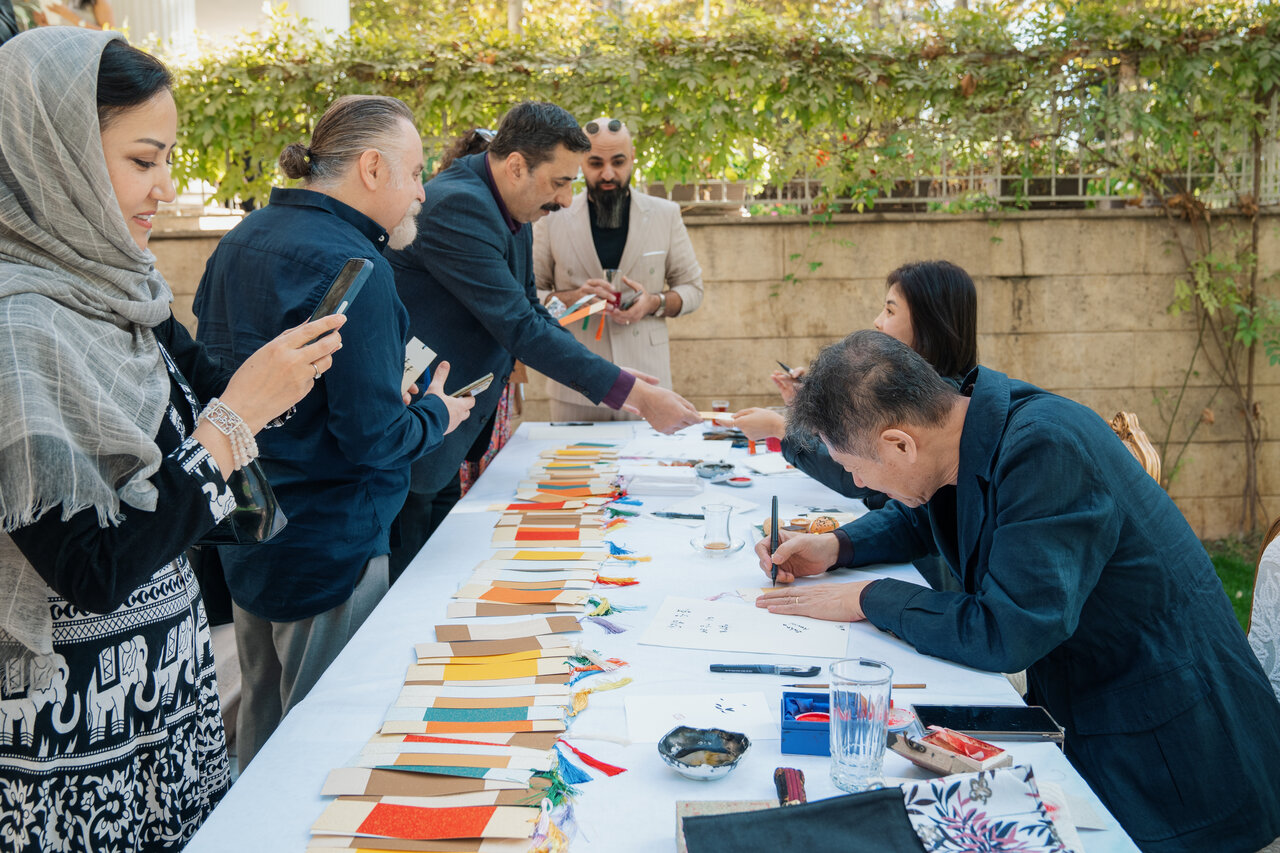
Photo credit: Niloofar Aghili
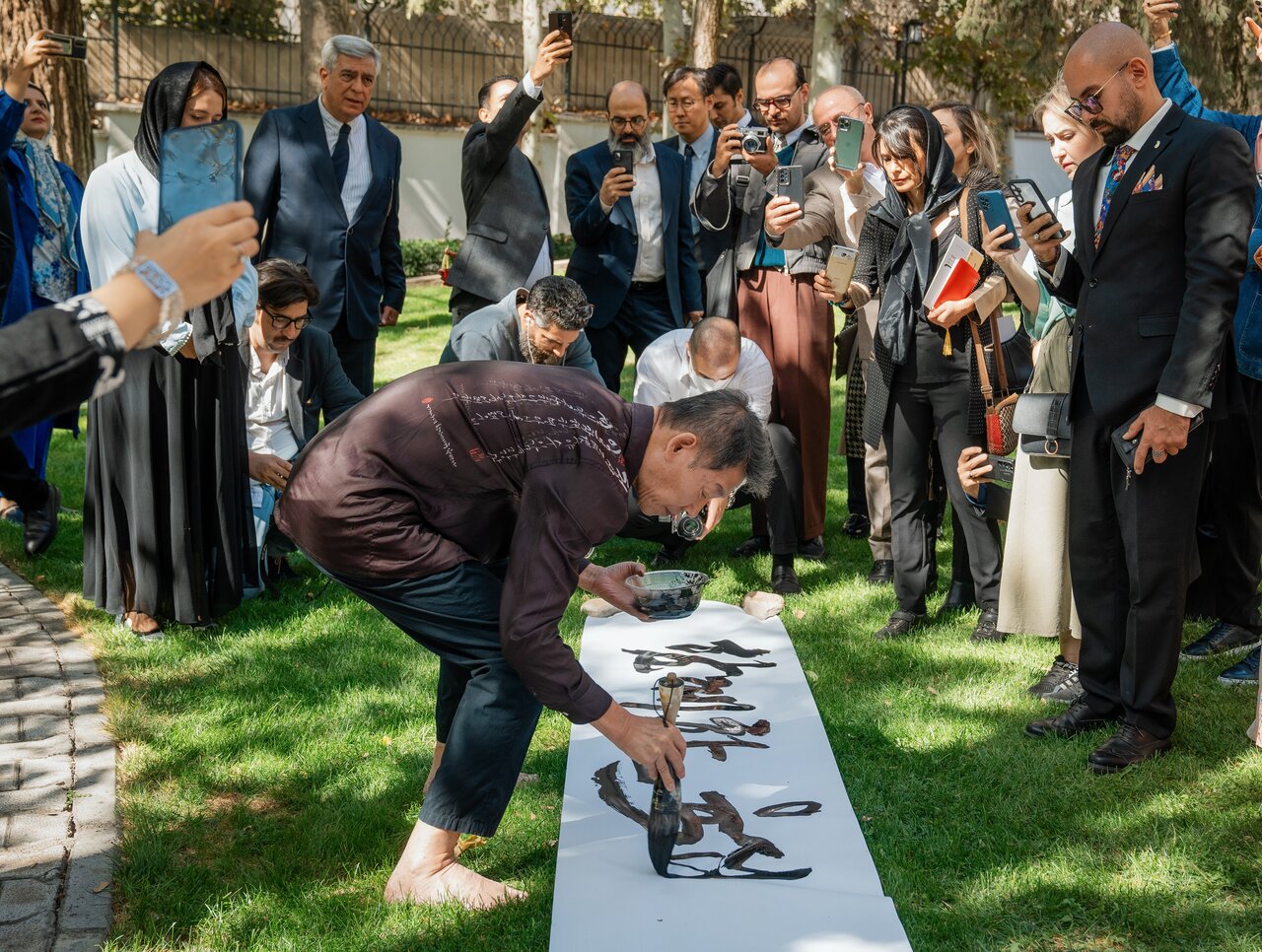
Photo credit: Niloofar Aghili