
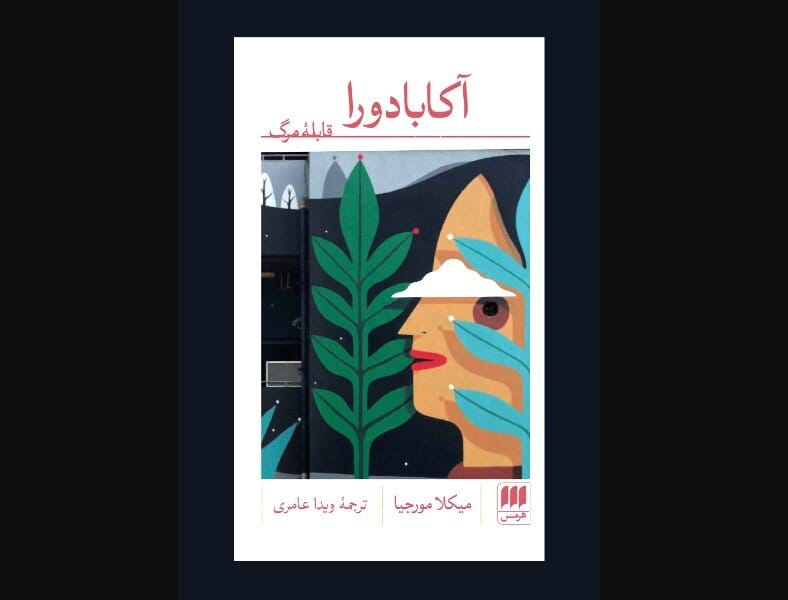
TEHRAN – The Persian translation of Italian novelist and playwright Michela Murgia’s book “Akkabadora” has recently been published by Tehran’s Hermes Publishing.
This book has been translated into Persian by Vida Ameri.
Accabadora, published in 2009, has been translated into many languages, including English and Chinese. For this work, Murgia won the Premio Dessi in the narrative category in September 2009. In May 2010, he won the Super Mondello Award, the most important of the Mondello Awards, and in September of the same year, he won the Campiello Award.
Set in the early 1950s in Soleni, a small village in Sardinia where everyone knows everyone else’s business but pretends not to, the story revolves around Maria Ristor, the last unwanted sister of four orphan sisters. Maria becomes the “anima child” (children born twice to a poor woman and an infertile woman) of Bonalia Urai, a wealthy woman who has never married. Maria and the seamstress Bonaria live together as mother and daughter, but both are aware that they are not related by blood. In the novel, it is revealed that Bonalia chose to adopt Maria after seeing her steal cherries, an act that symbolized the beginning of her sense of guilt and morality.
Although Bonalia’s adoption of Maria may seem partially motivated by interest, Maria always considered herself to be the last in every sense of the word. She is amazed at the respect and care her new mother gives her, giving her housing, education, and hope for the future. But Bonalia is shrouded in silence, a mysterious figure dressed in black and possessing ancient wisdom about life and death. She is a traditional Sardinian figure, the Acabadora, who, when truly called upon, ends the suffering of the dying with a merciful death.
Maria eventually learns the full truth about Bonalia’s role and must confront her beliefs about euthanasia. The novel leaves the reader to decide whether Maria took her adoptive mother’s life and ended her suffering.
SAB/